
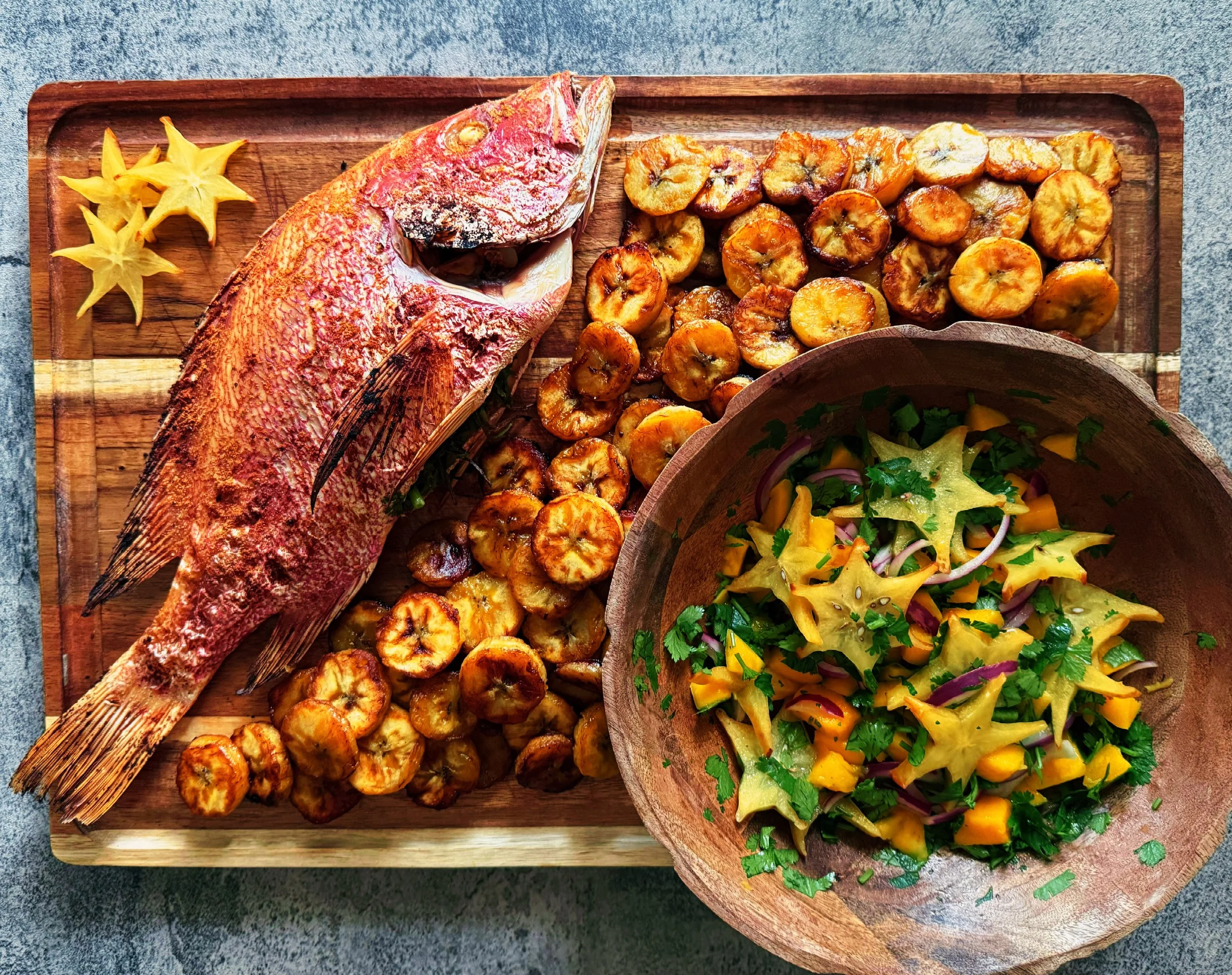
red snapper with starfruit salad and fried plantains
A whole baked red snapper already makes dinner feel a little more exciting but fried plantains and a fresh mango starfruit salad really complete the assignment. It looks impressive, tastes even better, and is surprisingly easy to pull together.
The history of starfruit and how it reached the Americas
Starfruit (also known as carambola) originated in Southeast Asia where it has been cultivated for centuries. It gets its name from its five prominent ridges which create a nearly perfect star when the fruit is sliced crosswise. Starfruit belongs in the same family as wood sorrel which helps explain its naturally tart flavor. As maritime trade expanded the fruit spread to India, Sri Lanka, Africa, and eventually the tropical Americas where the warm climate allowed it to thrive. It arrived in Florida more than a century ago although those early fruits were reportedly quite tart. Sweeter varieties were later brought over from places like Thailand, Taiwan, and Malaysia. Today it is grown throughout Florida, the Caribbean, and Latin America. Starfruit bruises easily and is usually harvested by hand, and because it contains a natural compound called caramboxin people with kidney disease are generally advised to avoid it.
How Indigenous, African, and European influences shaped Caribbean cooking
Caribbean cooking was shaped by centuries of cultures meeting; often under the violence of colonization and slavery. Indigenous peoples contributed ingredients and traditions built around cassava, corn, peppers, tropical fruits, and local seafood. Europeans introduced livestock, citrus, sugarcane, and new preservation methods, while enslaved Africans brought ingredients such as okra and pigeon peas, along with deep frying, one pot cooking, and bold seasoning traditions. Even plantains which originated in Southeast Asia became a Caribbean staple after traveling through Africa and across the Atlantic. The result wasn’t one single cuisine, but a collection of island food traditions shaped by adaptation and cultural exchange.
How tropical fruit salads became a common partner for savory seafood dishes
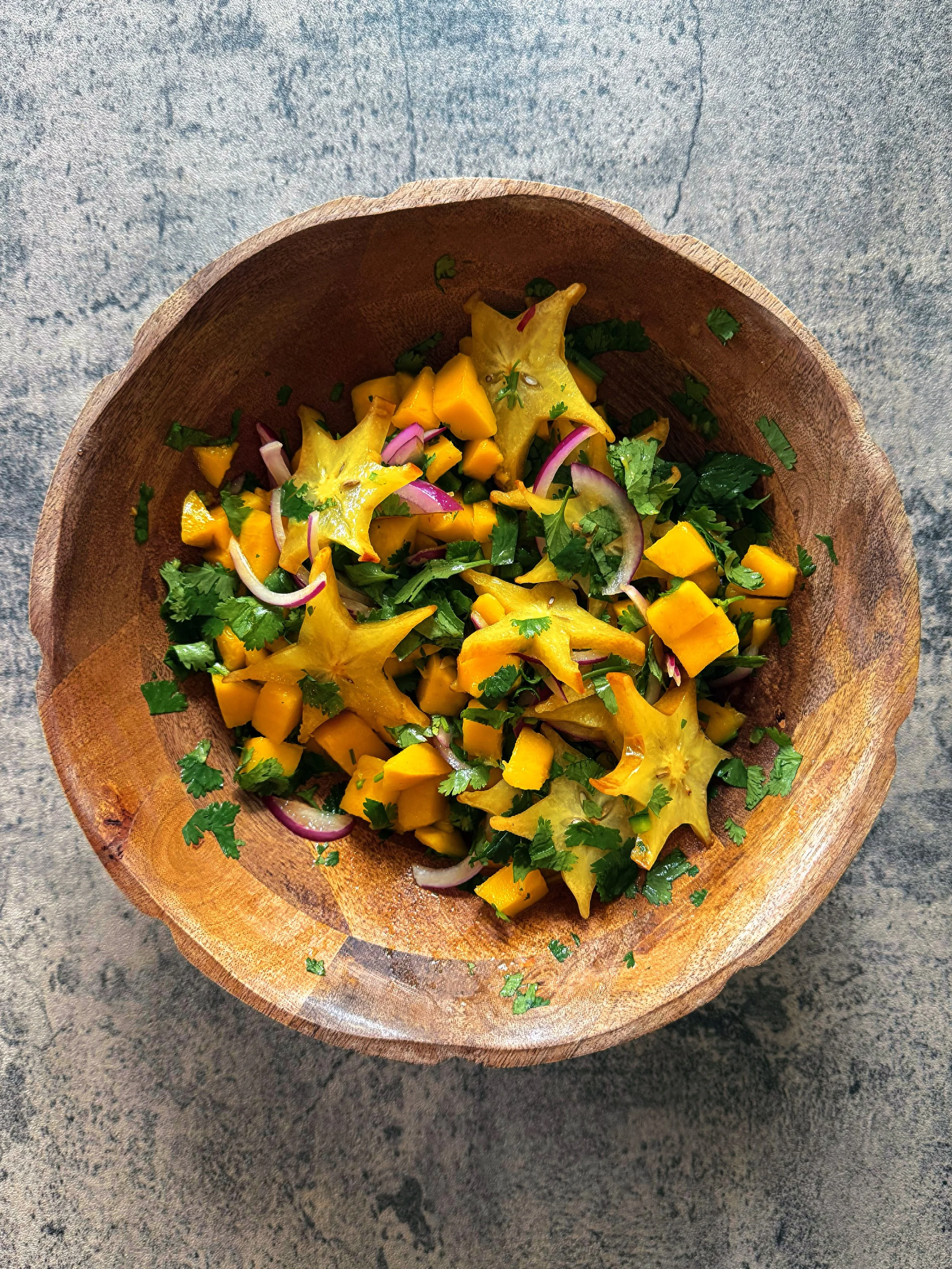
Pairing tropical fruit with seafood grew naturally in coastal regions where both were readily available. Mangoes, pineapple, citrus, and other fruits brought sweetness and acidity that balanced salty fish, rich cooking oils, and the heat of fresh chiles. Over time chopped fruit relishes and salsas became an easy way to add contrast without overpowering delicate seafood. The same idea is at work here: the mango and starfruit brighten the seasoned snapper while cooling down the jalapeno.
The difference between Caribbean and Latin American preparations of whole fish
Caribbean and Latin American preparations of whole fish share plenty of ingredients so the difference is usually found in the regional details. Caribbean versions often lean into allspice, thyme, Scotch bonnet peppers, citrus, and tropical fruit with the fish commonly fried or grilled. Across Latin America preparations vary widely but may feature garlic, cumin, oregano, achiote, cilantro, and fresh chiles with fish baked, grilled, or fried depending on the region. There is plenty of overlap between the two especially along the Caribbean coasts; whole fish with lime, garlic, cilantro, and chile belongs comfortably in both worlds.
Why red snapper is so often mislabeled
True red snapper is one specific species (Lutjanus campechanus) but the name is often used for other red colored fish including different snappers and even unrelated species. Red snapper commands a higher price creating an incentive to substitute something cheaper or easier to source. The seafood supply chain can also involve several boats, processors, distributors, and countries making incorrect labels (whether intentional or accidental) harder to trace. Once the head, skin, and fins are removed even experienced buyers may struggle to identify fish without DNA testing. In one nationwide testing only 7 out of 120 samples sold as red snapper were the real thing.
How to make red snapper with starfruit salad and fried plantains?
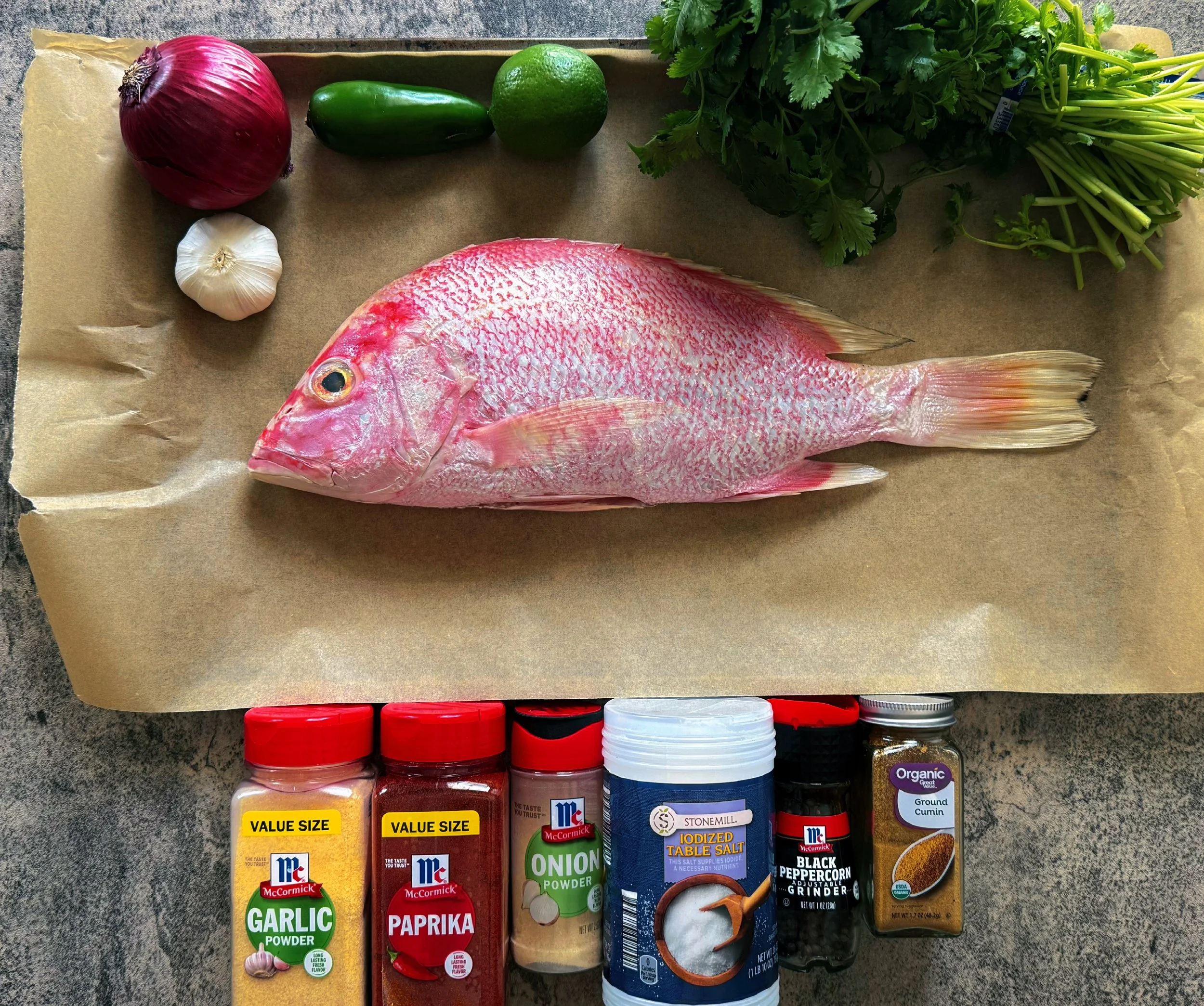
Preheat oven to 425f. Line a baking sheet with parchment paper and place the whole red snapper on it.
Fill the cavity with the smashed garlic cloves, lime slices, sliced jalapeno, a few slices of red onion, and 1/2 bunch cilantro. Then rub the outside of the fish with olive oil and season both sides with black pepper, paprika, garlic powder, onion powder, cumin, and salt.
Bake for about 25-35min, depending on the size of the fish, until the thickest part reaches an internal temperature of 145f.
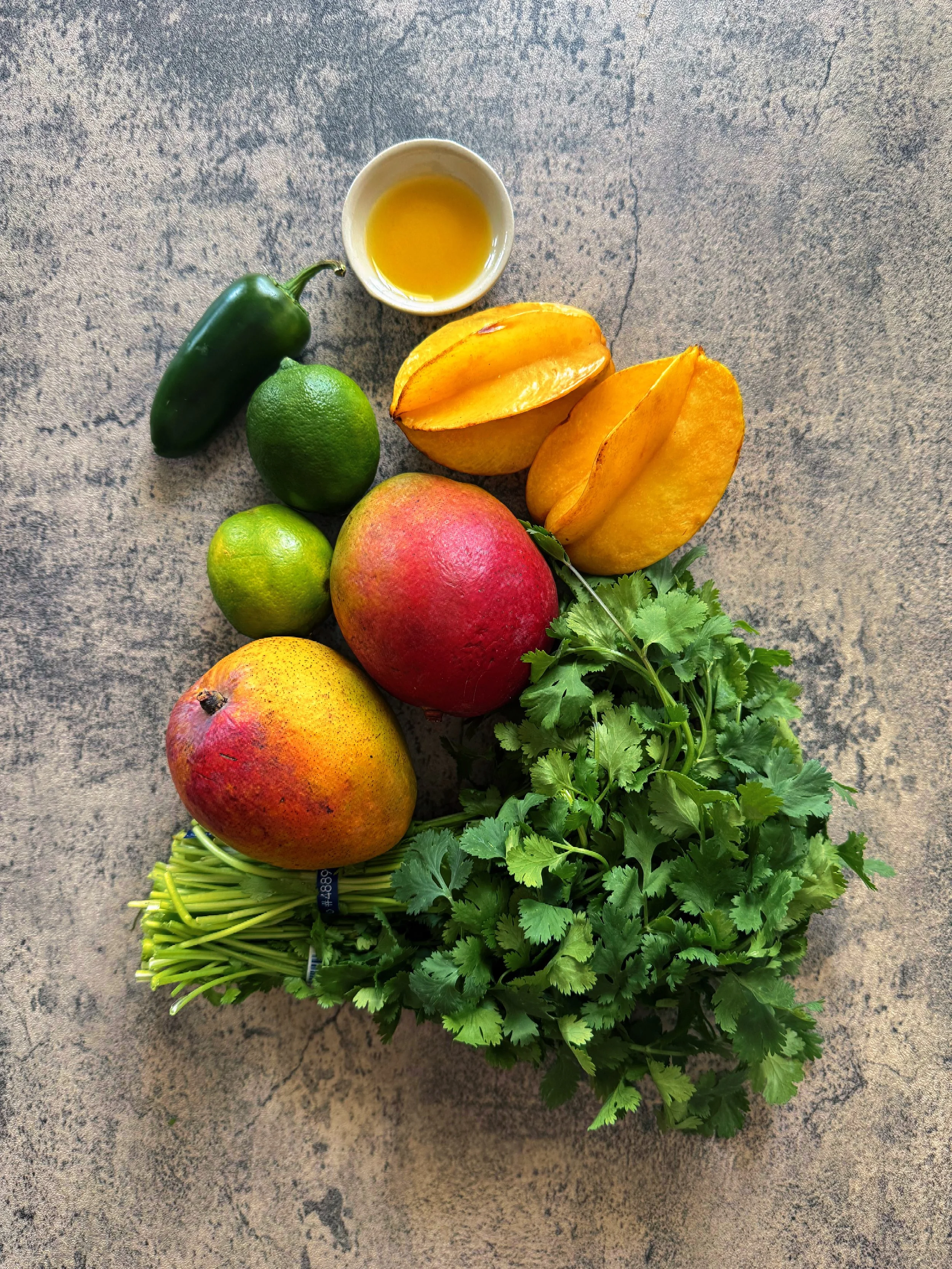
Meanwhile prepare the starfruit salad. In a large bowl combine the diced mangoes, sliced starfruit, thinly sliced red onion, diced jalapeno, and chopped cilantro. Add the juice of 2 limes and 1-2 tbsp olive oil. Season with salt and pepper. Toss to combine.
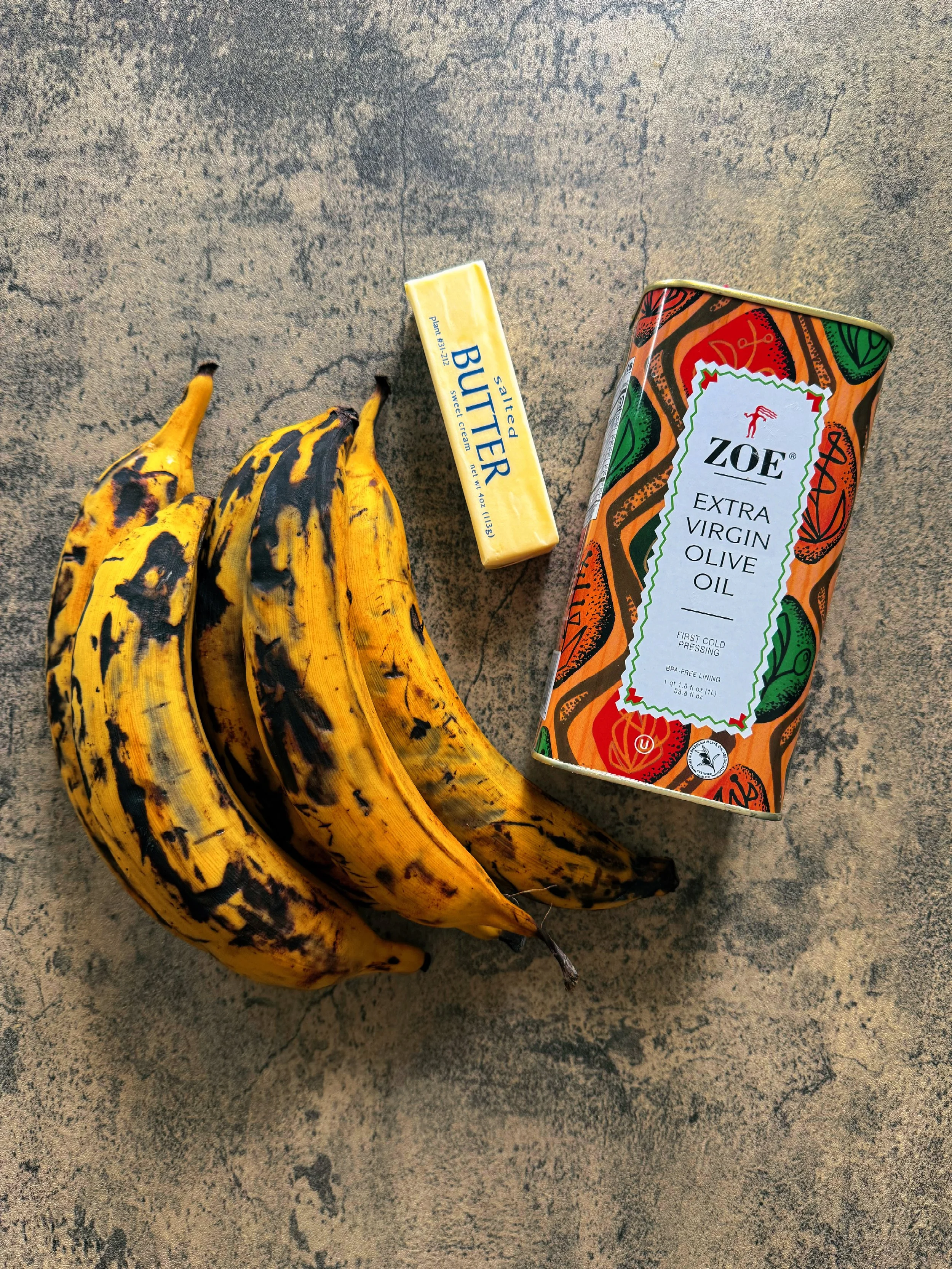
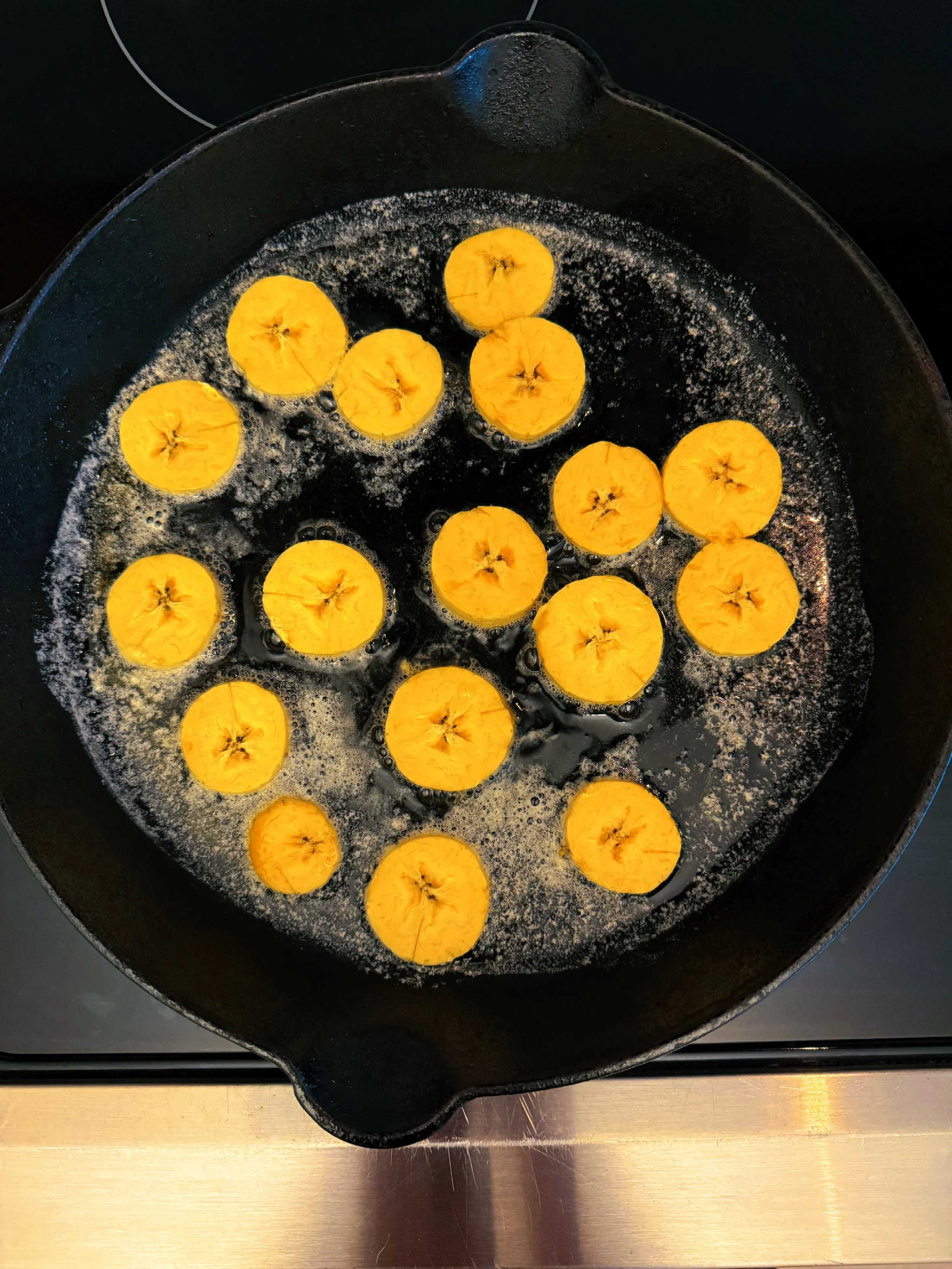
Heat equal parts of olive oil and butter in a cast iron skillet over medium heat. Working in batches, fry the plantain slices until golden brown on both sides. Transfer to a paper towel lined plate and season lightly with salt.
Once the fish is done, squeeze lime juice over it and let it rest for 5-10 minutes before serving with the prepared starfruit salad and fried plantains.
Tips
Pat the fish completely dry before adding oil and seasoning so the skin roasts instead of steaming.
Season inside the cavity as well.
If cooking multiple fish choose fish that are similar in size so they finish cooking at roughly the same time.
The fish is ready when the flesh is opaque, flakes easily near the backbone, and reaches 145f in the thickest part.
Let the fish rest before serving so the flesh separates from the bones more cleanly.
Use ripe but still firm fruit mangoes and starfruit so the salad stays fresh instead of becoming mushy.
Fry the plantains in batches to avoid lowering the oil temperature and making them greasy.