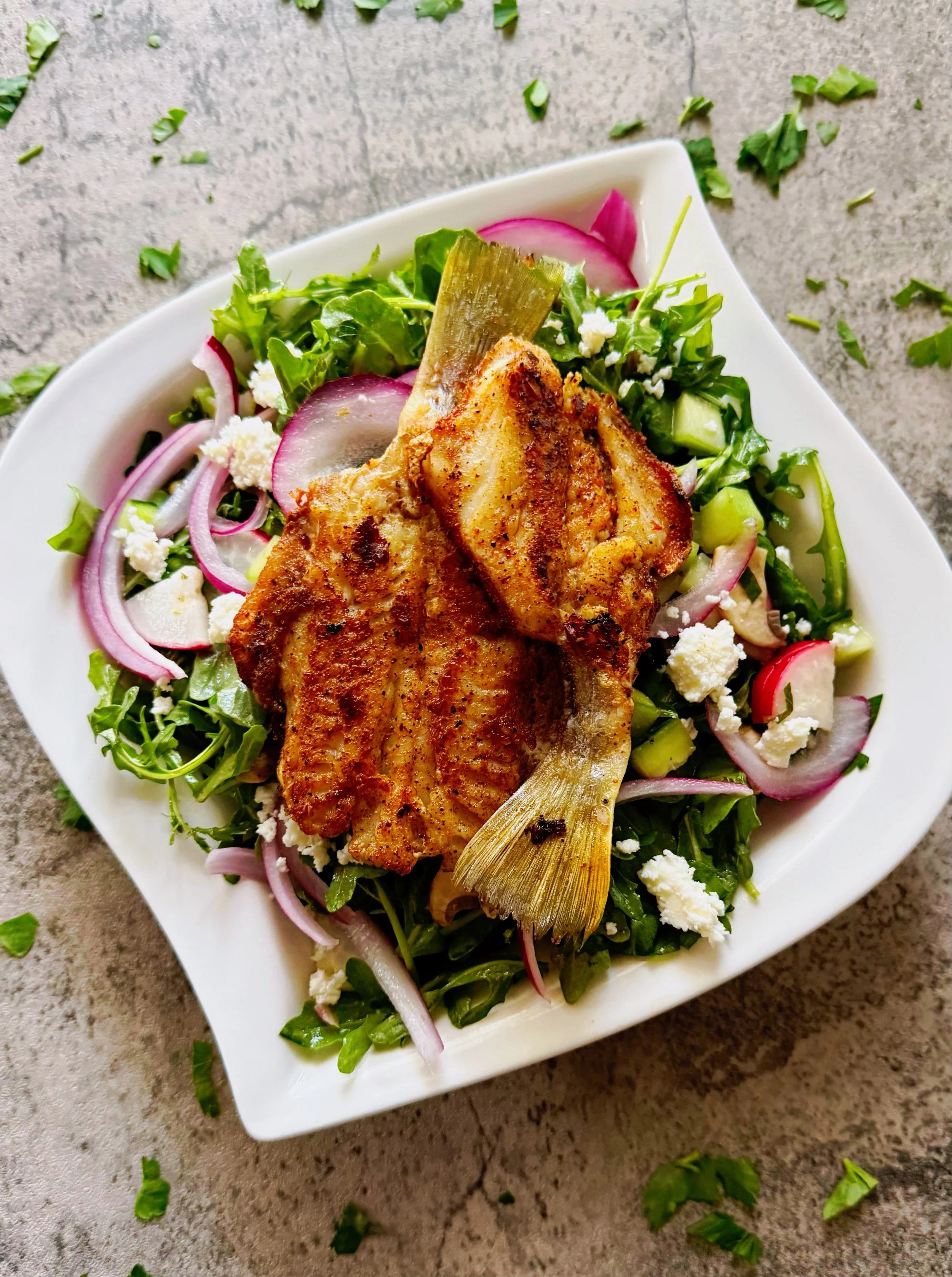
dockside fish salad
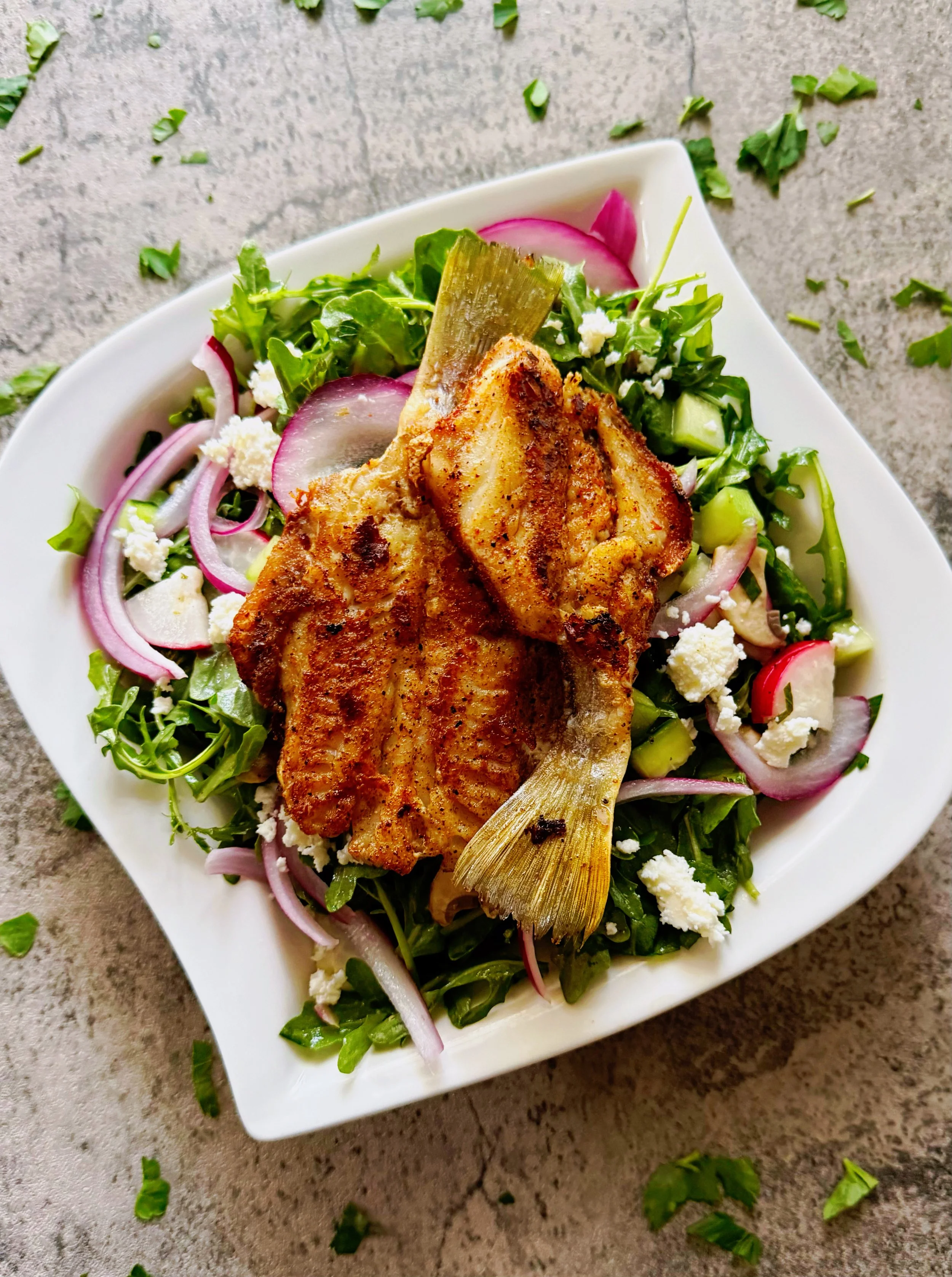
Fresh fish doesn’t need much to make a great meal. This crispy fried fish salad pairs your catch with peppery arugula, quick pickled onions, fresh vegetables, a bright caper Dijon dressing, and crumbled queso fresco. It’s light, fresh, and simple enough for weeknight but just as good after a day spent out on the water.
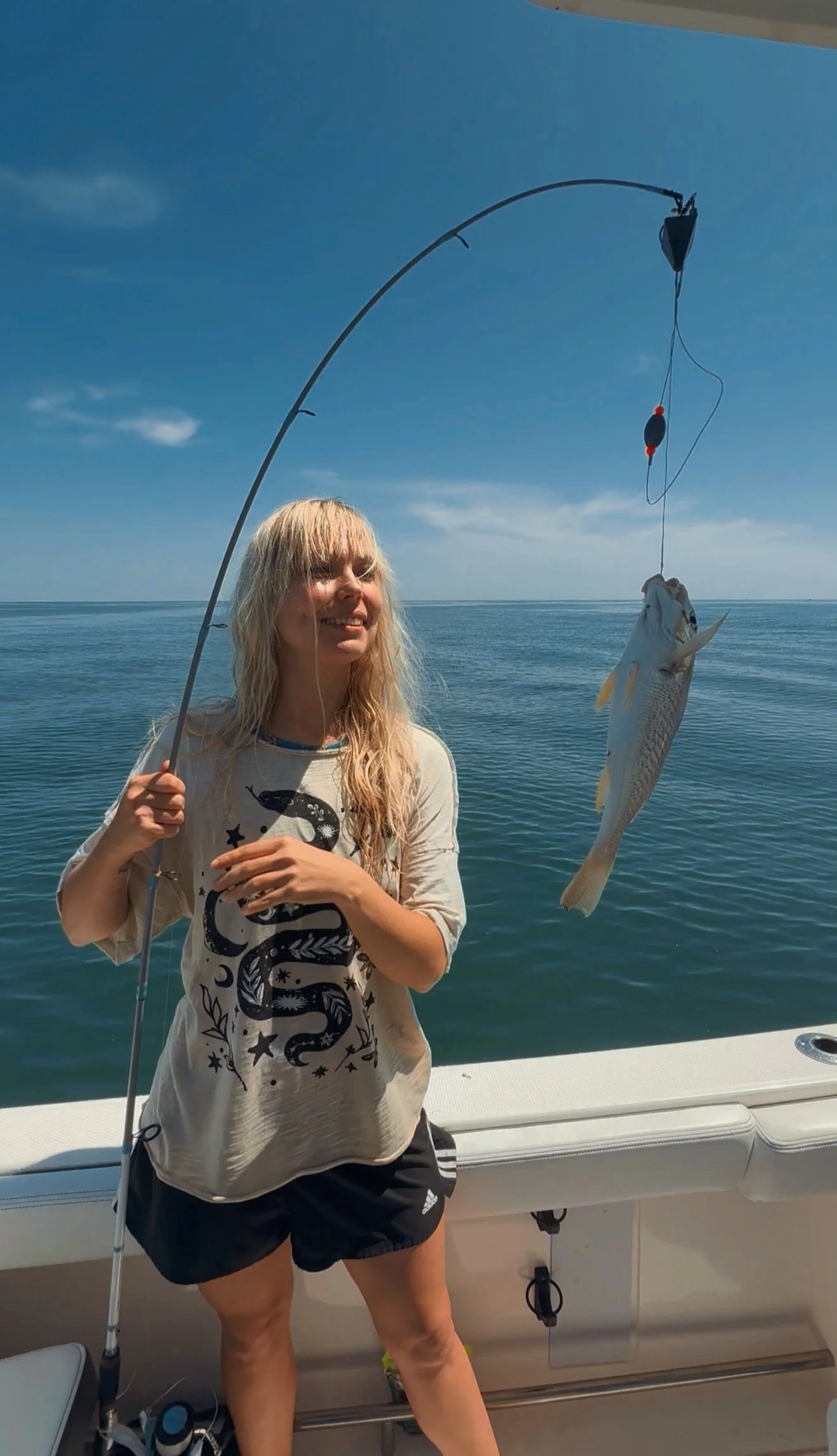
How to clean and prepare freshly caught fish
The exact cleaning process depends on the species but the goal is always the same: remove anything you don’t want to eat while keeping as much meat as possible.
Rinse the fish under cold water to remove slime and debris.
Use a knife or a spoon to remove scales working from tail toward the head.
Make a shallow cut from the vent to the base of the gills and remove the entrails.
Rinse the cavity and scrape away any remaining blood along the backbone.
Remove the head, fins, and backbone (if wanting fillets or boneless pieces), Smaller fish can also be cooked whole if preferred.
Check for any remaining pin bones and remove with tweezers.
Pat the fish completely dry before seasoning.
Why do we scale fish?
Fish scales act like armor protecting the fish from injury and parasites while still allowing it to move efficiently through water. Since they’re designed for protection many species have scales that stay tough even after cooking. Most fish are scaled because the scales can leave the finished dish with an unpleasant texture. Removing them also helps the seasoning stick better and makes the fish easier to eat. That said, not every fish needs to be scaled. Some species have very small or scale free skin that’s commonly cooked as is while others are skinned before cooking all together. Whether you scale a fish depends on the species and how you plan to cook it.
What are capers?
Capers are the unopened flower buds of the caper bush. After they’re harvested they’re preserved in brine or salt developing the tangy, salty flavor they’re known for. Despite their small size capers add a briny punch that balances rich ingredients like fried fish. That’s why they’re a staple in many Mediterranean seafood dishes, vinaigrettes, and sauces.
What is the history of pickling?
Pickling is one of the oldest methods of preserving food dating back more than 4000 years. Long before refrigeration people relied on vinegar, salt, and fermentation to extend the life of vegetables, fruits, and even fish. Ancient civilizations in Mesopotamia were among the first to preserve cucumbers in brine and the technique eventually spread throughout Europe, Asia, and the Middle East. As trade expanded vinegar became more widely available making quick pickling an easy way to preserve seasonal produce while adding tangy flavor to meals.
Let’s talk about arugula
Arugula has been cultivated for thousands of years with records of it being grown as far back as ancient Rome. Unlike lettuce it was prized for its bold, peppery flavor and was eaten raw, cooked, or even used for its seeds which could be pressed into oil. The Romans also believed arugula had medicinal properties and considered it an aphrodisiac, making it a common sight in gardens and kitchens. Today arugula is grown around the world and is especially popular in salads thanks to its crisp texture and peppery taste. Its slightly spicy flavor pairs particularly well with rich ingredients like fried fish, creamy cheeses, and bright vinaigrettes making it an easy choice when you want a salad with little more character than traditional lettuce.
How to make dockside fish salad?
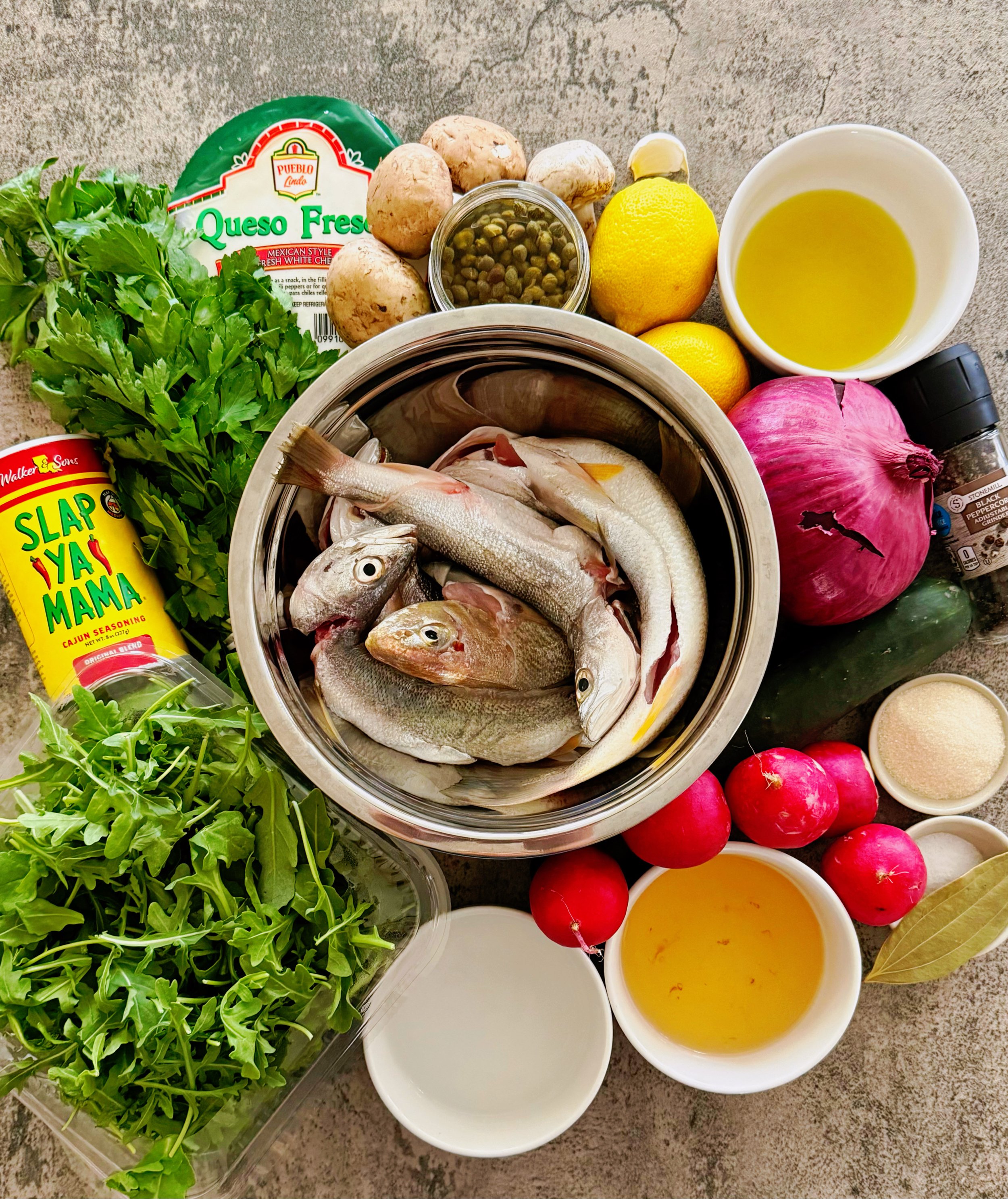
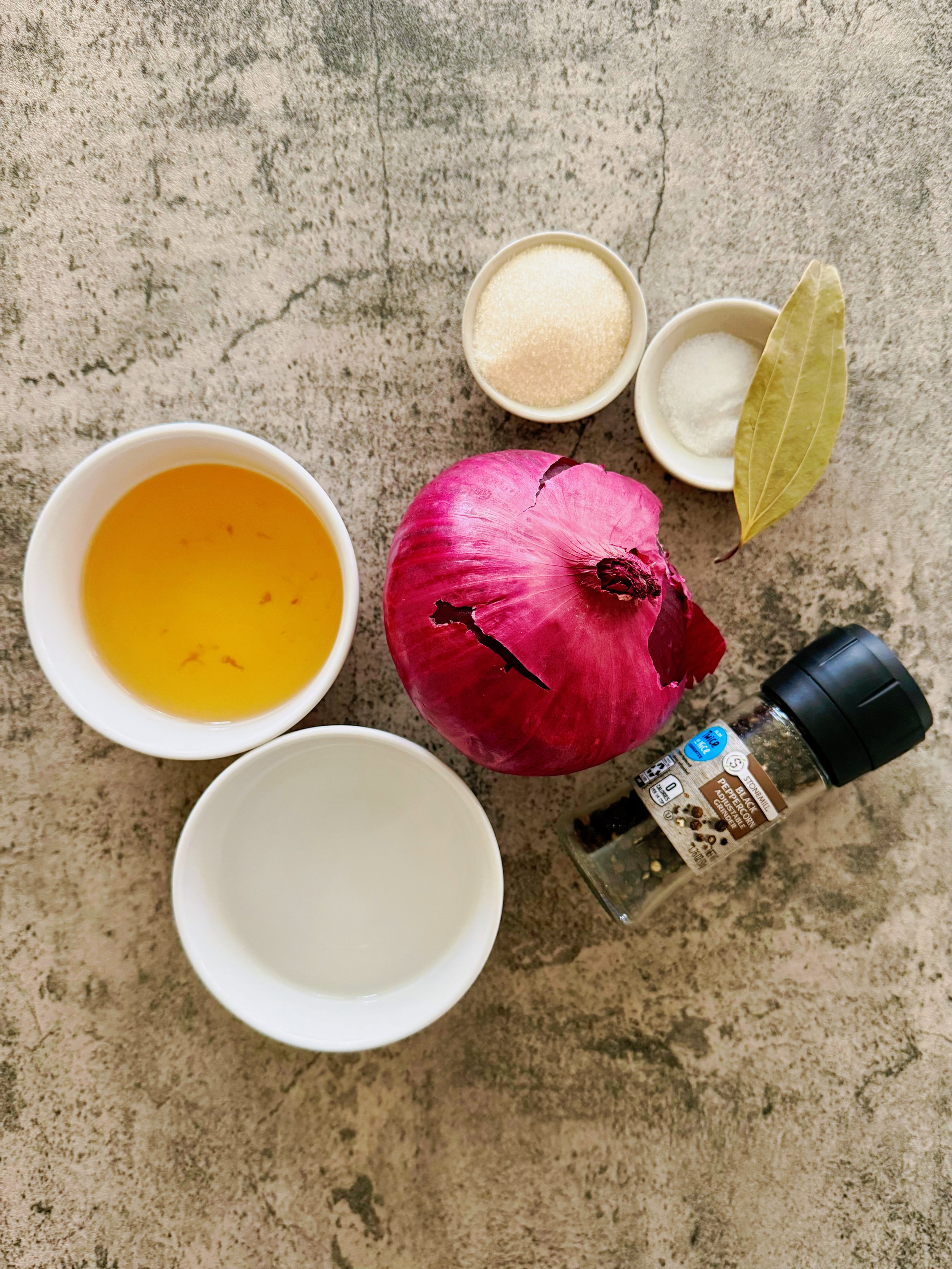
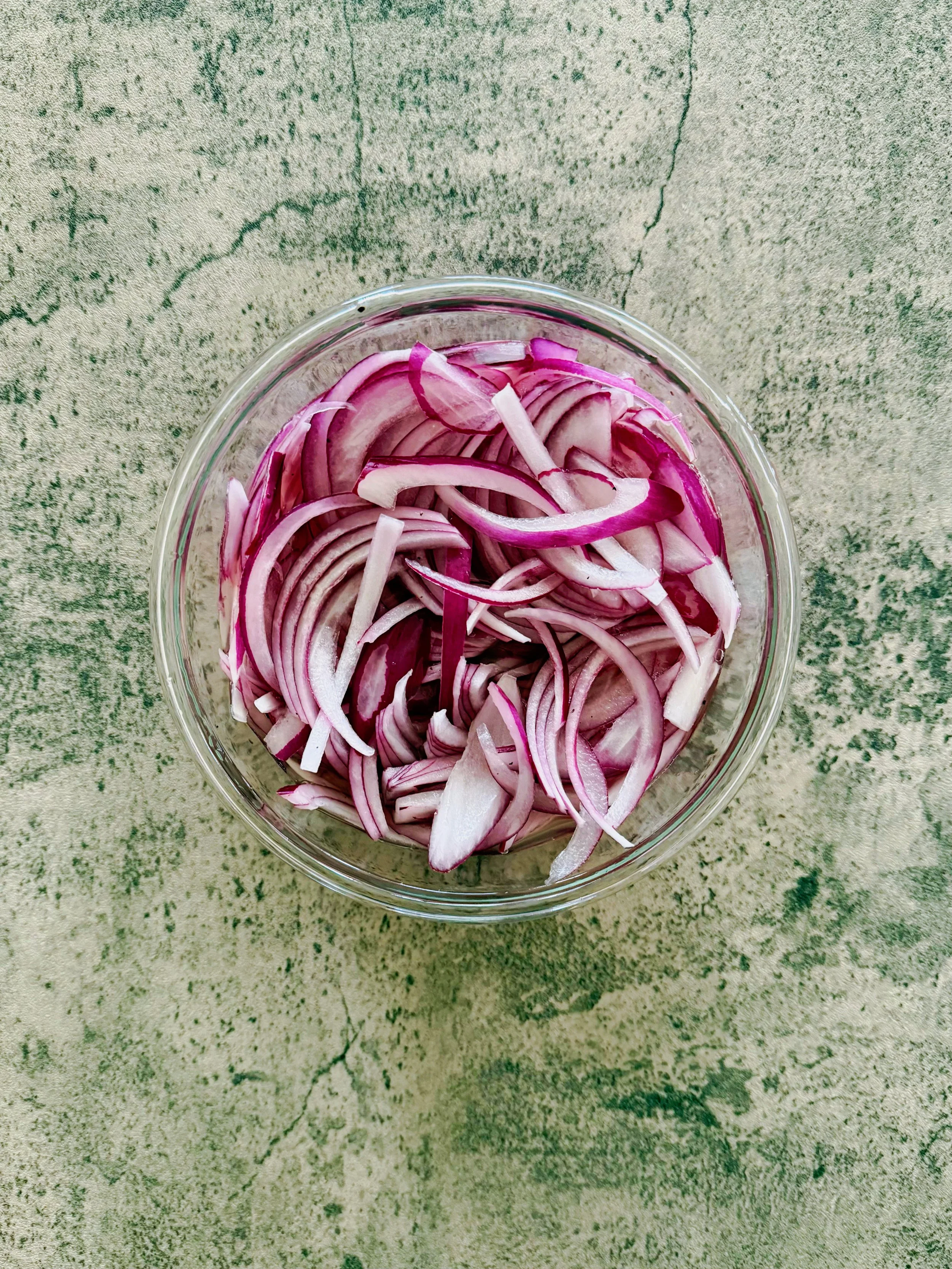
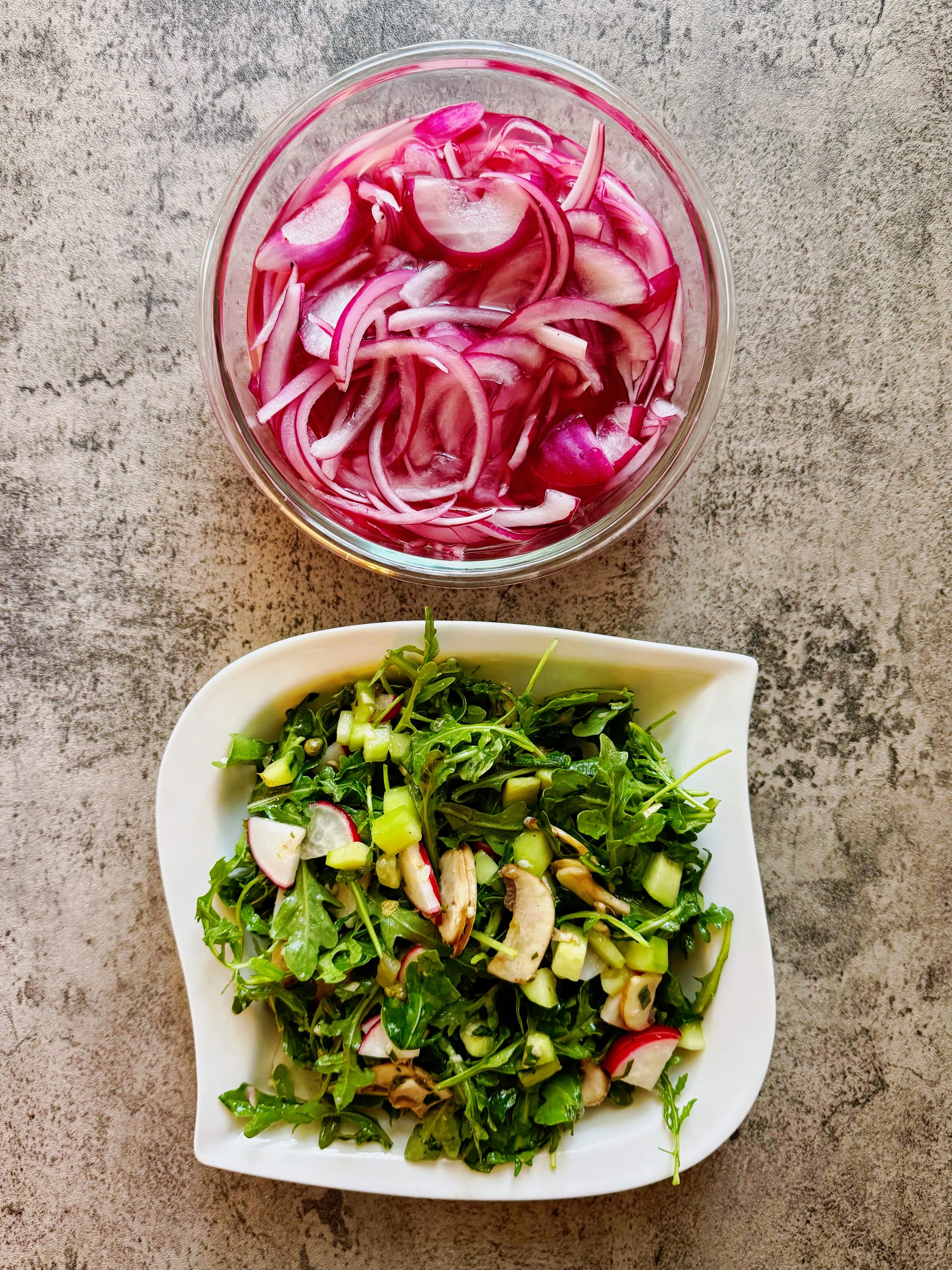
Prepare the quick pickled onions. In a medium bowl whisk together 1/2 cup apple cider vinegar, 1/2 cup water, 2 tbsp sugar, and 1 tsp salt until fully dissolved. Add the bay leaf, sliced onions, and freshly cracked pepper. Mix and submerge the onion slices as much as possible. Cover and set aside.
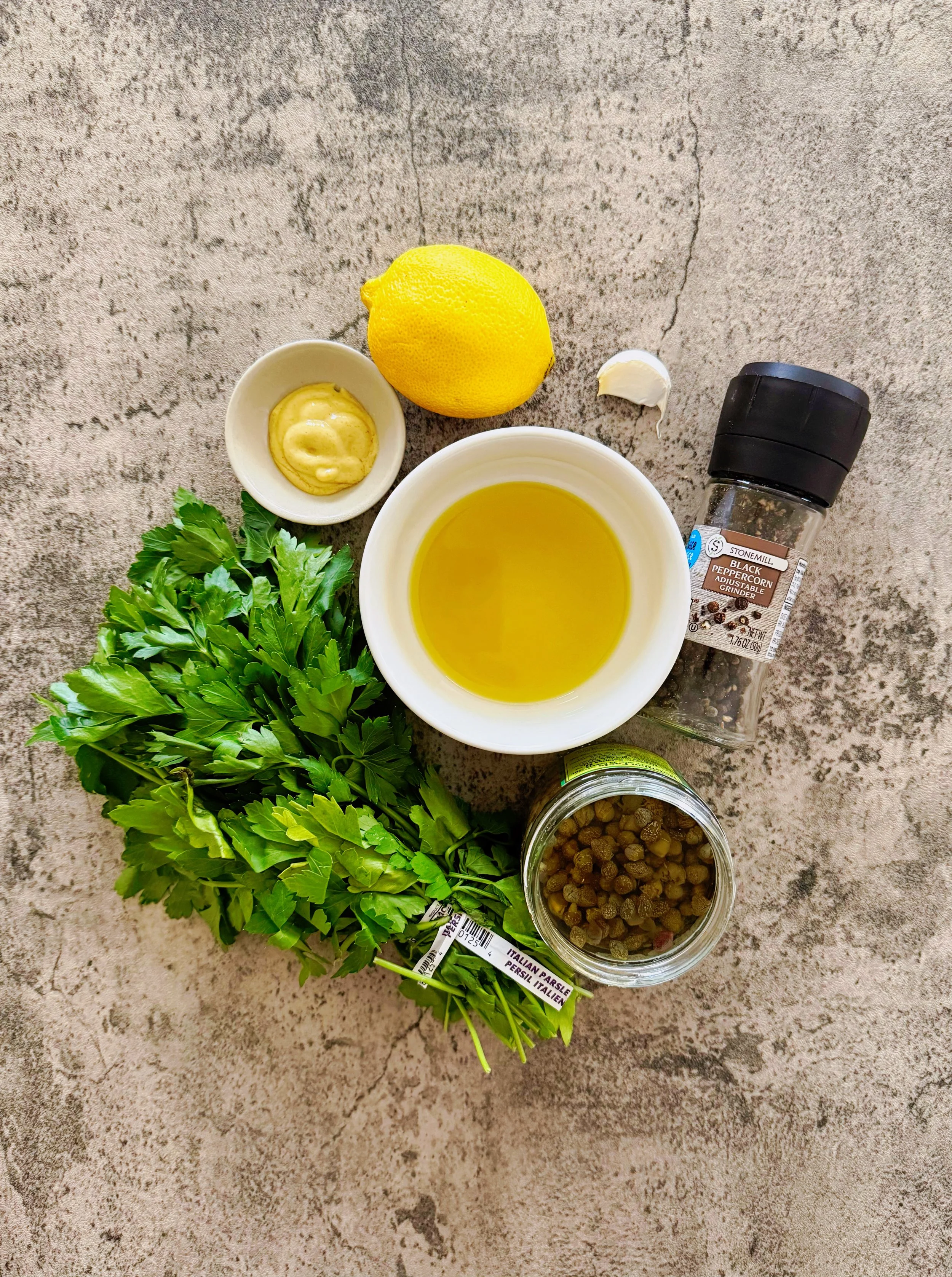
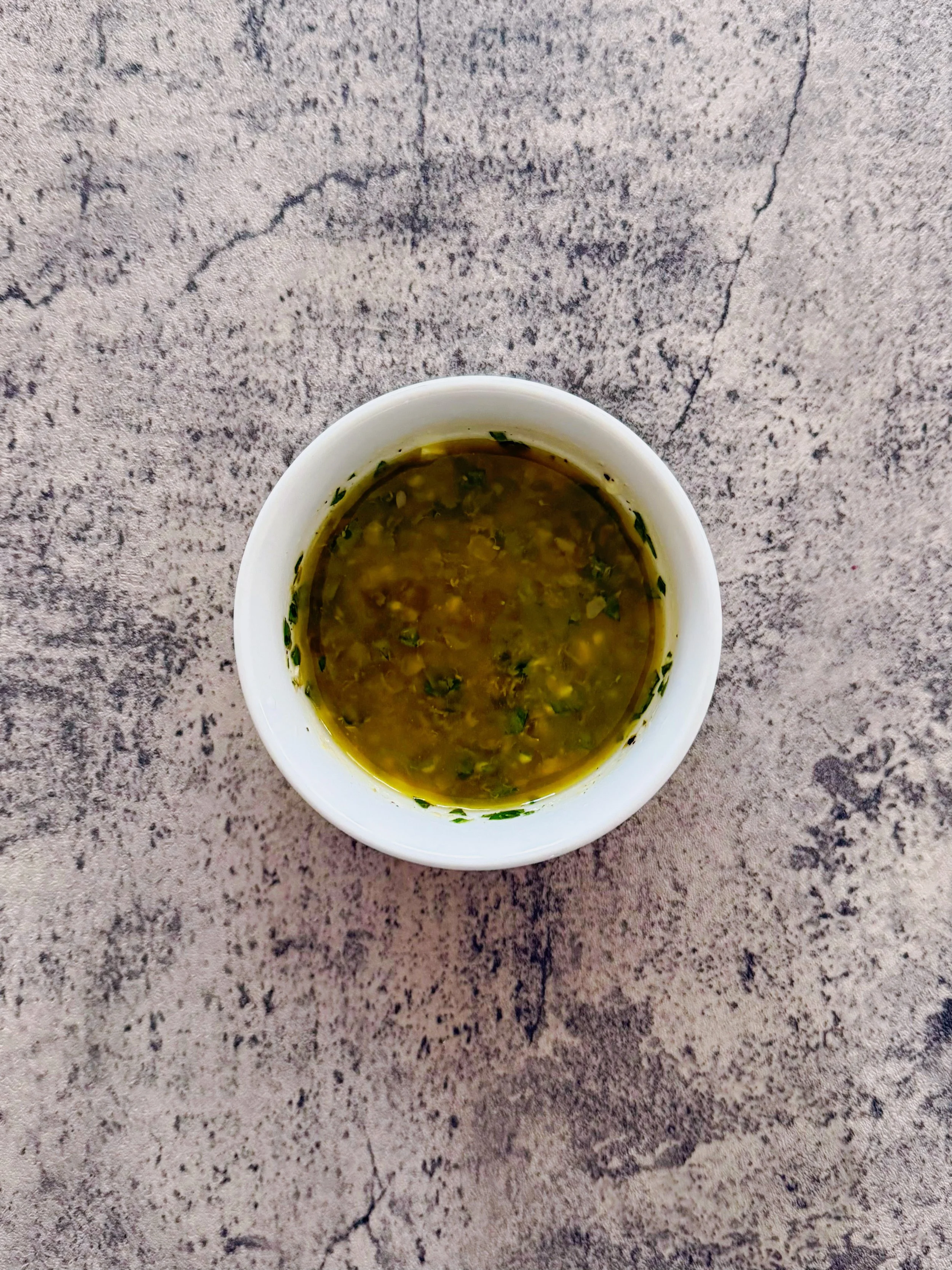
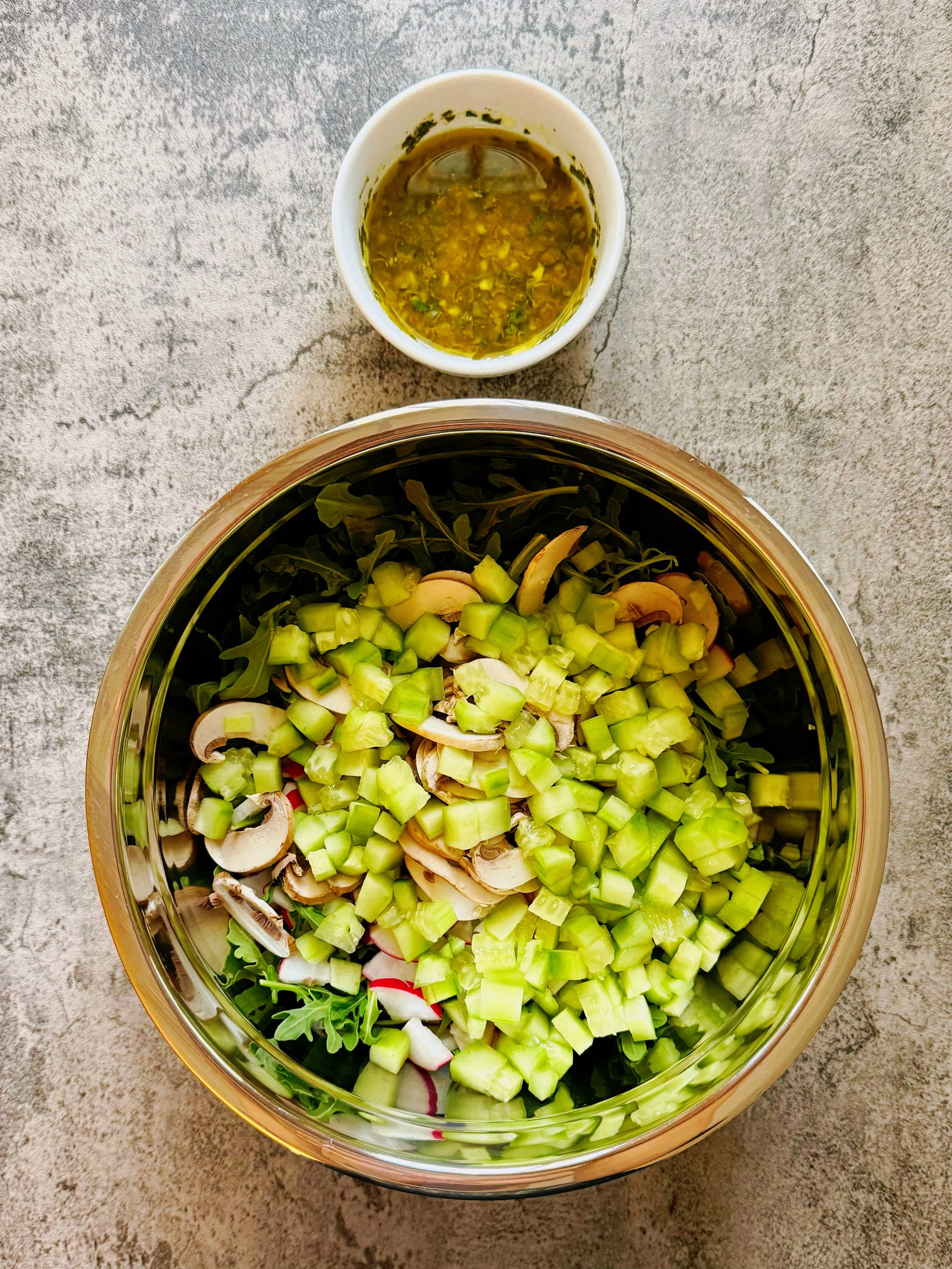
Prepare the dressing. In a small bowl whisk together 3 tbsp extra virgin olive oil, 2 tbsp capers, 2 tbsp flat leaf parsley, minced garlic, 1 tsp Dijon mustard, and juice of 1 lemon. Mix until uniform and set aside.
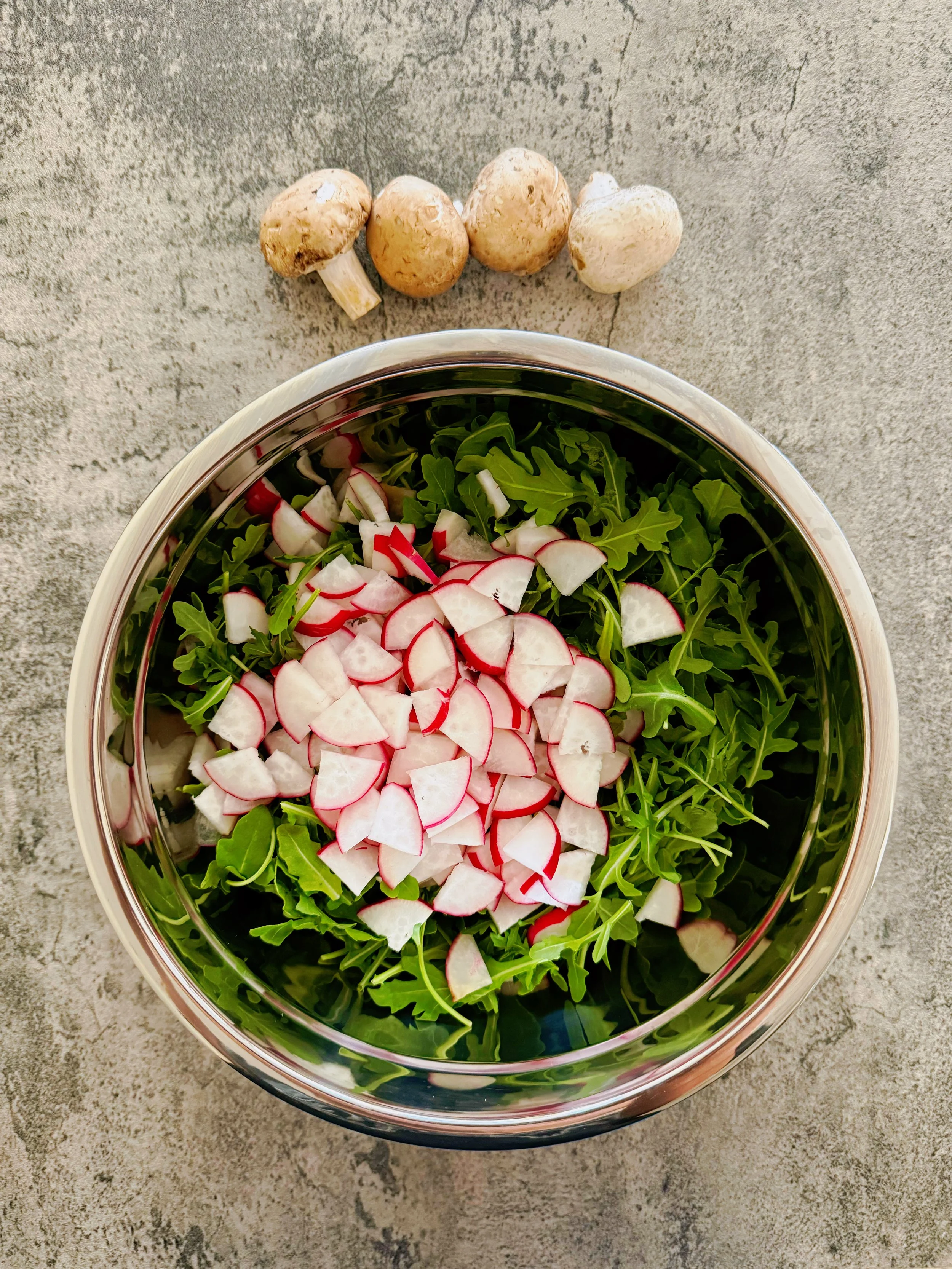
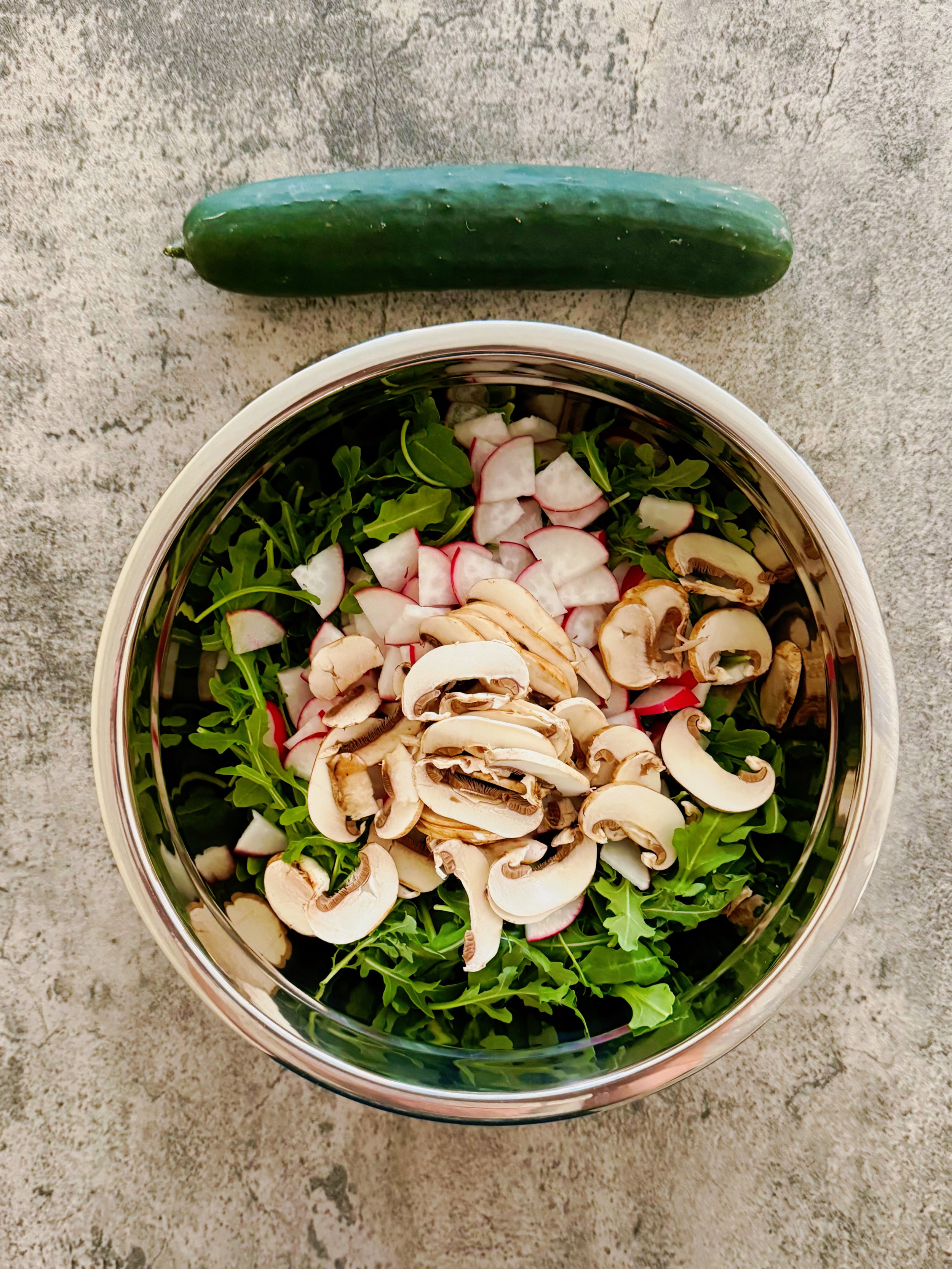
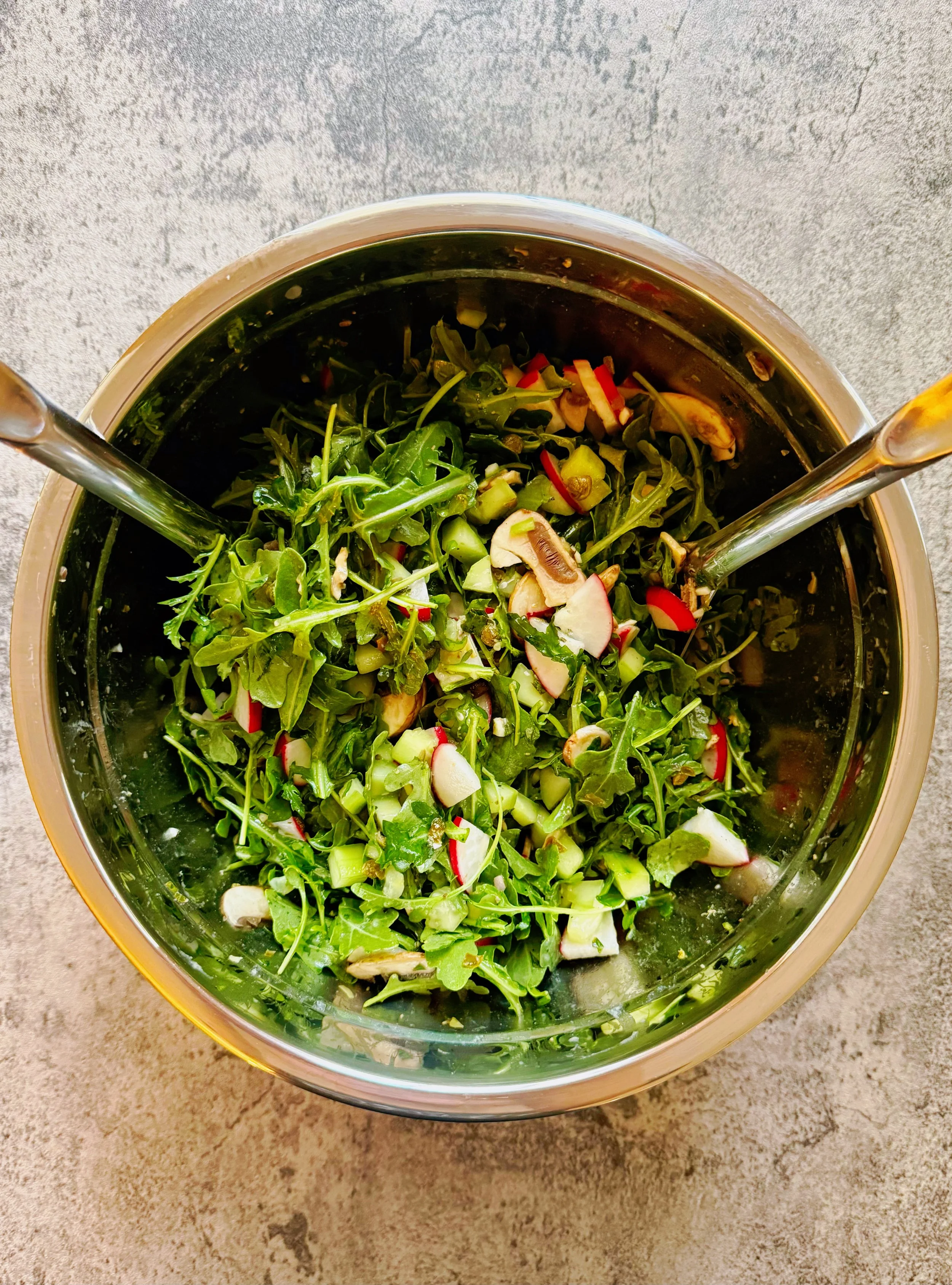
Prepare the salad. In a large bowl combine arugula, sliced radishes, baby bella mushrooms, and chopped cucumber. Set aside.
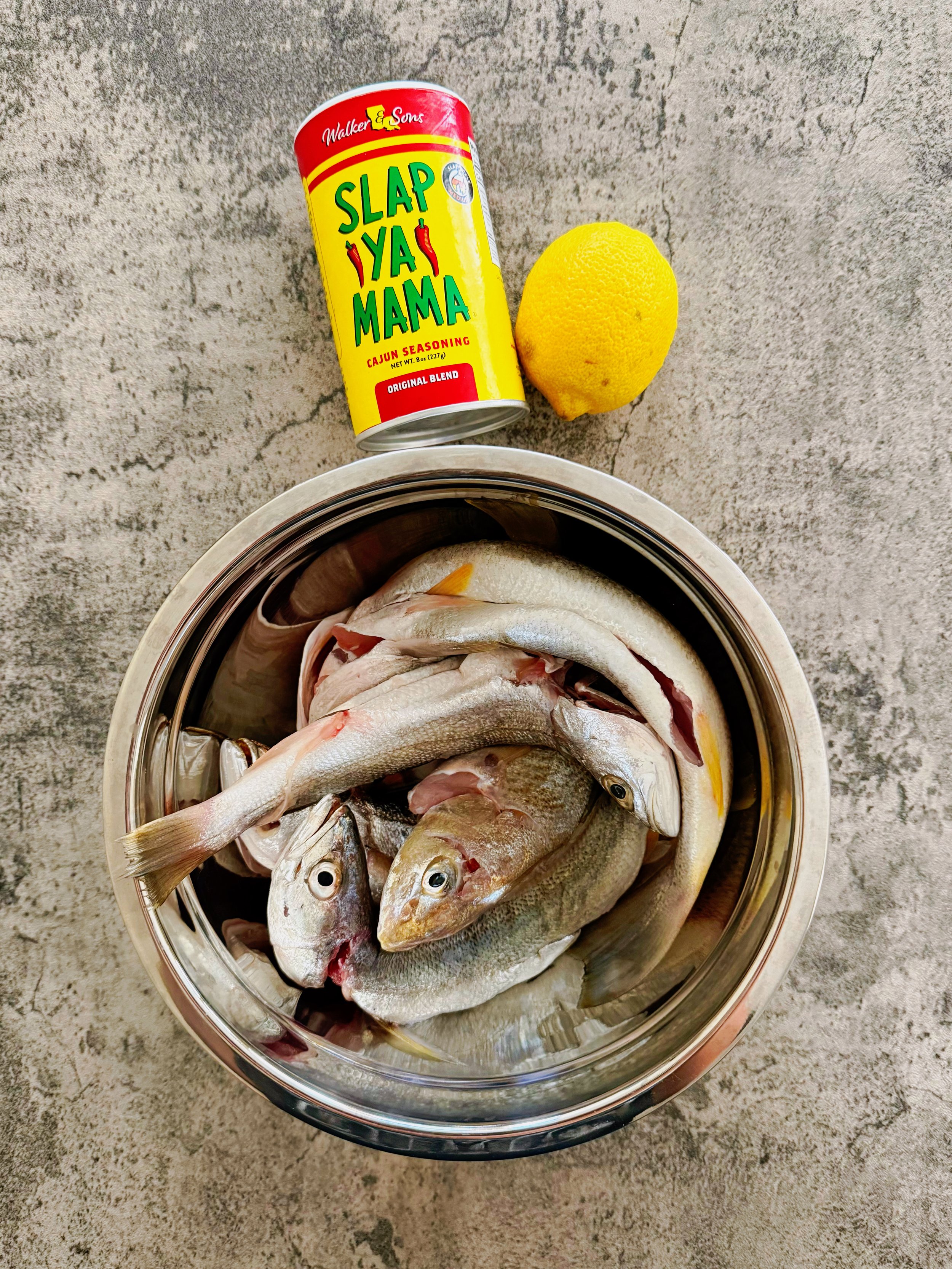
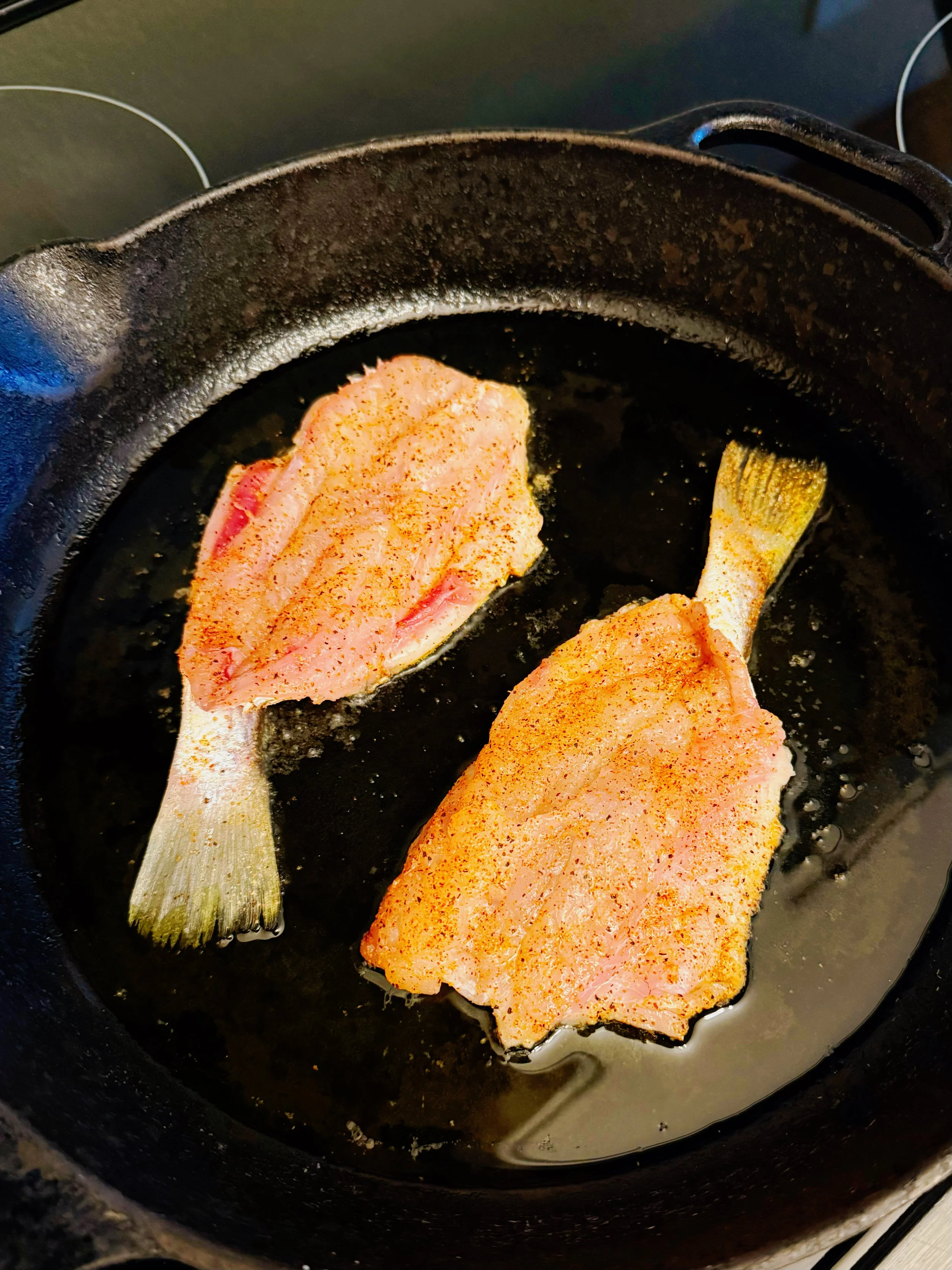
Season the prepared fish with Slap Ya Mama seasoning to taste, then fry in olive oil on a cast iron skillet over medium heat until golden brown. Once done, remove from heat and squeeze lemon juice on top.
Toss the salad with the prepared dressing.
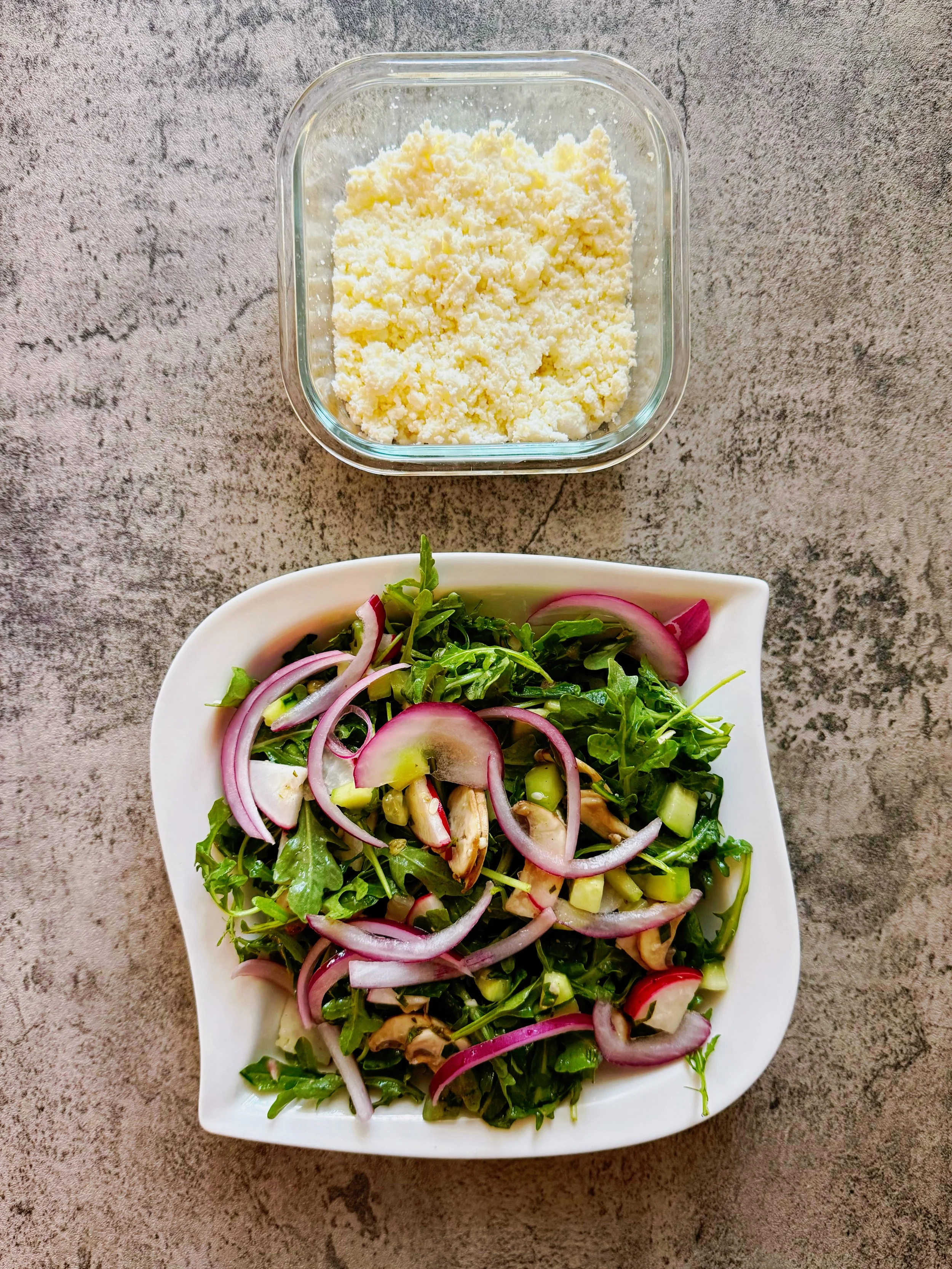
Arrange salad on serving plates, top with the pickled onions and queso fresco crumbles, then place the crispy fried fish on top.
Tips
Pat the fish dry before seasoning it so it browns instead of steaming.
Don’t overcrowd the skillet, fry in batches if needed to keep the fish crispy.
Taste the dressing before tossing the salad and adjust the lemon or Dijon if needed.
Use firm white fish.
Let the fish rest for a few minutes after frying to let the juices redistribute.
Freezer habit every cook should try
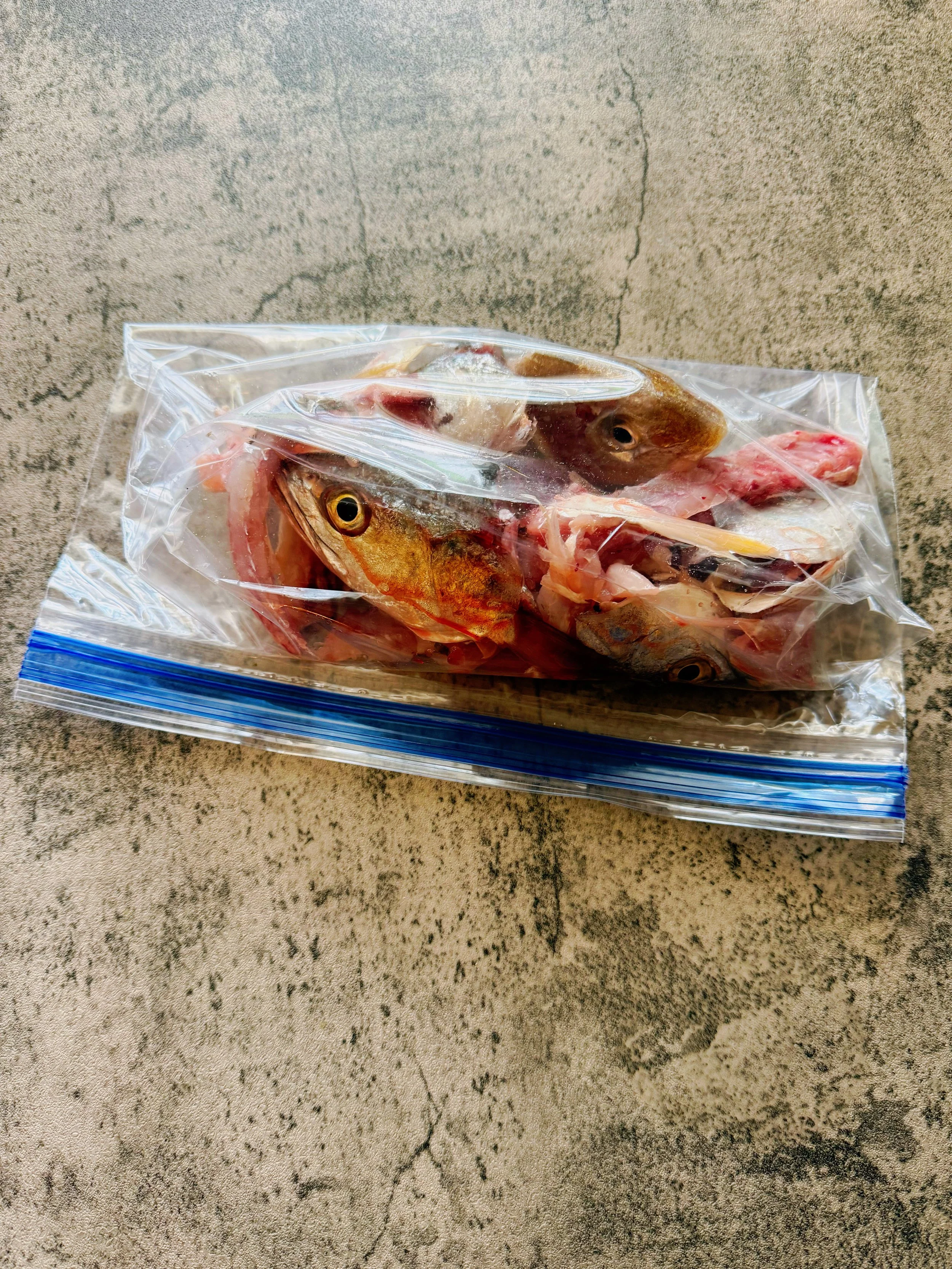
One freezer habit I swear by is keeping separate scrap bags for homemade stock. Fish heads and bones go in one bag, vegetable scraps in another, and chicken or beef bones each get their own. Once the bag is full they becomes the base for a stock that’s far more flavorful than you’d get from a carton.