chicken with baked brie and peaches
This is the kind of summer dinner that feels accidentally impressive without being complicated. Crispy herb roasted chicken, warm baked Brie, sweet roasted peaches, and a sharp arugula salad all balance each other out in the best way. The peaches turn jammy in the oven, the Brie gets soft and rich, and the lemony Dijon dressing cuts through everything so the plate never feels too heavy. It’s fresh, savory, a little sweet, and exactly the kind of meal that works when you want something comforting that still tastes like summer.
What is Brie?
Brie is a soft French cheese made from cows milk known for its creamy center and edible white rind. It has a mild, buttery flavor with earthy notes from the bloomy rind which is created using a specific mold culture during the aging process. It comes from the Brie region east of Paris, especially around Meaux and Melun where the most famous traditional versions are still made. Brie de Meaux traces its roots all the way back to the Middle Ages. Today Brie is made all over the world but traditional Brie de Meaux and Brie de Melun are protected styles with specific regional and production standards.
What is the difference between Brie and Camembert?
Brie and Camembert look almost identical at first which is why many people think they’re basically the same cheese with different branding. Brie is milder, creamier, and more buttery. The flavor is soft and slightly mushroomy, and easy to pair with fruits and herbs without overpowering them. Camembert is smaller, denser, and much more intense. Historically the two cheeses also come from different regions of France. Brie comes from Brie region near Paris while Camembert comes from Normandy, a region known for dairy farming. Brie tends to melt silkier while Camembert becomes thicker and more pungent as it warms up. That’s why Brie is often used in recipes like baked Brie with fruit while Camembert is more likely to be eaten with crusty bread and stronger savory flavors.
Let’s talk about cast iron
Cast iron cookware has been around for centuries. Versions of cast iron pots and pans were used in China as early as the Han dynasty, and by the 1700s cast iron cookware had become common across Europe and early America. Families cooked with the same pans for generations because they were expensive to replace and almost impossible to wear out. One of the biggest reasons cast iron stayed popular is heat retention. Once the pan gets hot it stays hot, which creates better browning, deeper caramelization, and more even cooking. A properly seasoned skillet develops a natural nonstick surface over time from layers of polymerized oil baked into the metal. In other words the pan slowly builds a coating out of years of cooking fat and heat. It’s one of the few kitchen tools that gets better with use instead of worse.
How to make chicken with baked brie and peaches?
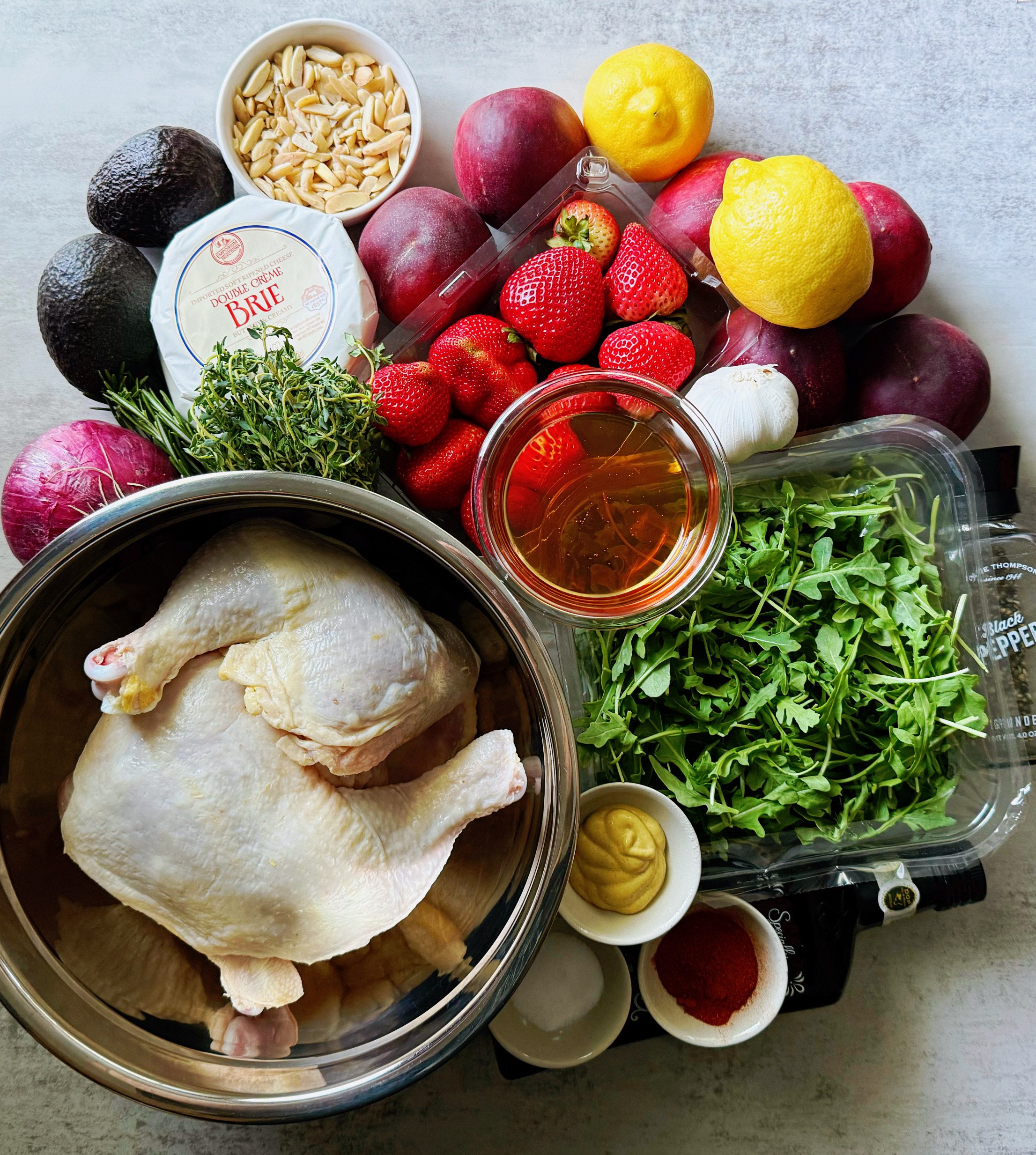
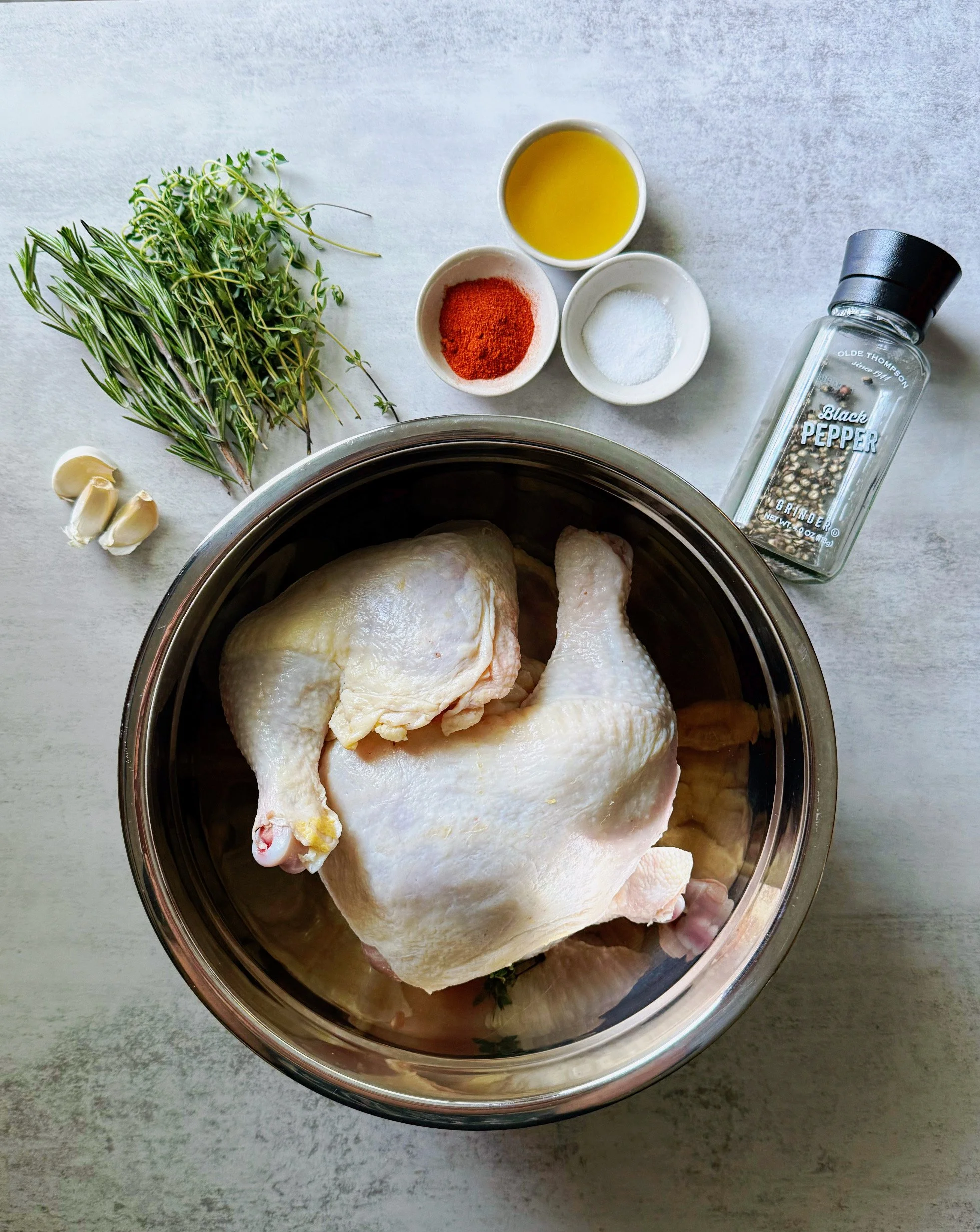
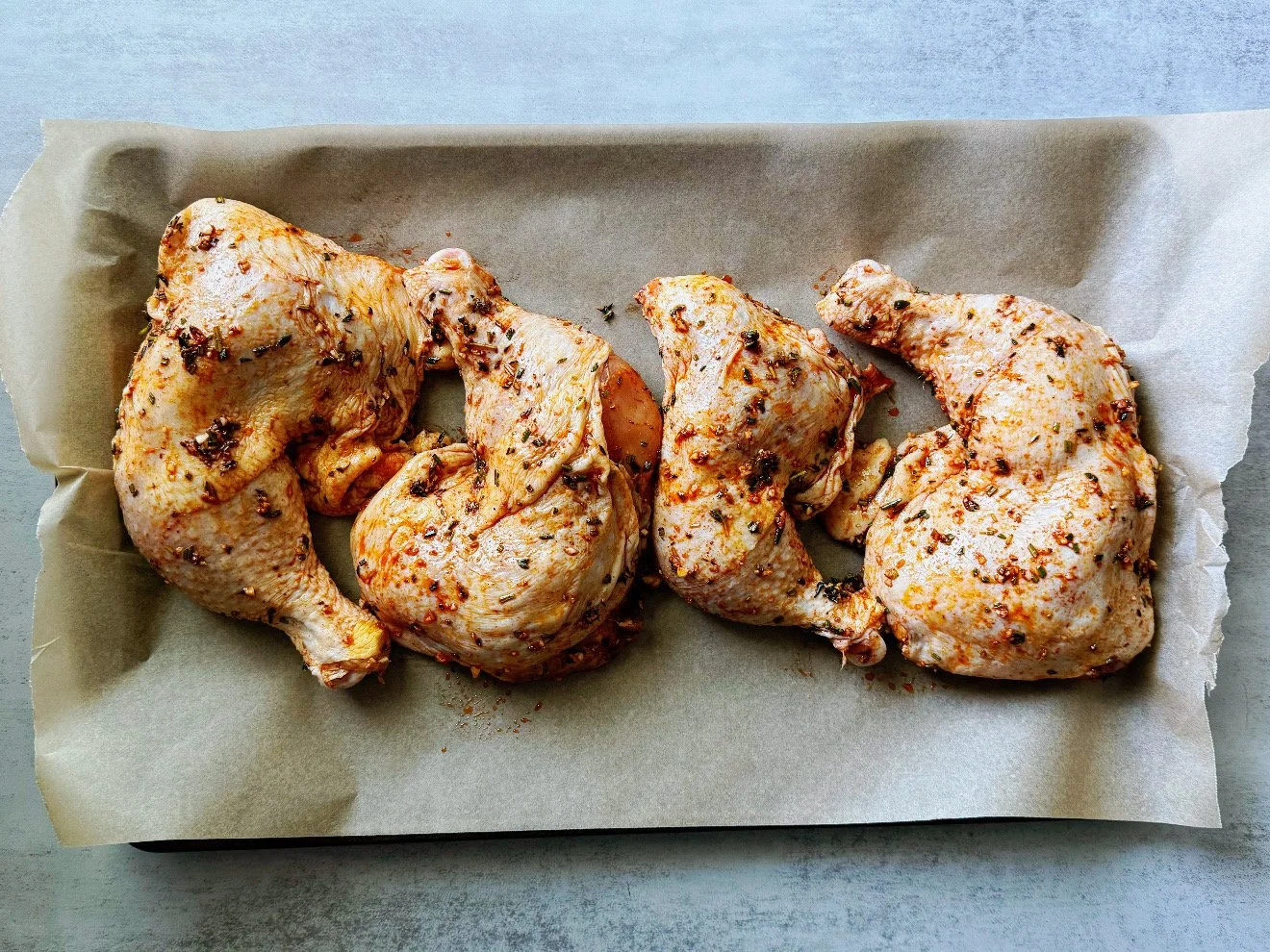
Line a sheet pan with parchment paper. Marinate the chicken leg quarters with 2 tbsp olive oil, 1 tsp salt, 1 tsp paprika, 2 tbsp thyme, 1 1/2 tbsp rosemary, 3 garlic cloves, and 1/2 tsp pepper. Arrange the leg quarters on the sheet pan and preheat the oven to 400f.
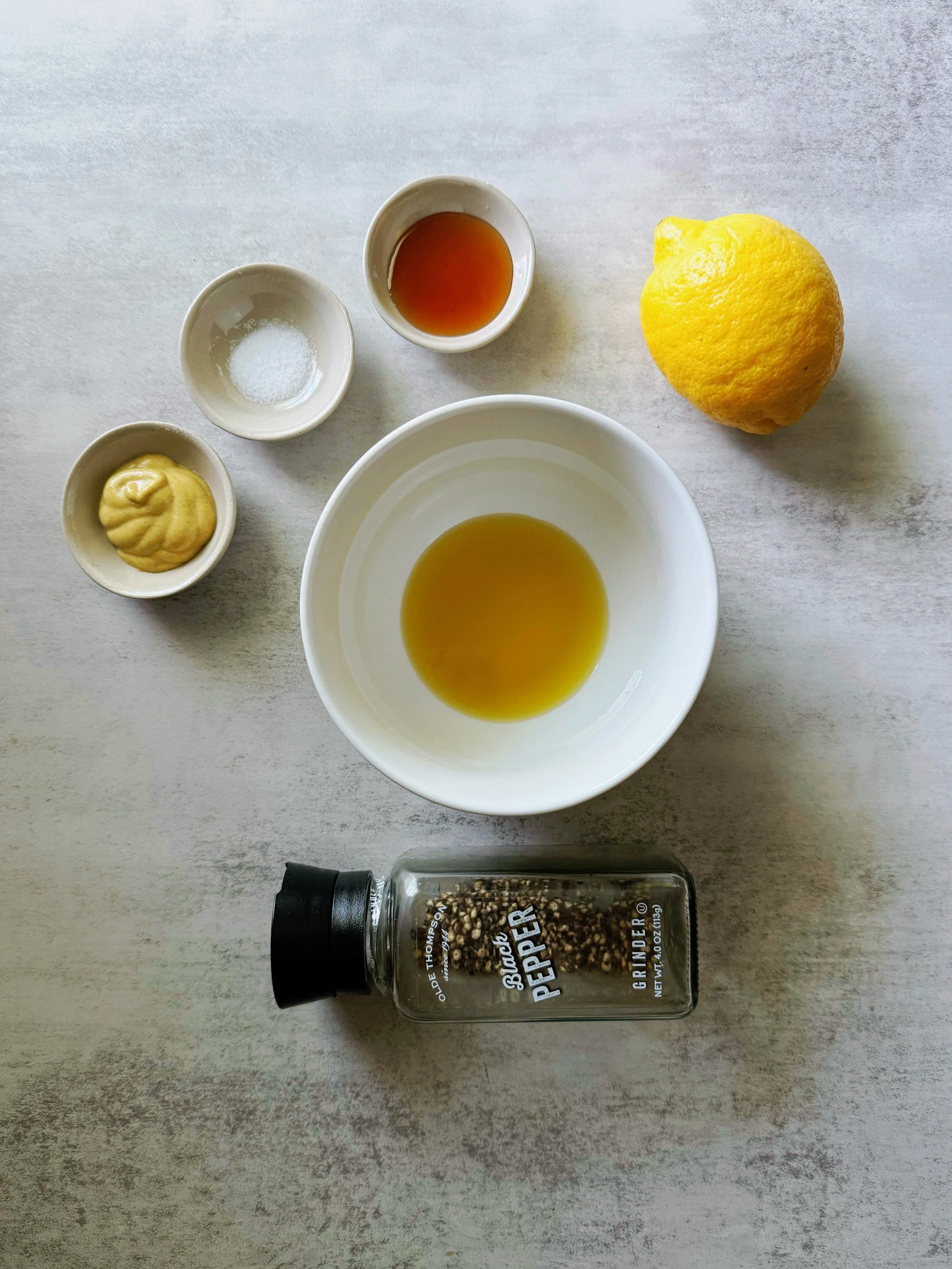
In a small bowl whisk together 3 tbsp extra virgin olive oil, juice of 1 lemon, 1 tbsp honey, 1 1/2 tbsp Dijon mustard, 1/4 tsp salt, and 1/8 tsp pepper. Taste and adjust seasoning if needed.
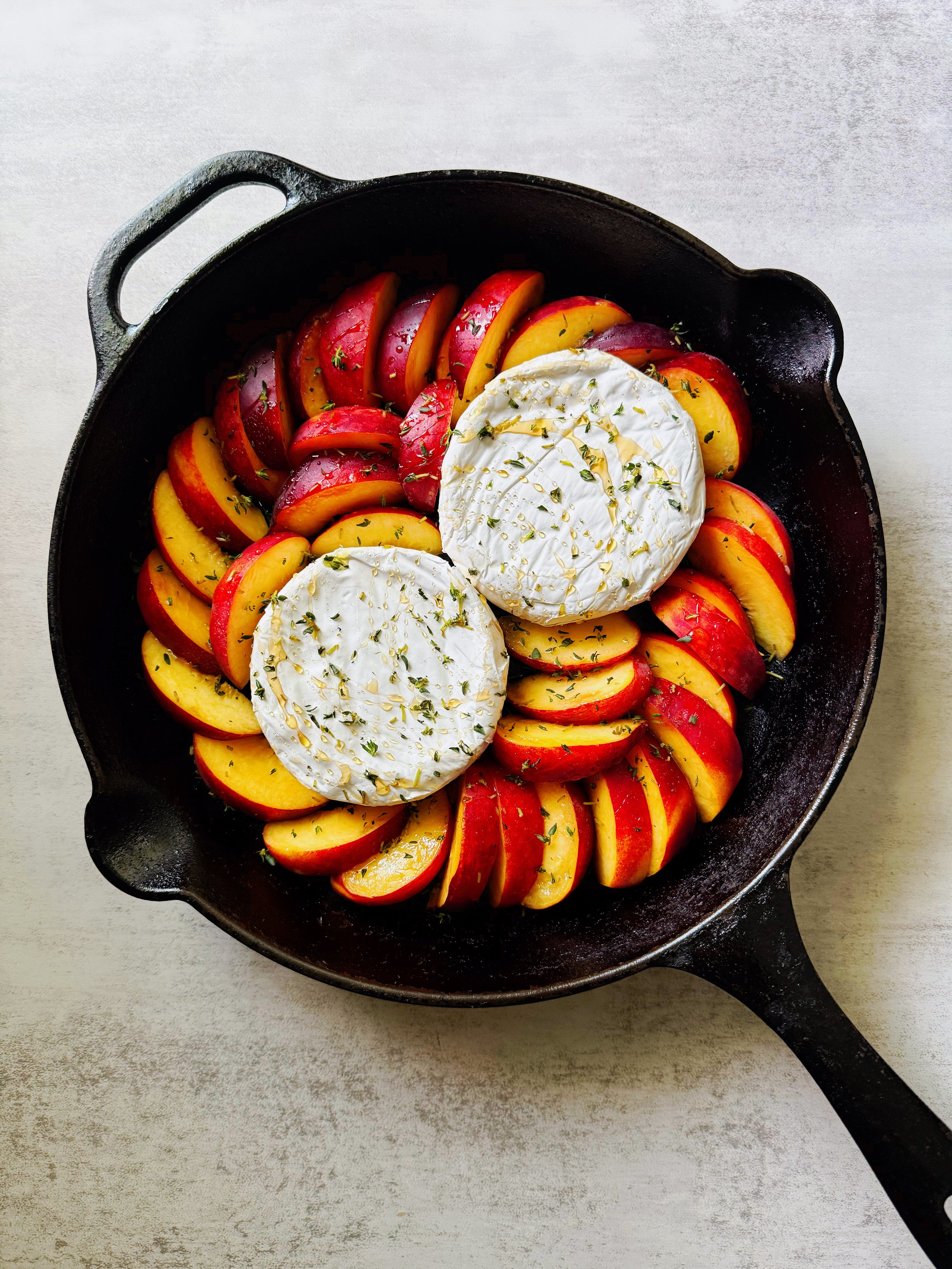
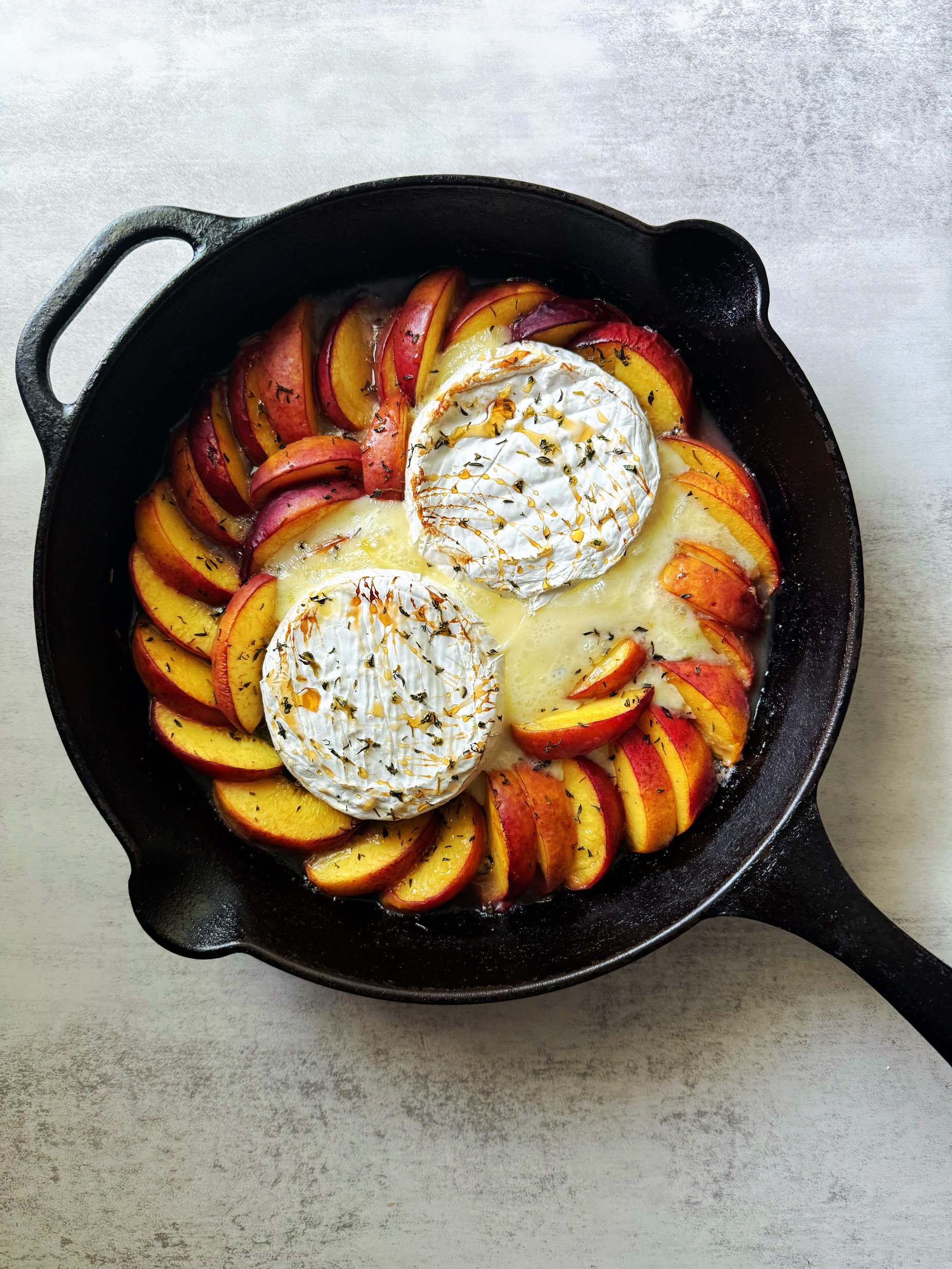
Place the Brie wheels in a cast iron skillet and arrange the peach wedges around them. Drizzle 1 tbsp honey, then sprinkle with 1 tbsp thyme and a pinch of salt.
Bake the chicken for about 70-75 minutes or until internal temperature reaches 165f and the skin is golden brown. When the chicken has about 20 minutes left place the brie and peaches in the oven.
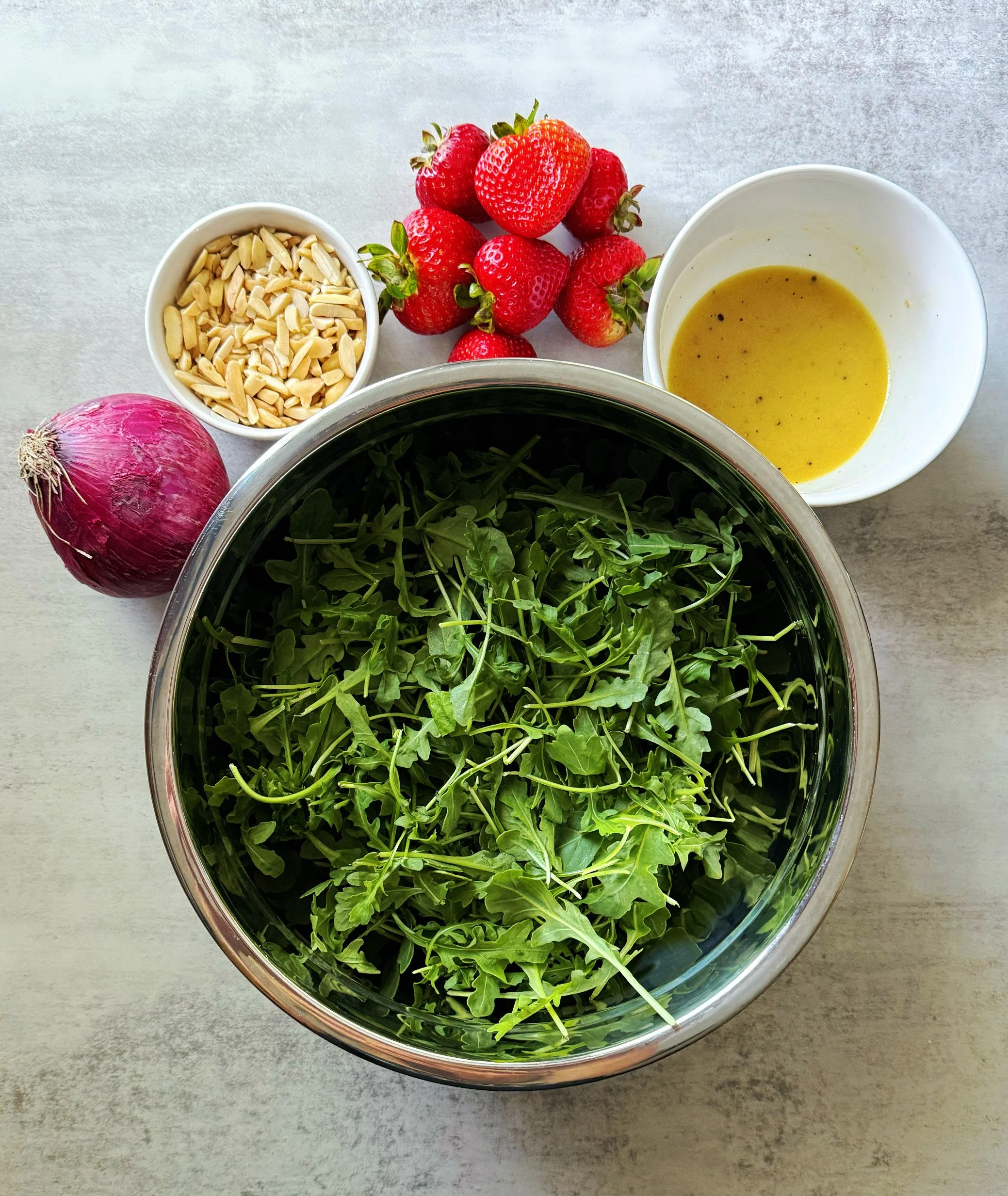
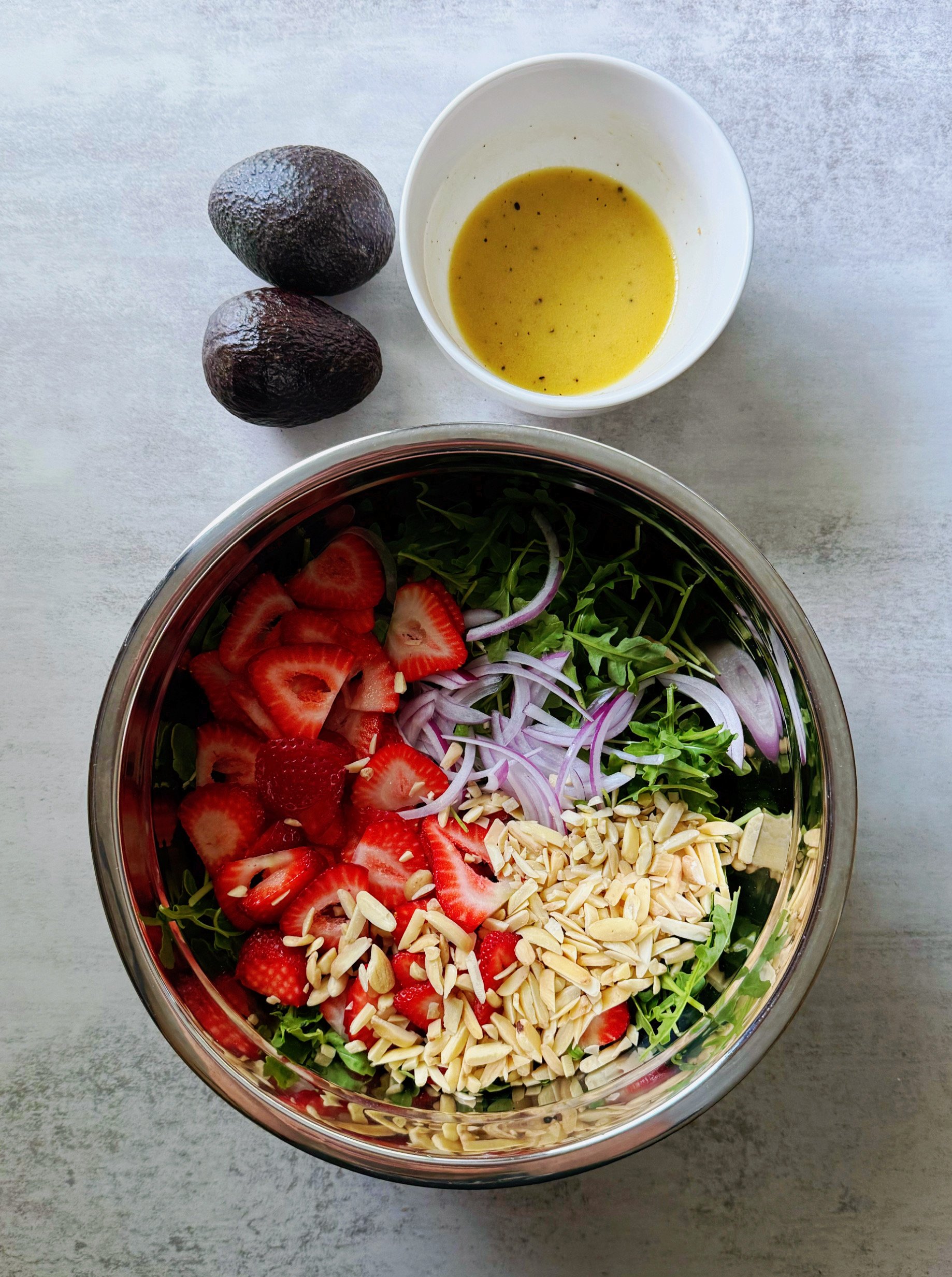
Meanwhile prepare the salad. In a large bowl combine 4 cups arugula, thinly sliced red onion, 6-8 sliced strawberries, 1/2 cup sliced almonds, and prepared dressing. Add the avocado slices at the end.
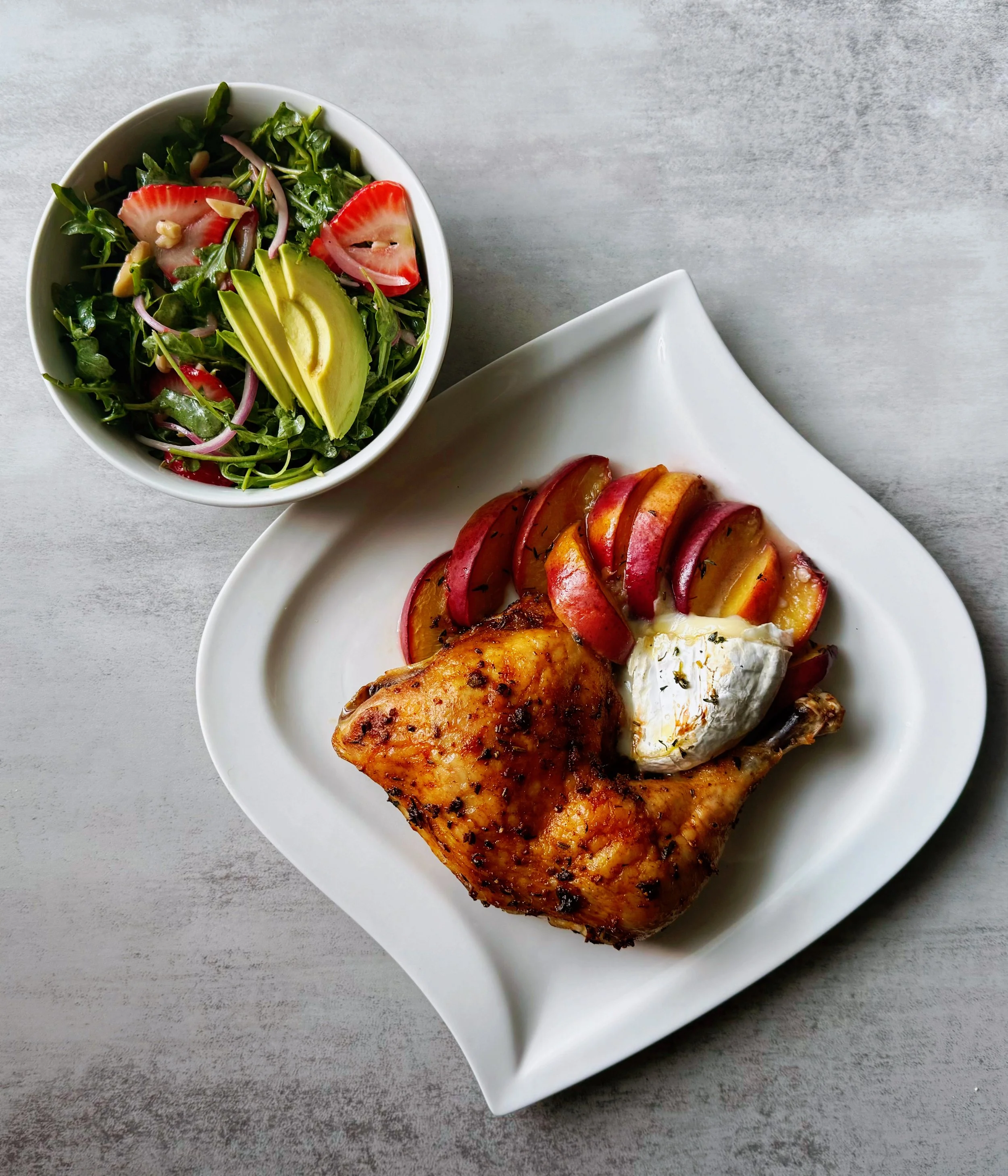
Once the chicken is done baking let it rest 5-7 minutes before serving. Plate the chicken leg quarters, baked brie and peaches, and salad. Serve immediately.
Tips
Use ripe but still slightly firm peaches so they soften in the oven without turning mushy.
Pat the chicken dry before seasoning. Dry skin helps it roast up golden.
Room temperature Brie melts more evenly than cold Brie.