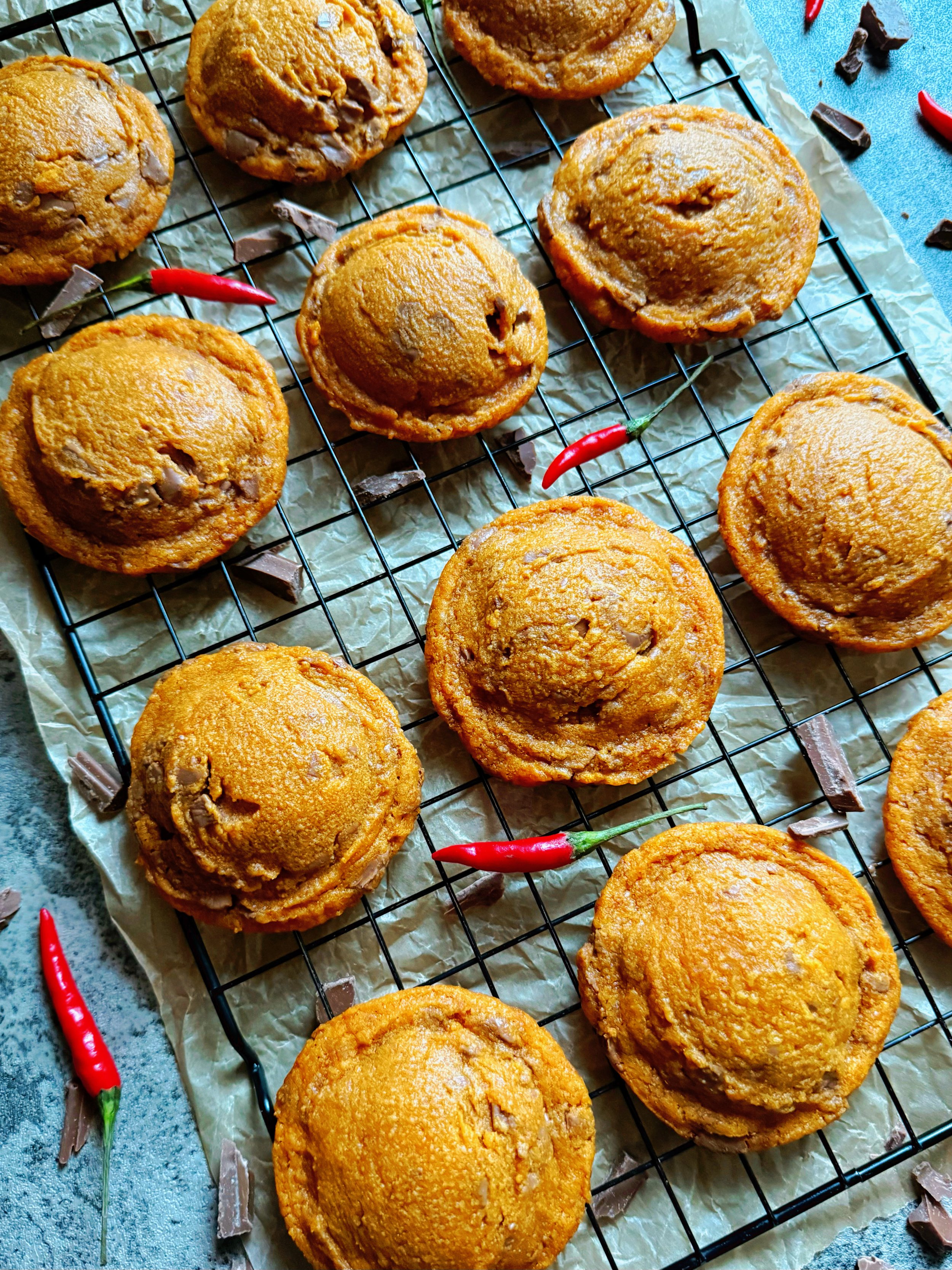
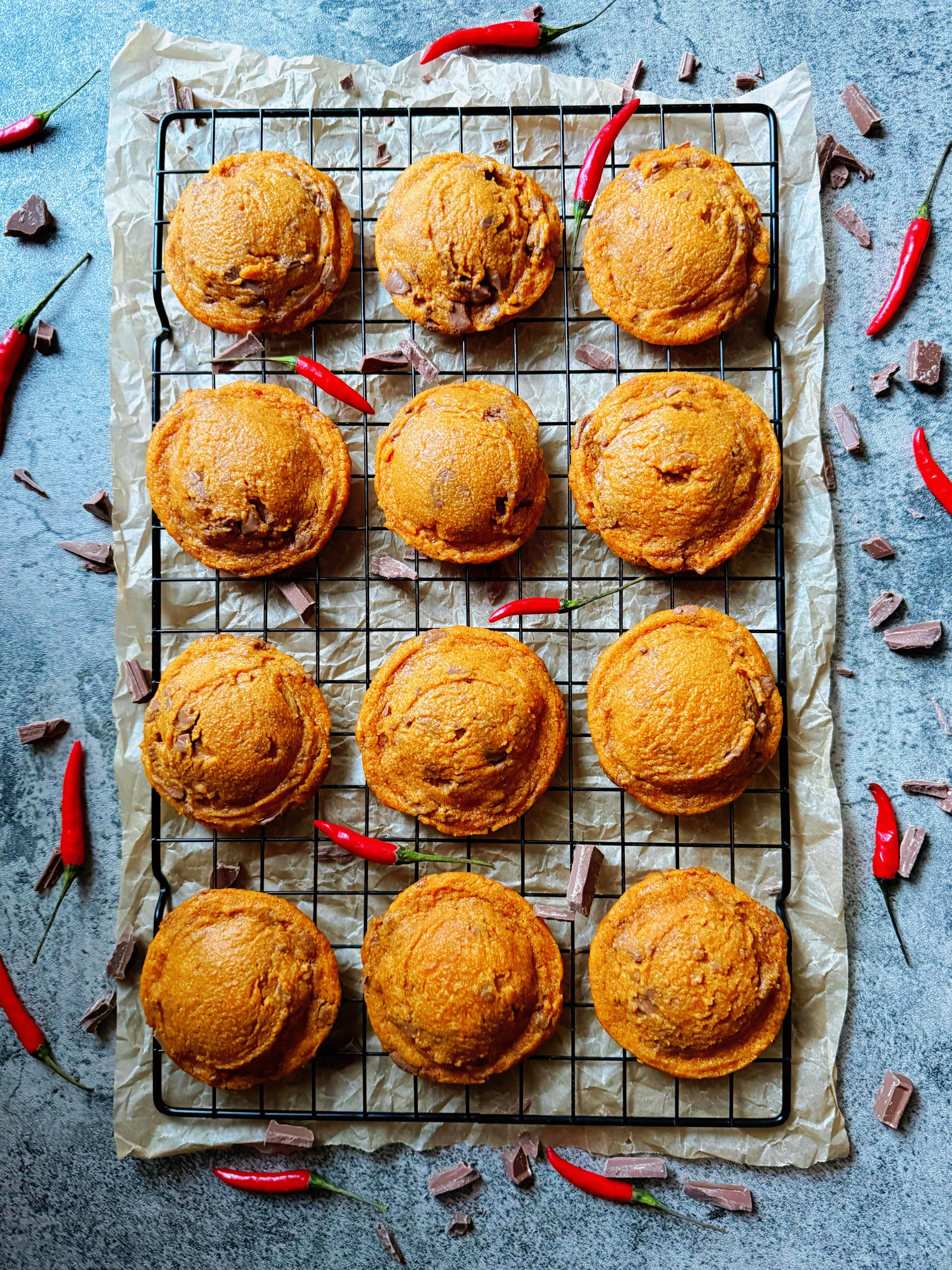
gochujang chocolate chip cookies
At first glance these cookies look like classic chocolate chip cookies but the addition of gochujang adds subtle layer of heat and fermented depth that makes them far more interesting. The butter and brown sugar create a soft, chewy cookie with rich caramel notes while milk chocolate keeps the flavor mellow and nostalgic . You don’t taste ‘spicy’ in the obvious sense, instead the gochujang lingers quietly in the background adding just enough warmth.
What is gochujang?
Gochujang is a Korean fermented chili paste made from red pepper powder, glutinous rice, fermented soybeans, and salt. Korea had a long tradition of fermenting soybean pastes before chili peppers arrived from the Americas in the 16th century through global trade. Over time peppers were incorporated into these older techniques creating the sweet,savory, and mildly spicy paste known today. By the 18th century gochujang was a well established pantry staple, traditionally fermented for months in earthenware jars. Its deep umami and gentle heat have made it one of the defining ingredients of Korean cuisine.
Pairing chocolate and chili
The pairing of chocolate and chili dates back thousands of years. Ancient civilizations like the Maya civilization and the Aztec civilization prepared cacao as a bitter, frothy drink flavored with chili peppers and other spices. These beverages were prized for their stimulating qualities and were often reserved for rituals the elite. When cacao was introduced to Europe in the 16th century sugar transformed chocolate into a sweeter treat, but the combination of chocolate and spice endured. These cookies build on that long history, using gochujang to add gentle heat and fermented depth to a familiar chocolate chip cookie.
What is the history of cookies?
Cookies have been around for over a thousand years but they likely began as something much more practical than indulgent. Early versions appeared in Persia after sugar became more widely available. Bakers would place small spoonfuls of sweetened dough into the oven to test the temperature before committing to larger cakes and breads. If the dough baked properly the oven was ready. As trade routes expanded these small sweets spread across the Middle East and into Europe where each region developed its own variations. The English called them biscuits, the Dutch used word koekje (meaning little cake), and that eventually became the English word “cookie”. By the time European settlers arrived in North America cookies were already a well established part of home baking. What began as an oven test evolved into one of the most adaptable desserts in the world.
How fermentation shapes flavor
Fermentation is one of the oldest ways humans have transformed food and much of what we now describe as depth and complexity begins with microbes. As beneficial bacteria and enzymes break down starches and proteins they create new compounds that add savory, tangy, and subtly sweet notes. The result is a flavor that tastes fuller and more layered than the original ingredients alone. In gochujang fermentation softens the sharpness of the chili and develops a deep umami character. Rather than making these cookies overly spicy it adds a faint savory edge that enhances the caramel notes of brown sugar and the richness of chocolate. It is a small ingredient but fermentation gives it the kind of complexity that makes familiar flavors taste more interesting.
How butter affects cookie texture?
Butter plays one of the biggest roles in determining cookie texture. Because it’s roughly 80% fat and 15-18% water it contributes both richness and structure. When butter is creamed with sugar it traps tiny air pockets that help cookies rise and bake into a lighter texture. The butter then melts in the oven, allowing the dough to spread. The temperature of the butter matters just as much as the amount. Room temperature butter creams properly and produces cookies that are thick, tender, and evenly textured. Melted butter creates denser, chewier cookies and often leads to more spread. In this recipe thoroughly creaming softened butter with sugar creates a cookie with crisp edges, a soft center, and a lighter crumb.
Why chilling cookie dough improves texture?
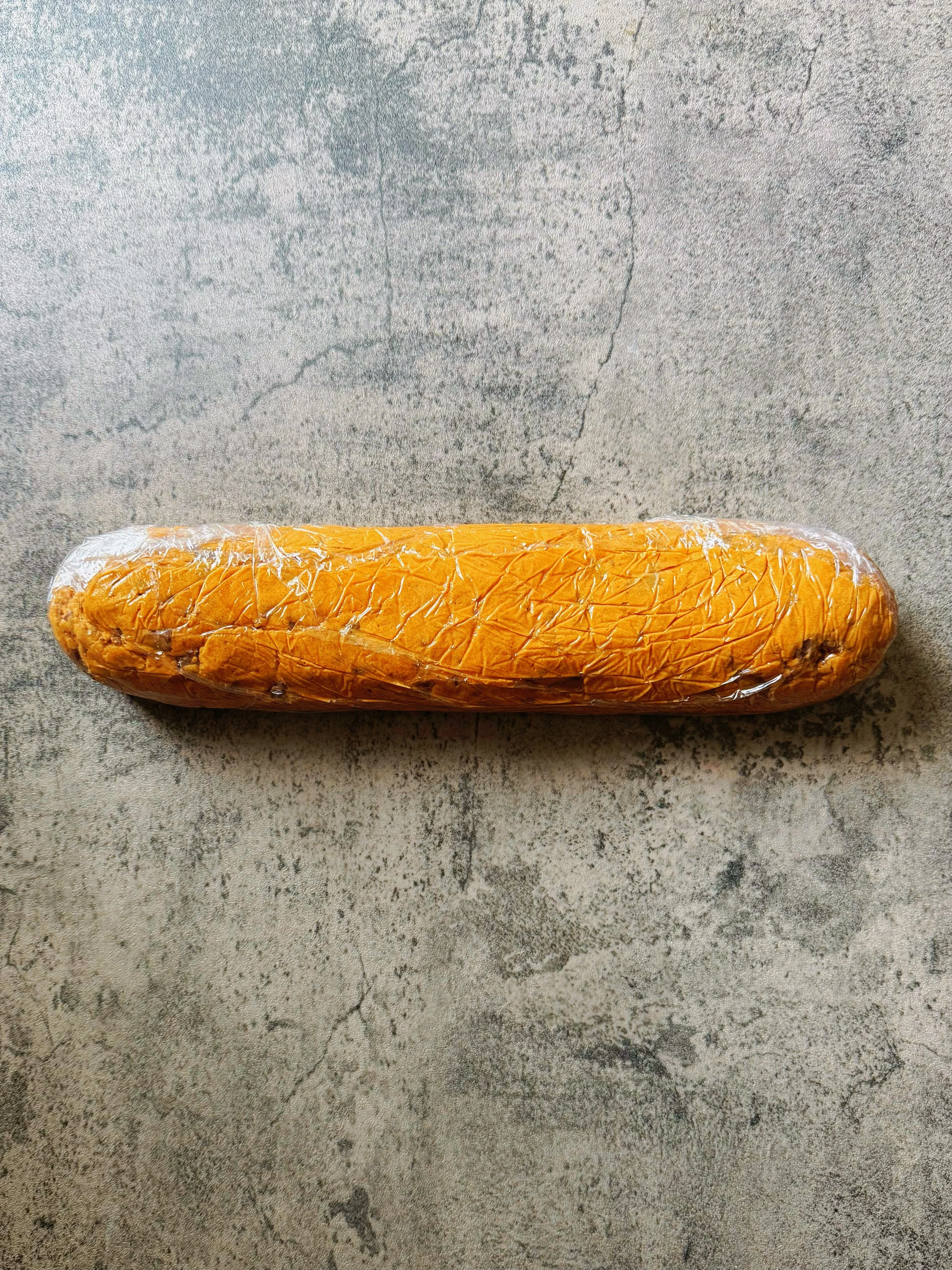
Chilling cookie dough gives the flour time to fully hydrate and allows the butter to firm up. This slows how quickly the cookies spread in the oven resulting in thicker cookies with softer centers and better defined edges. The rest also gives the ingredients time to meld. Brown sugar dissolves more completely, moisture distributes evenly, and the flavor becomes deeper and more balanced. In practical terms chilled dough produces cookies that bake more evenly and taste more developed than dough baked immediately after mixing.
How to make gochujang chocolate chip cookies?
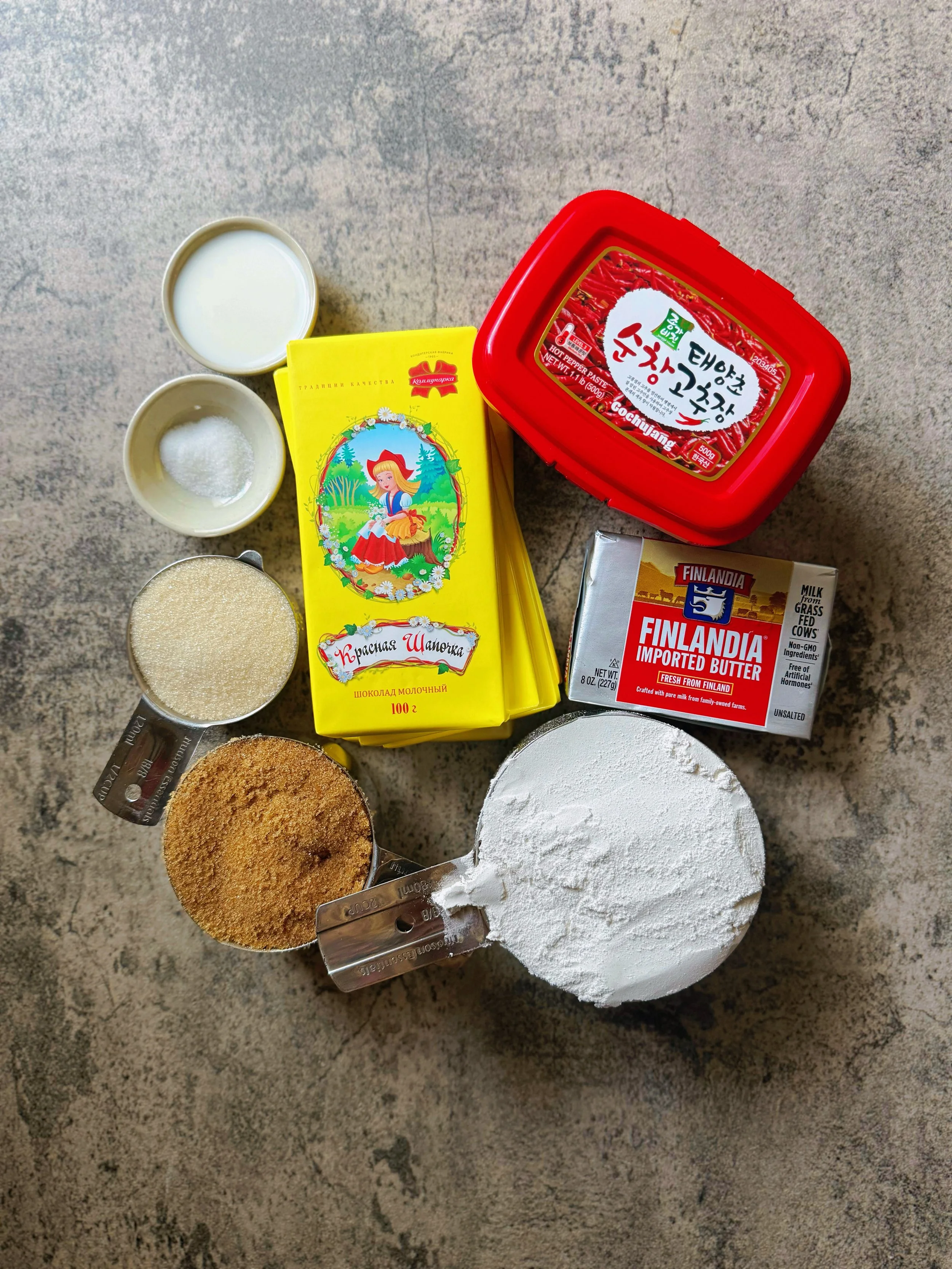
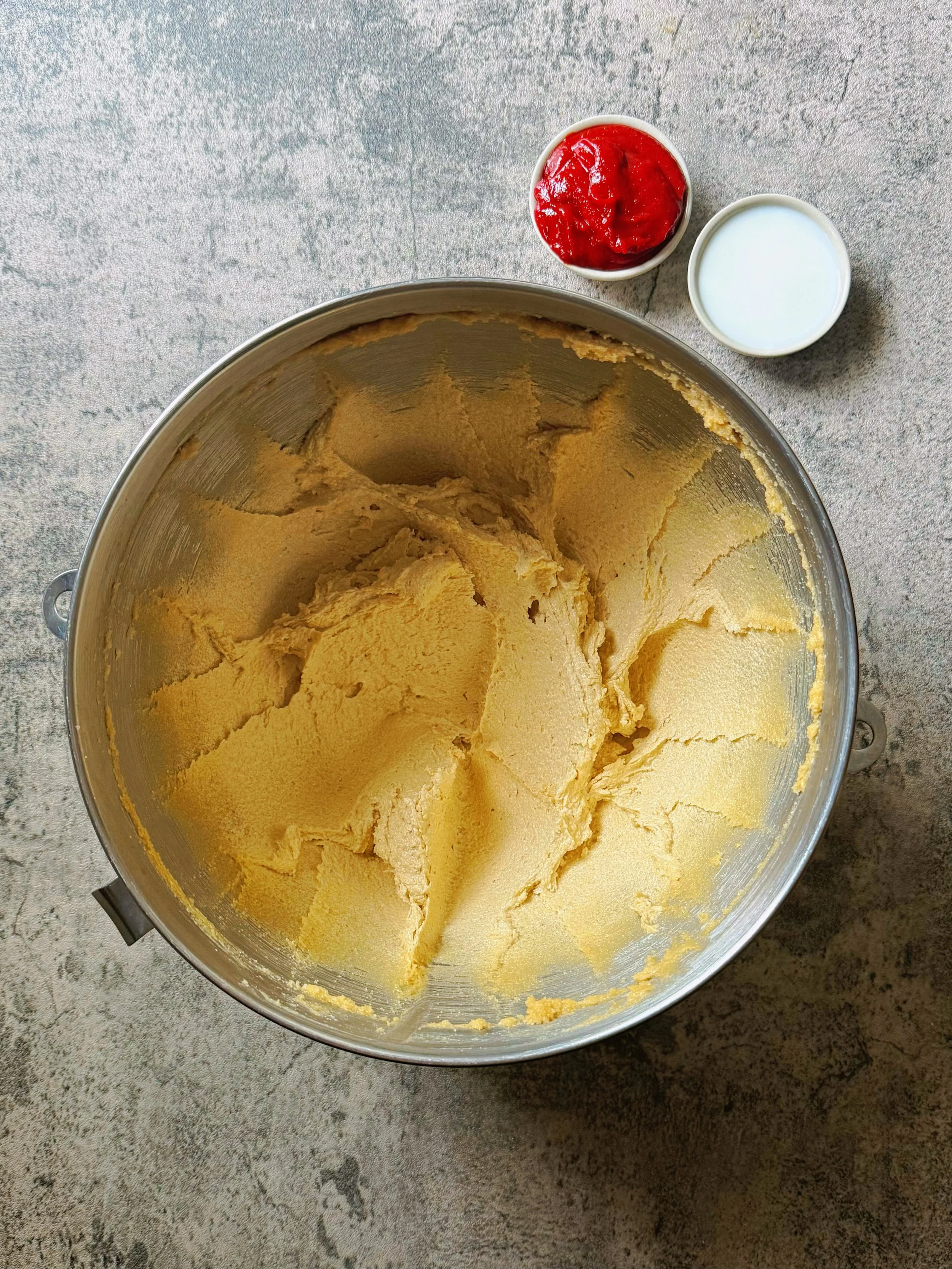
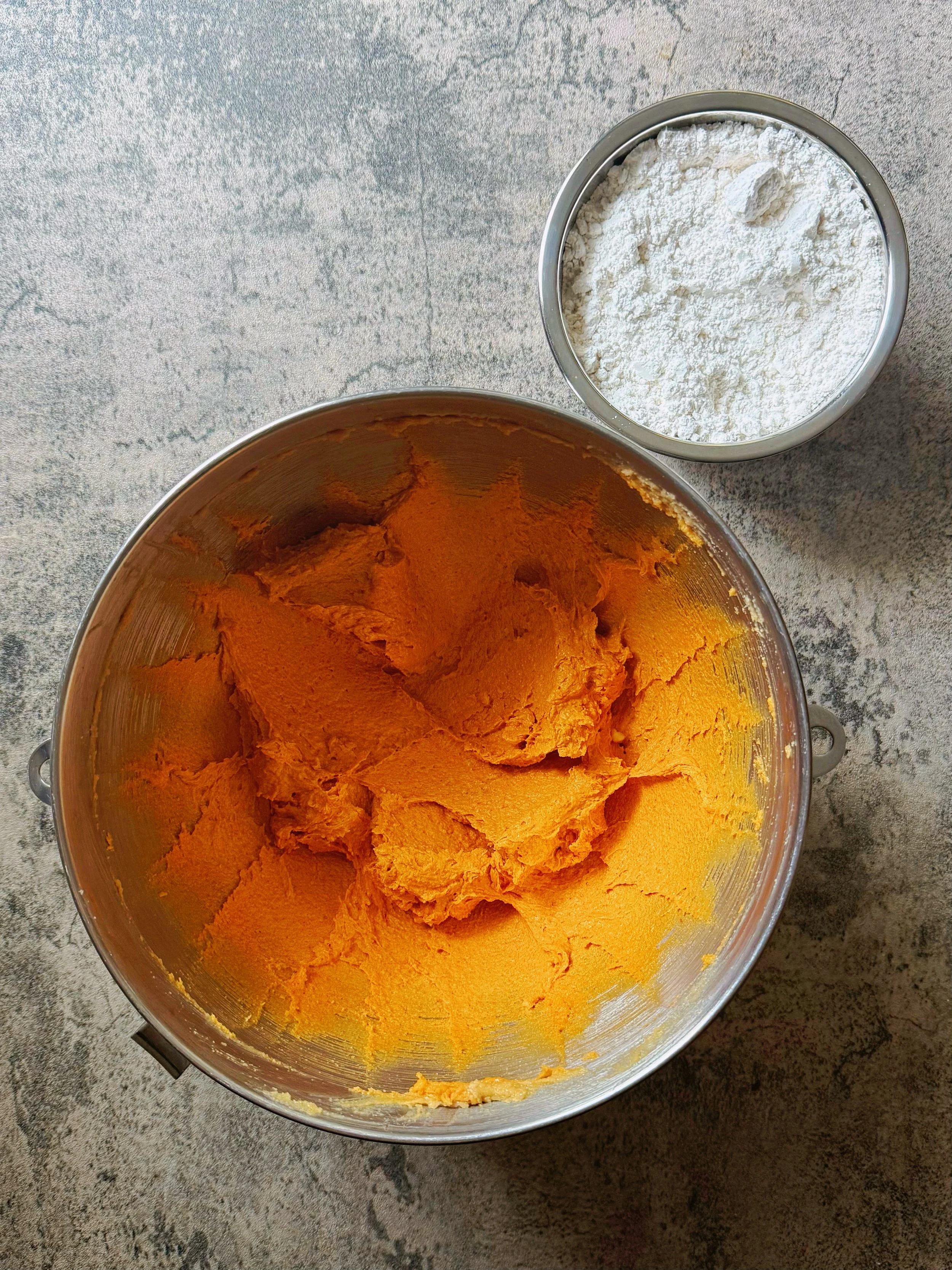
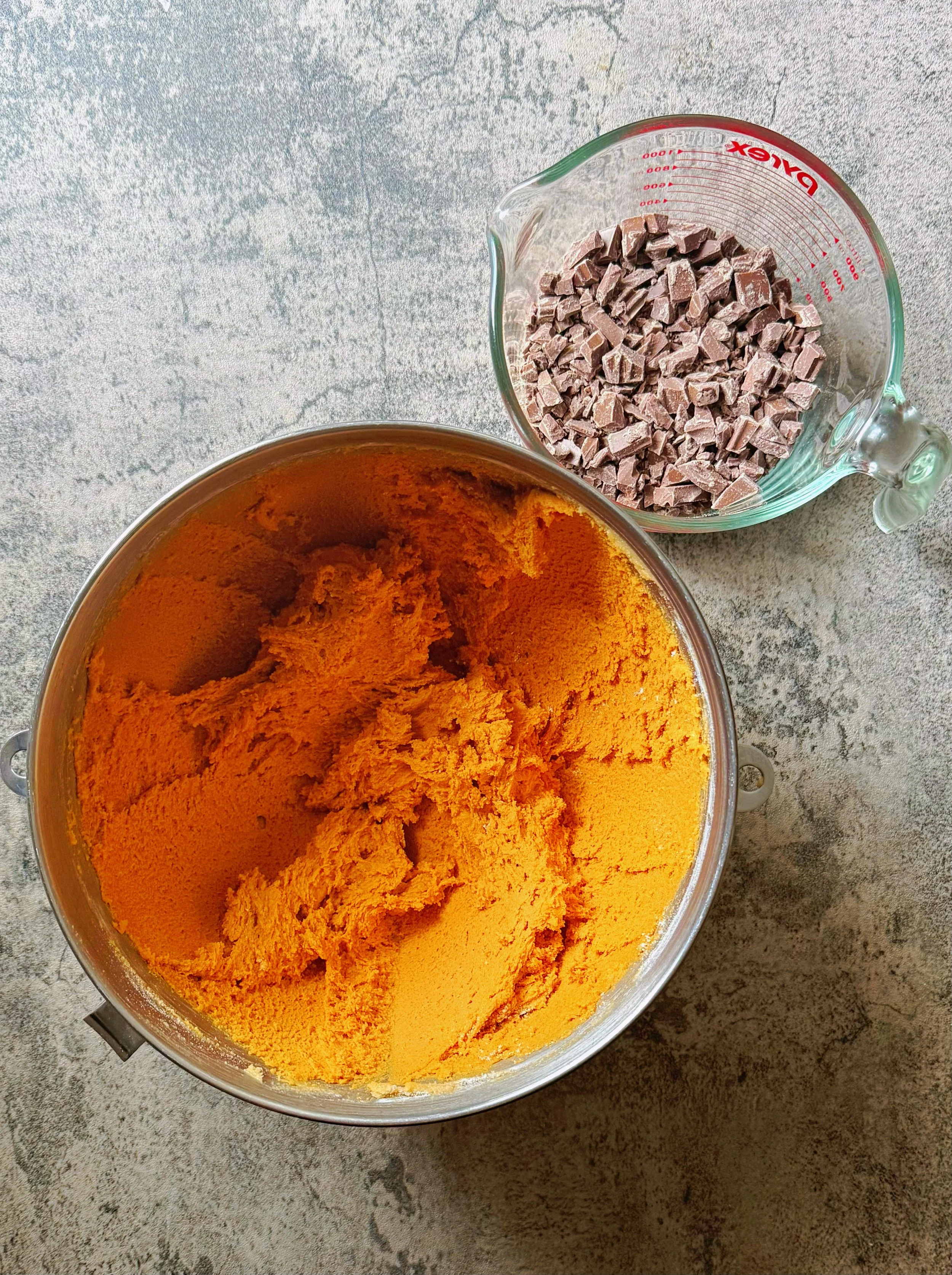
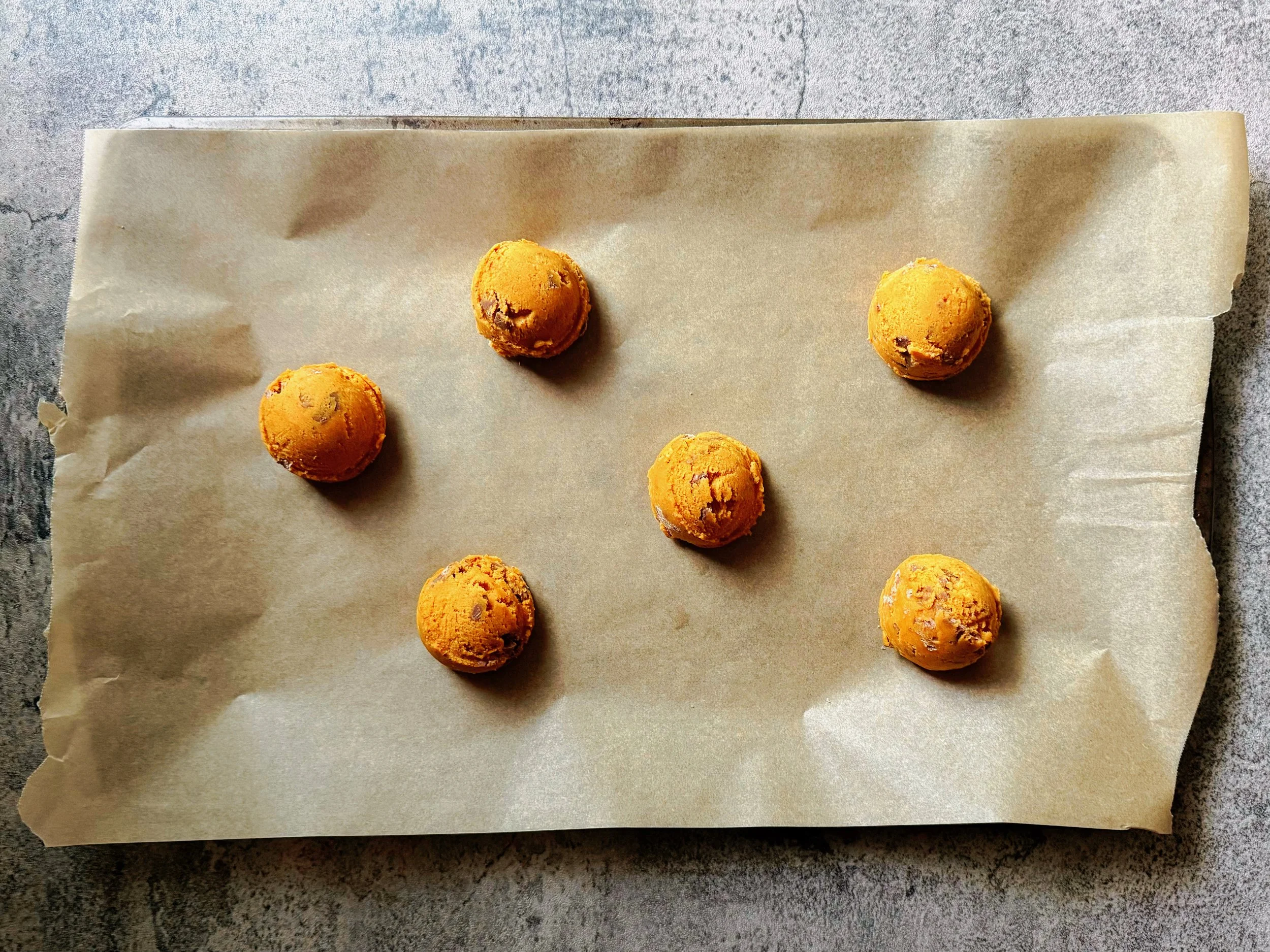
Using the paddle attachment cream together 1 cup room temperature butter with 1 cup brown sugar and 1/2 cup sugar for about 8-10 minutes until light and fluffy. Scrape bowl halfway through. Mix in 3 tbsp gochujang and 2 tbsp milk. In a small bowl whisk together 3/4 tsp salt and 2 cups flour. Mix the flour mixture into the dough until just combined. Once the cookie dough is uniform fold in 1 1/2 cups milk chocolate chips. Refrigerate 4 hours to overnight. Preheat oven to 350f and line sheet pans with parchment paper. Divide the cookie dough into 2-3 tablespoon sized balls and place on the prepared pans leaving room around each cookie to spread. Bake for 11-13 minutes. The cookies should look set while the centers still appear slightly soft. Let the cookies cool completely before moving them.