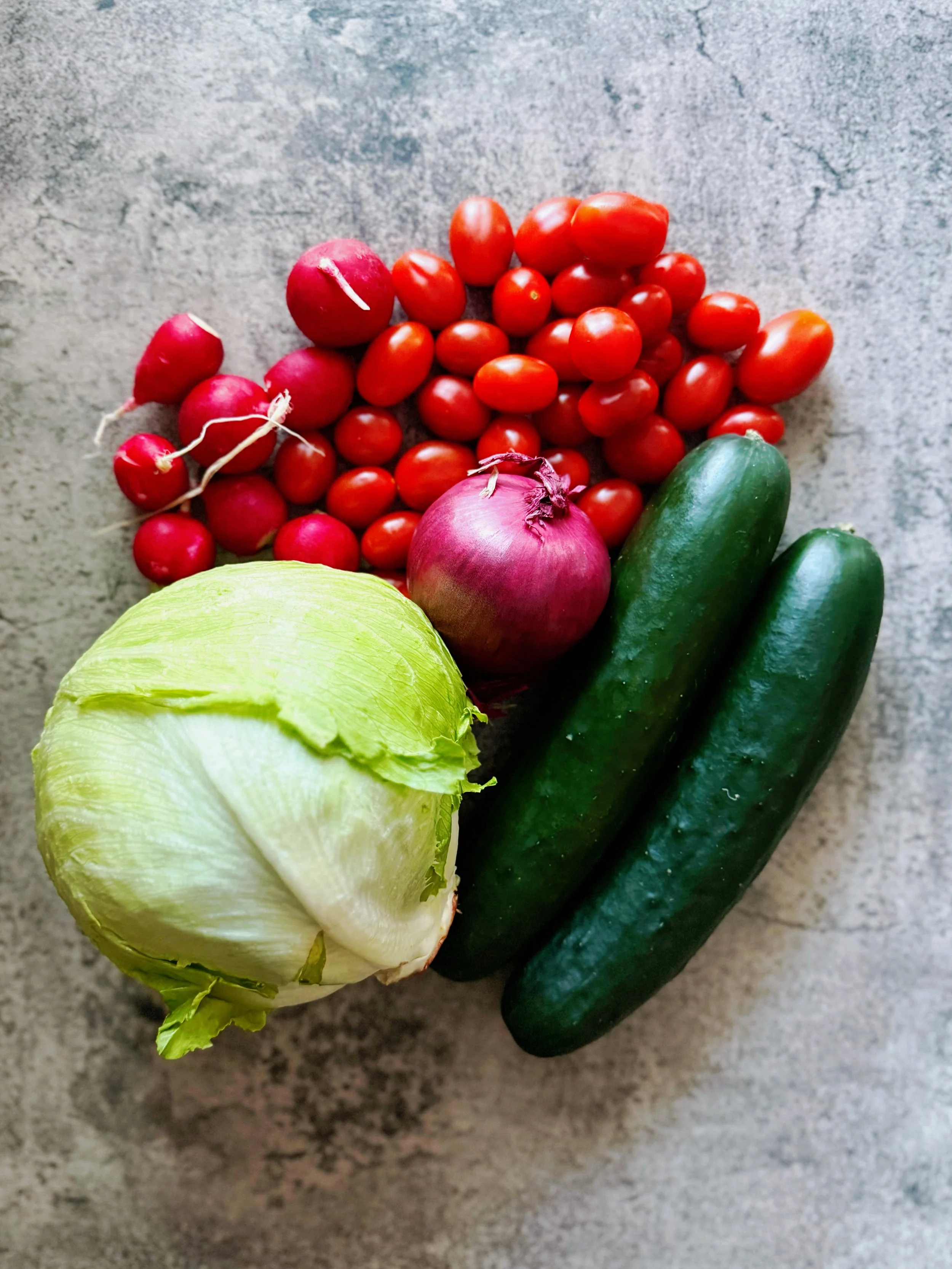
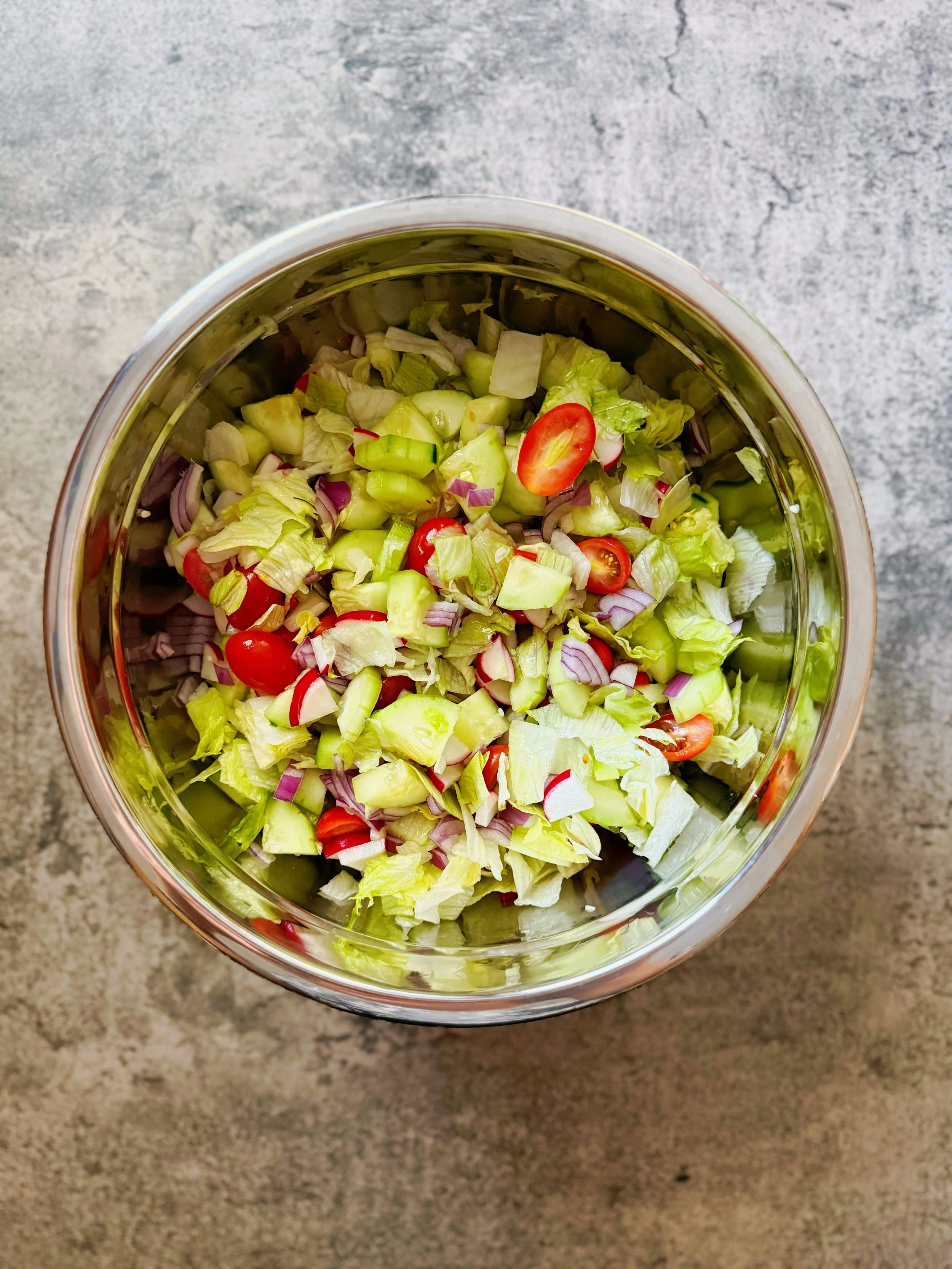
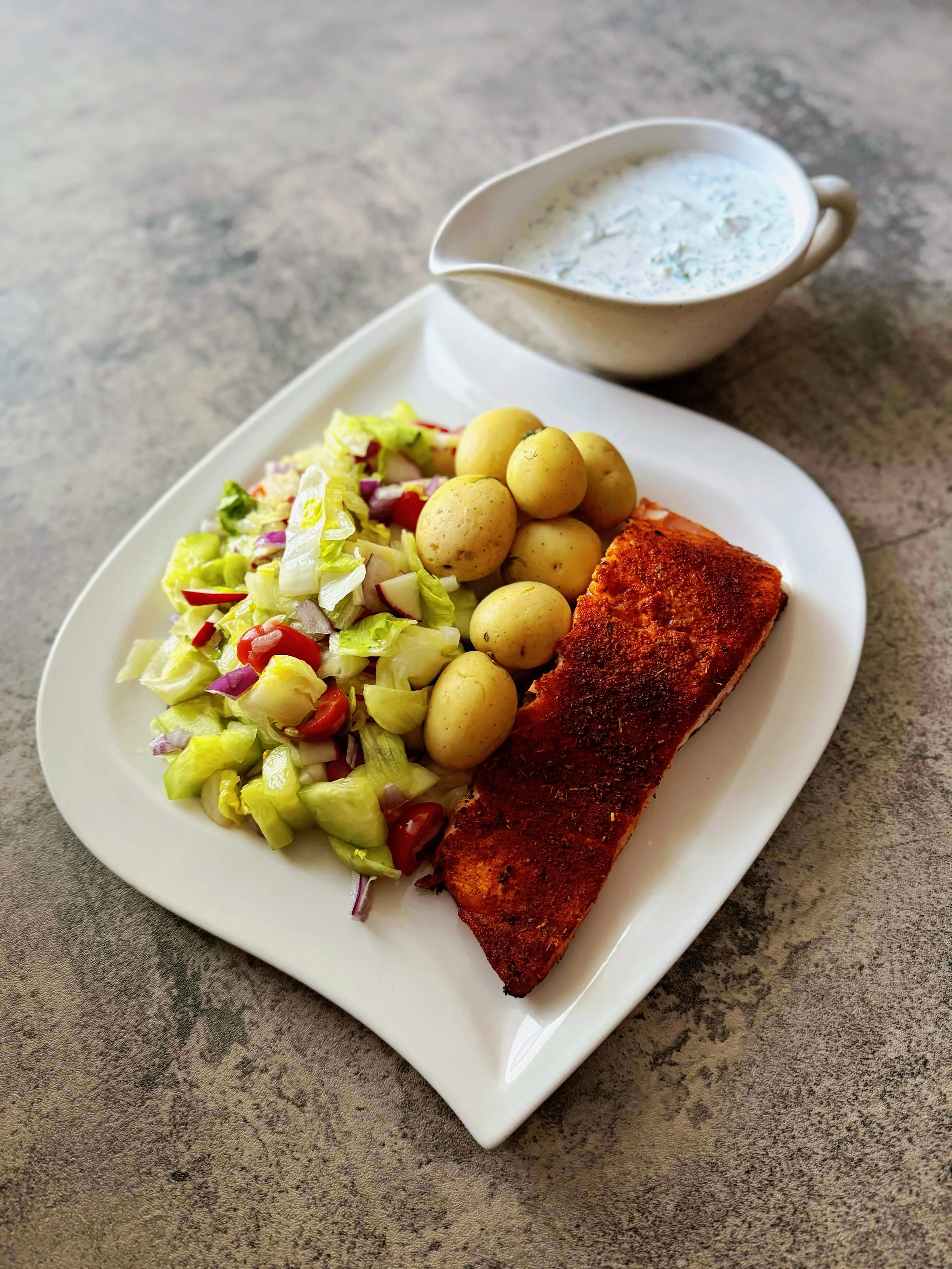
salmon dinner with dill yogurt sauce
This is the kind of dinner I come back to when I want something balanced but not complicated. Salmon baked until just tender, boiled potatoes with fresh dill, a crisp salad, and a thick garlic-dill yogurt sauce that cools everything down. Nothing fancy. Just good ingredients layered in a way that makes sense. It’s simple but doesn’t feel basic. Warm and cool. Soft and crisp. Clean flavors that don’t compete.
The Nordic inspiration behind this dish
Salmon is central to Scandinavian cooking, especially in countries like Finland, Sweden, and Norway where cold waters make it abundant and culturally foundational. Dill is one of the defining herbs of Nordic cuisine; used with fish, potatoes, yogurt sauces, and preserved dishes. Boiled new potatoes with fresh dill are almost a default pairing in summer meals. A cool yogurt sauce echoes traditional dill sauces served with fish throughout the region. The crisp radish-cucumber salad reflects the Nordic preference for freshness and clean contrast rather than heavy seasoning. The only real deviation is the Cajun seasoning which adds a subtle edge, but the backbone of the plate (salmon, dill, potatoes, cultured dairy, fresh vegetables) is very much in conversation with Nordic food philosophy: seasonal, simple, and built on contrast rather than excess.
What is the difference between Greek yogurt and regular yogurt?
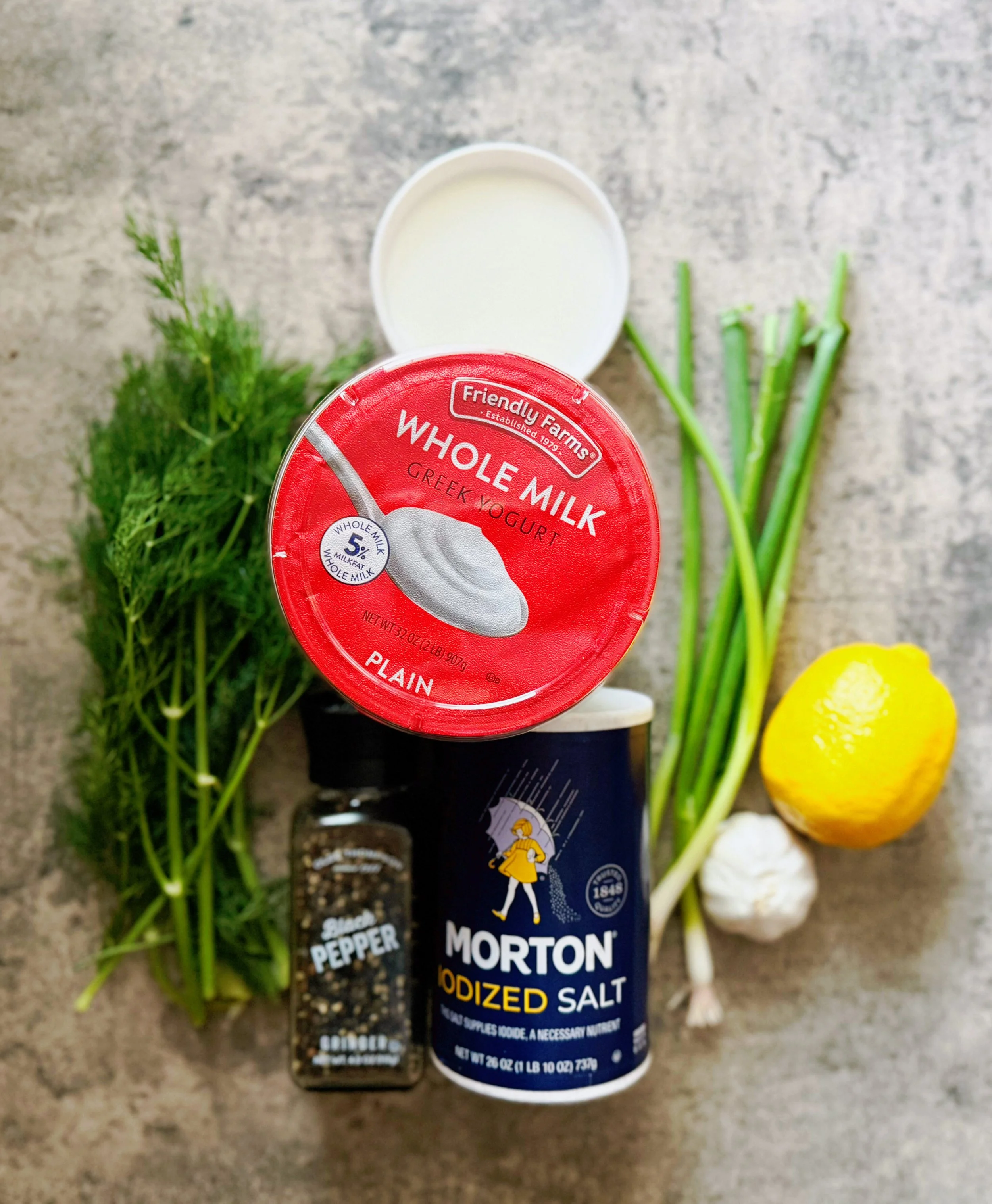
Greek yogurt and regular yogurt start the same way (milk fermented with live cultures) but Greek yogurt is strained more which removes extra whey. That simple step changes everything: it becomes thicker, tangier, higher in protein, and lower in lactose and sugar compared to regular yogurt which stays lighter and more fluid. That higher protein content makes Greek yogurt more filling and helpful for muscle support and steady blood sugar, while regular yogurt often provides slightly more calcium and a gentler texture. Both offer probiotics that support gut health, but Greek yogurt behaves more like a creamy ingredient than just a topping adding structure, richness, and clean sharp bite that balances heavier foods.
What is the difference between wild caught and farm raised salmon?
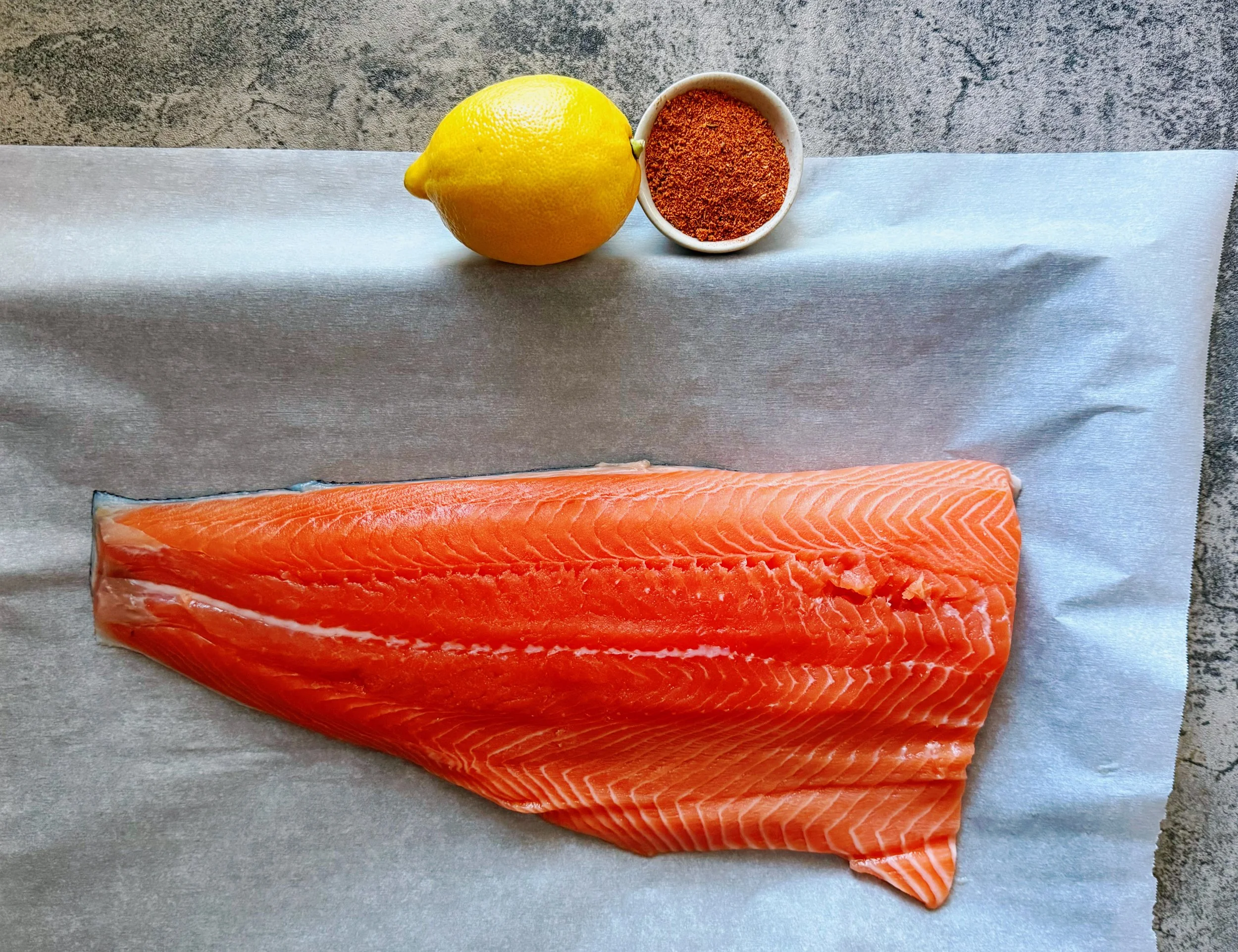
Wild caught and farm raised salmon differ mostly in how they live and what they eat which affects both flavor and nutrition. Wild salmon grows in its natural environment feeding on a varied diet that gives it a deeper color, firmer texture, and a cleaner more pronounced flavor, often with slightly higher levels of certain omega-3 fats. Farm raised salmon is raised in controlled environments and typically has a milder taste, softer texture, and more consistent fat content which can make it feel richer and more buttery. Nutritionally both provide high quality protein and heart healthy fats but wild salmon tends to be leaner while farm raised salmon often contains more total fat and calories.
Upsides and downsides exist in both: wild caught is often praised for its natural diet and firmer texture but can be more expense, less consistent in size, and sometimes drier if over cooked. Farm raised salmon is widely available, more affordable, and forgiving to cook because of its higher fat content, though some people prefer to research sourcing due to environmental practices and feed differences. Ultimately the best choice is the one that fits your taste, budget, and values.
How to make salmon dinner with dill yogurt sauce?
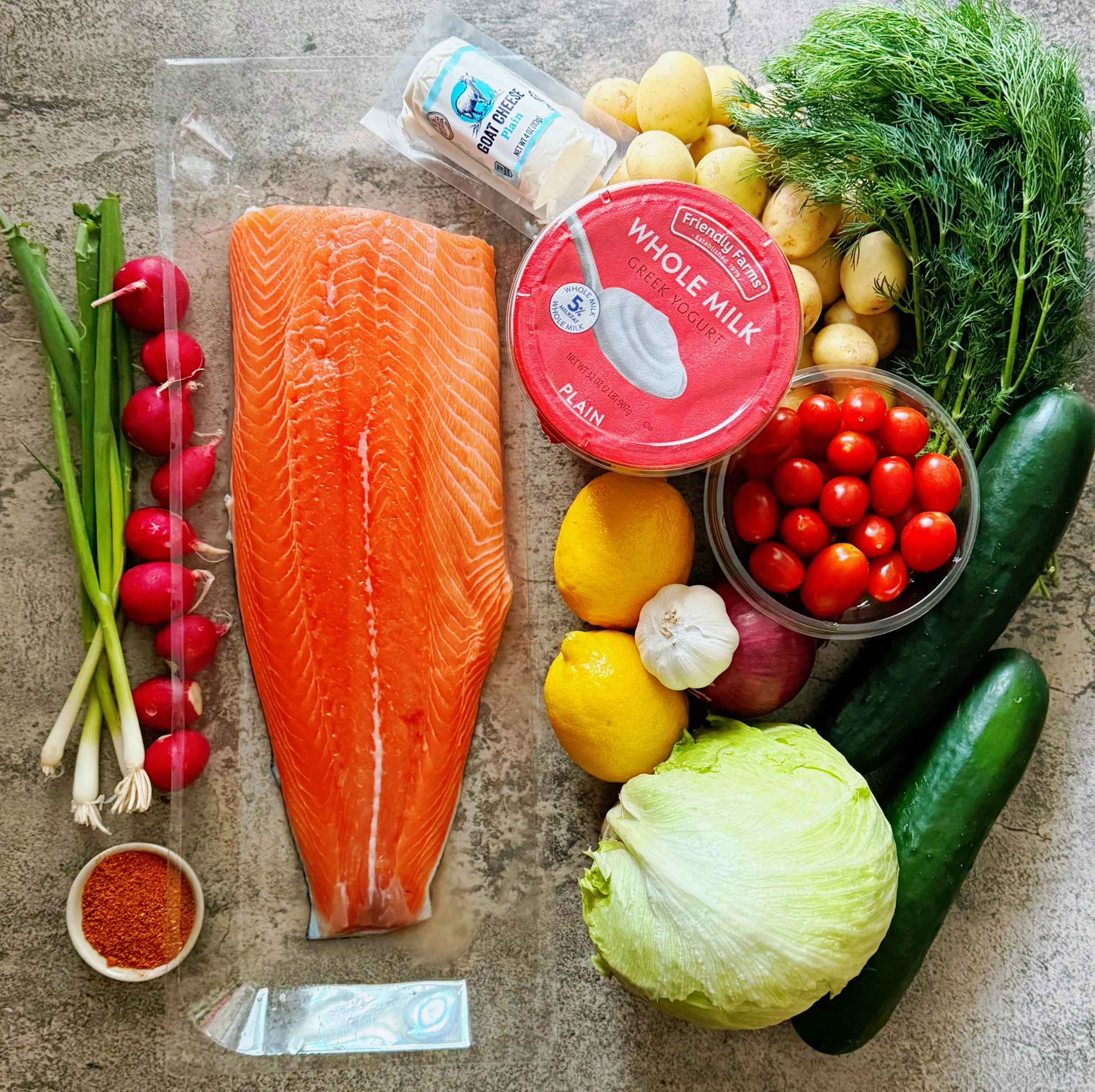
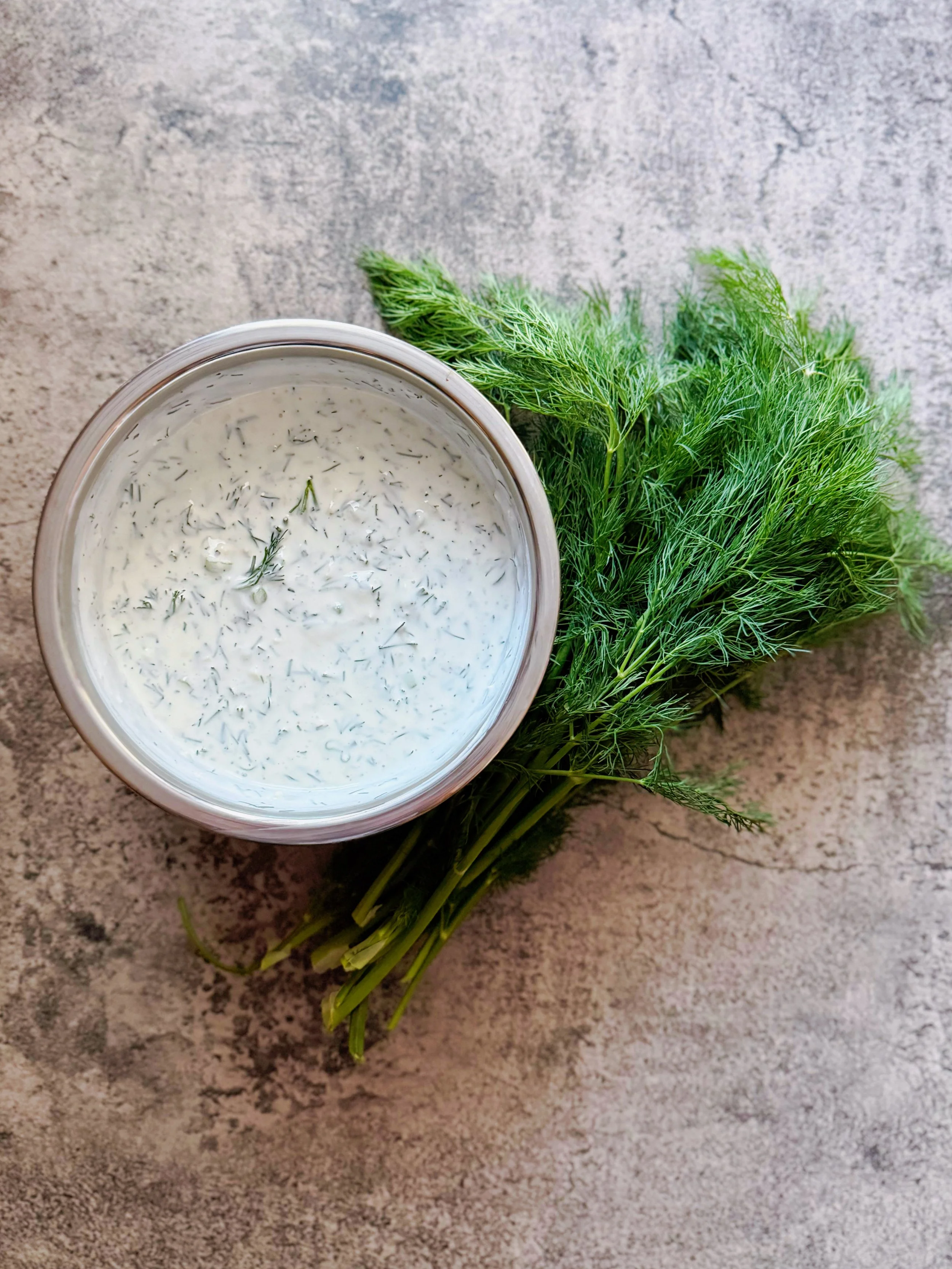
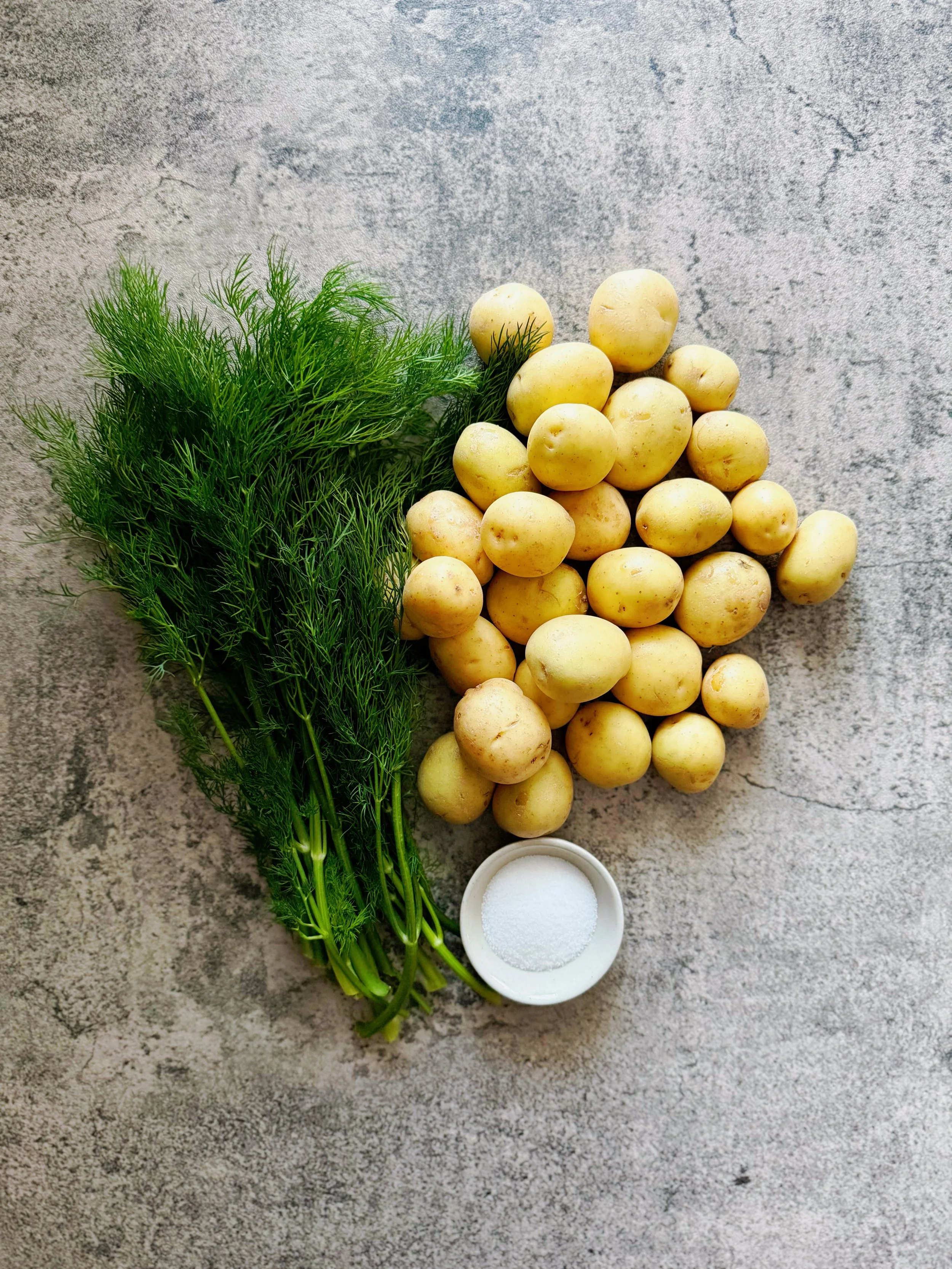
Preheat oven to 425f and line a sheet pan with parchment paper. Bring a large pot of salted water to boil. Meanwhile pat the salmon dry with paper towels and squeeze juice of 1 lemon over it. Set aside. First make the yogurt sauce. In a small bowl mix together 2 cups Greek yogurt, 1 bunch chopped dill, juice of 1 lemon, 6 minced garlic cloves, and 4 sliced green onions. Gradually add 1/2-1 cup milk to preferred thickness. Season to taste with salt and pepper. Add the potatoes and 1 bunch of dill in the boiling water. Cook for about 25 minutes until tender. Meanwhile season salmon with the Cajun style seafood seasoning. Bake for about 19-24 minutes until the internal temperature reaches 135f for medium or 145f for well done. Remove salmon from heat about 5f before desired temperature as it will continue to cook while resting. Prepare the salad. In a large bowl toss together 10 chopped radishes, 2 cups halved cherry tomatoes, 2 chopped cucumbers, 1 chopped small red onion, and 1/2 head of chopped lettuce. Lightly season with salt and pepper. Plate boiled potatoes, salad, and salmon. Serve with a dollop of plain goat cheese and dill yogurt sauce.
Tips
Pat the salmon dry before before adding lemon. Moisture prevents proper surfce cooking.
Pull the salmon out 5f early. Resting is what keeps it juicy. If using farm raised salmon lean toward 135f. If wild don’t push past 135-138f or it dries quickly.
Let potatoes steam dry for a few minutes after draining to prevent watery plating.
Add milk in the yogurt sauce slowly; it thins quickly.
Let the goat cheese come to room temp before plating so its smooth instead of crumbly and stiff.