
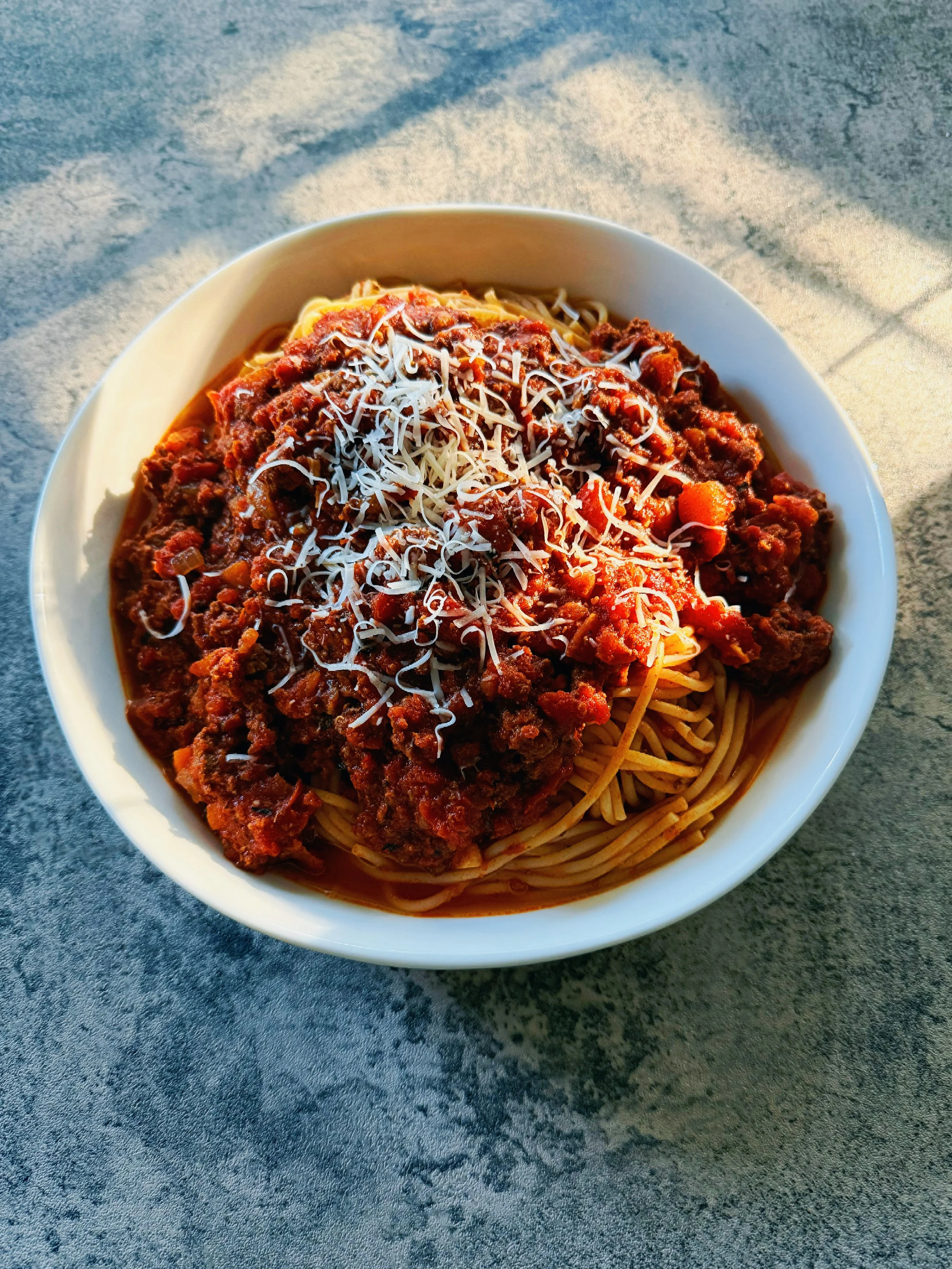
spaghetti with meat sauce
This is one of those meat sauces that takes a little patience but is worth the wait. I make mine with plenty of ground beef, fresh tomatoes, garlic, and a Parmesan rind that simmers right along with everything else. After several hours on the stove the sauce gets thick, rich, and packed with flavor. It’s a big batch but that’s kind of the point. The leftovers are just as good (if not better) the next day.
Bolognese vs. American meat sauce
Although bolognese and American meat sauce are often treated as the same thing they’re actually quite different. Traditional ragu alla bolognese comes from Bologna, Italy and is primarily a meat based sauce with relatively little tomato. It typically contains beef, onions, carrots, celery, wine, and milk, and is traditionally served with tagliatelle. American meat sauce combines the richness of beef with a much more prominent tomato base and is traditionally served with spaghetti.
Why Parmesan rinds belong in sauces
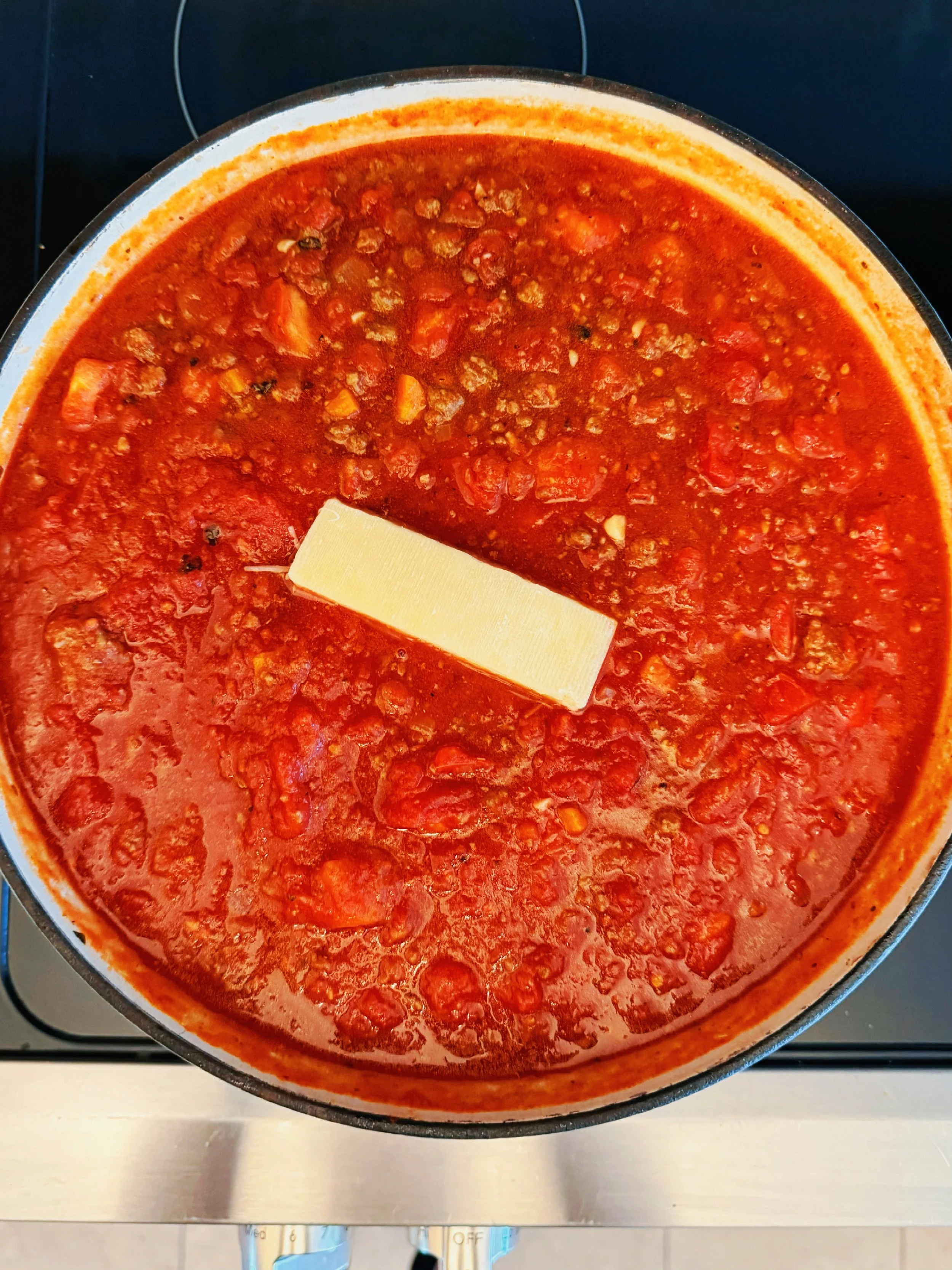
Parmesan rinds are worth saving because they still contain plenty of flavor. As Parmesan ages proteins break down into amino acids (including glutamate) which contributes to its rich, savory umami flavor. Adding a rind to a simmering sauce allows some of those compounds to gradually release into the liquid giving it more depth without making it noticeably cheesy. The rind itself is edible since Parmigiano Reggiano develops a natural rind rather than a wax coating but it won’t completely melt into the sauce because of its dense, dried structure. It’s especially useful in slow cooked meat sauces, soups, and stews where it has time to release its flavor.
The science behind tomato paste
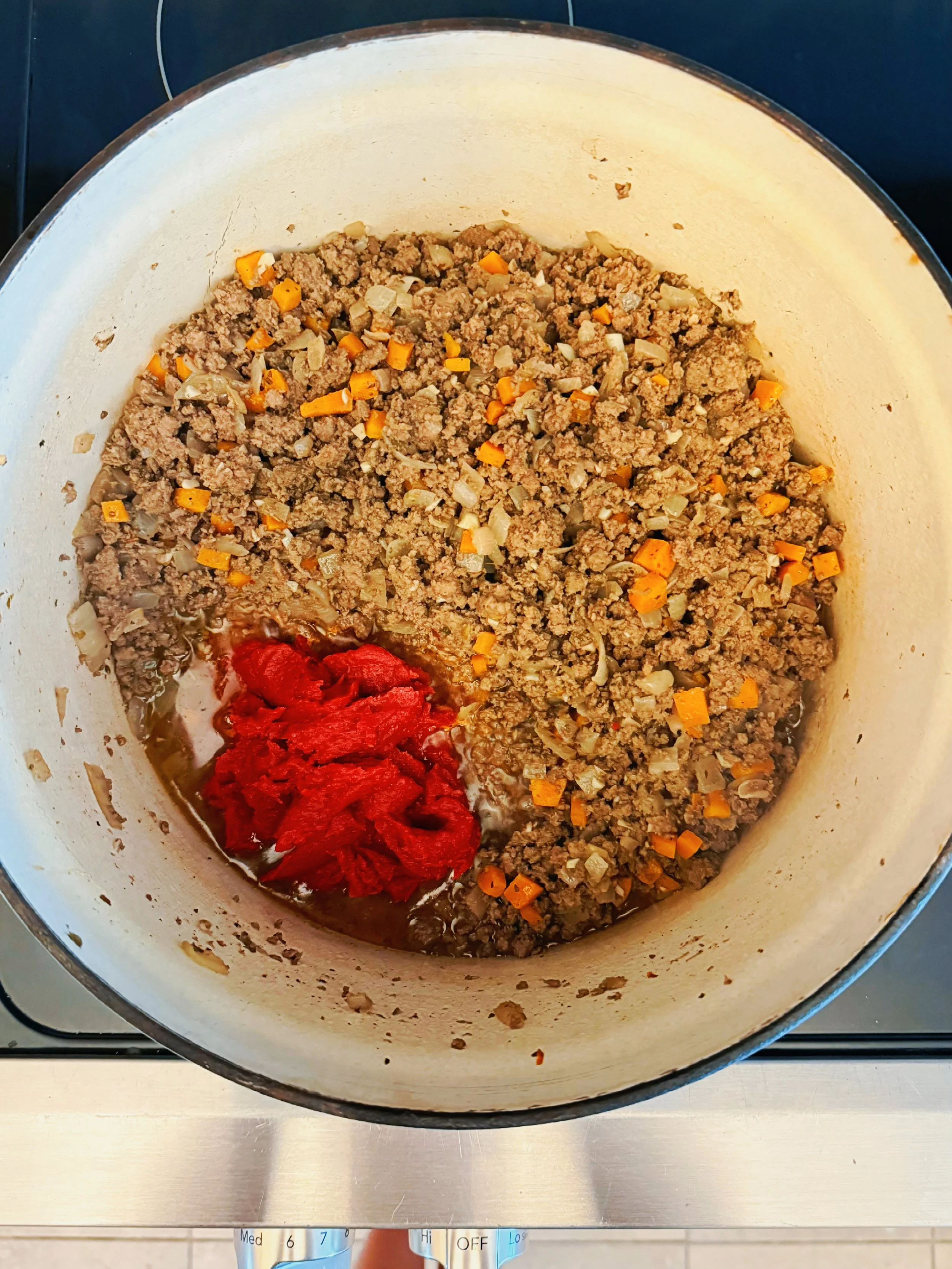
Tomato paste is already concentrated but cooking it few minutes before adding rest of the tomatoes makes a difference. As the remaining moisture evaporates the paste starts to brown developing deeper flavor through reactions like the Maillard reaction. You’ll notice it turning from bright red to brick like red color. This also mellows some of its acidity and brings out more of its natural sweetness. Tomato paste is naturally rich in glutamates which contribute to umami so it’s an easy way to add depth to a meat sauce.
Why are bay leaves are so difficult to describe?
Unlike stronger herbs bay leaves don’t necessarily add a flavor you can immediately identify. They contain aromatic compounds like eucalyptol which gives them a subtle eucalyptus-like herbal slightly peppery notes. Their aroma gradually infuses into the sauce as it simmers adding another layer of complexity without overpowering the other ingredients. Dried bay leaves have a different flavor profile than fresh ones with a more mellow aroma. You probably won’t notice a distinct bay leaf flavor in a rich meat sauce but you might notice something missing if you leave them out.
Forks and spaghetti etiquette
Italy was one of the first places in Europe to adopt forks which were already being used in the Byzantine Empire. They created some religious backlash in the beginning since ‘God had provided us fingers as natural forks’. During the Middle Ages eating with your hands was normal and forks were sometimes considered unnecessary luxuries. Early forks typically had just two prongs with the four pronged version coming popular later on in the 18th century. In Italy spaghetti is traditionally eaten by twirling a few strands around a fork against the plate, using a spoon is often associated with children or tourists although it’s not unheard of. Cutting spaghetti is generally frowned upon and taking too many strands at once is considered poor table manners. Slurping your spaghetti is also frowned upon, the idea is to get each forkful into your mouth without leaving noodles dangling. Considering long pasta was once eaten with bare hands it’s pretty funny how many rules we’ve developed around it eating it today.
Spaghetti grows in trees
In 1957 the BBC aired an April Fools prank that convinced some people spaghetti grew on trees. The segment was narrated by a respected broadcaster Richard Dimbleby during the current-affairs show Panorama. The 3 minute report showed a Swiss family harvesting spaghetti from branches and laying it out to dry in Ticino, Switzerland. They even claimed it had been a particularly good harvest thanks to mild weather and the disappearance of spaghetti weevil. Spaghetti wasn’t as common in British households back then so apparently the idea wasn’t completely ridiculous to everyone. Some viewers actually called BBC asking how to grow their own spaghetti trees and were reportedly told to put a strand of spaghetti in a tin of tomato sauce and hope for the best. All of this was presented as a serious news report which makes it even funnier.
How to make meat sauce?
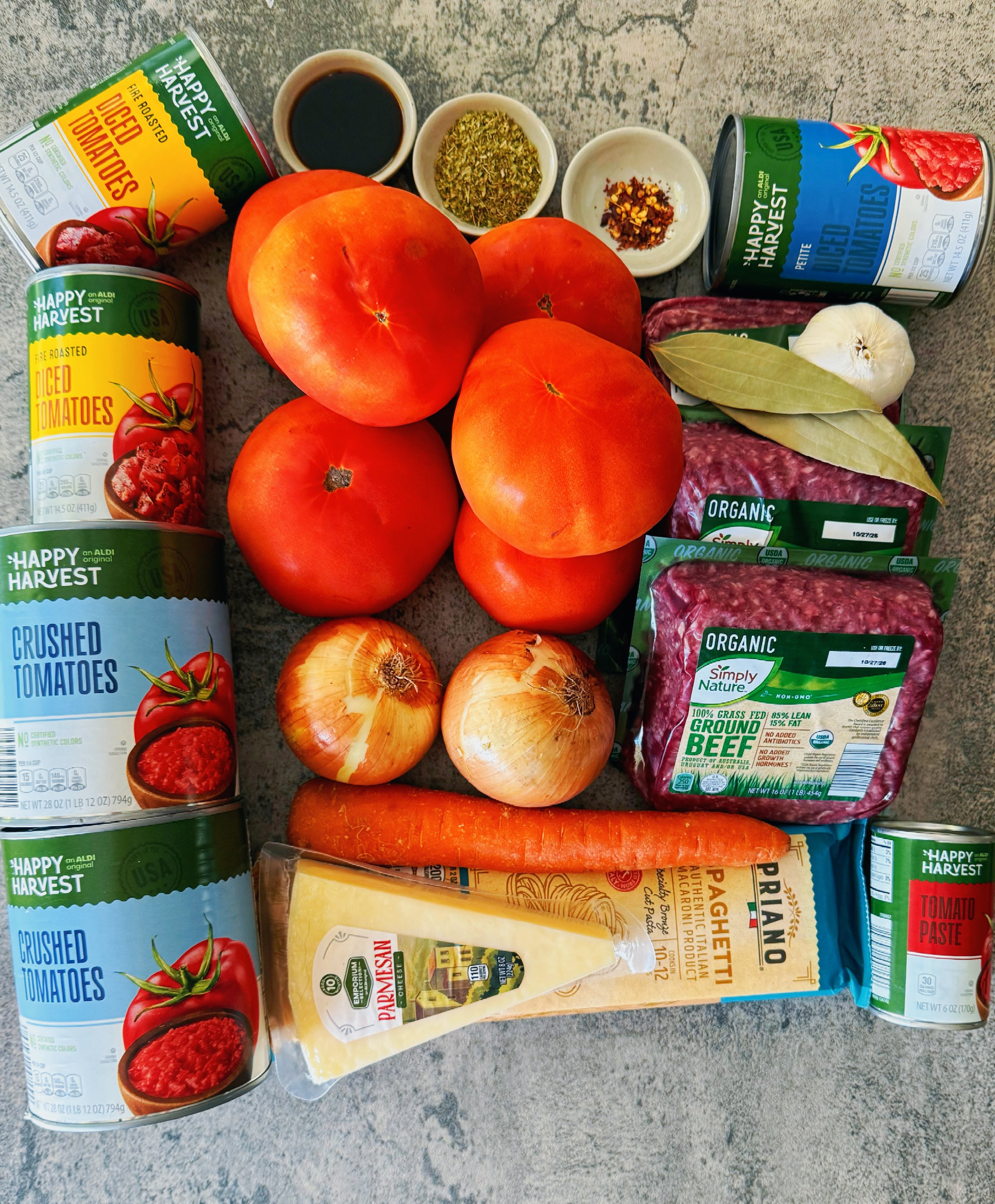
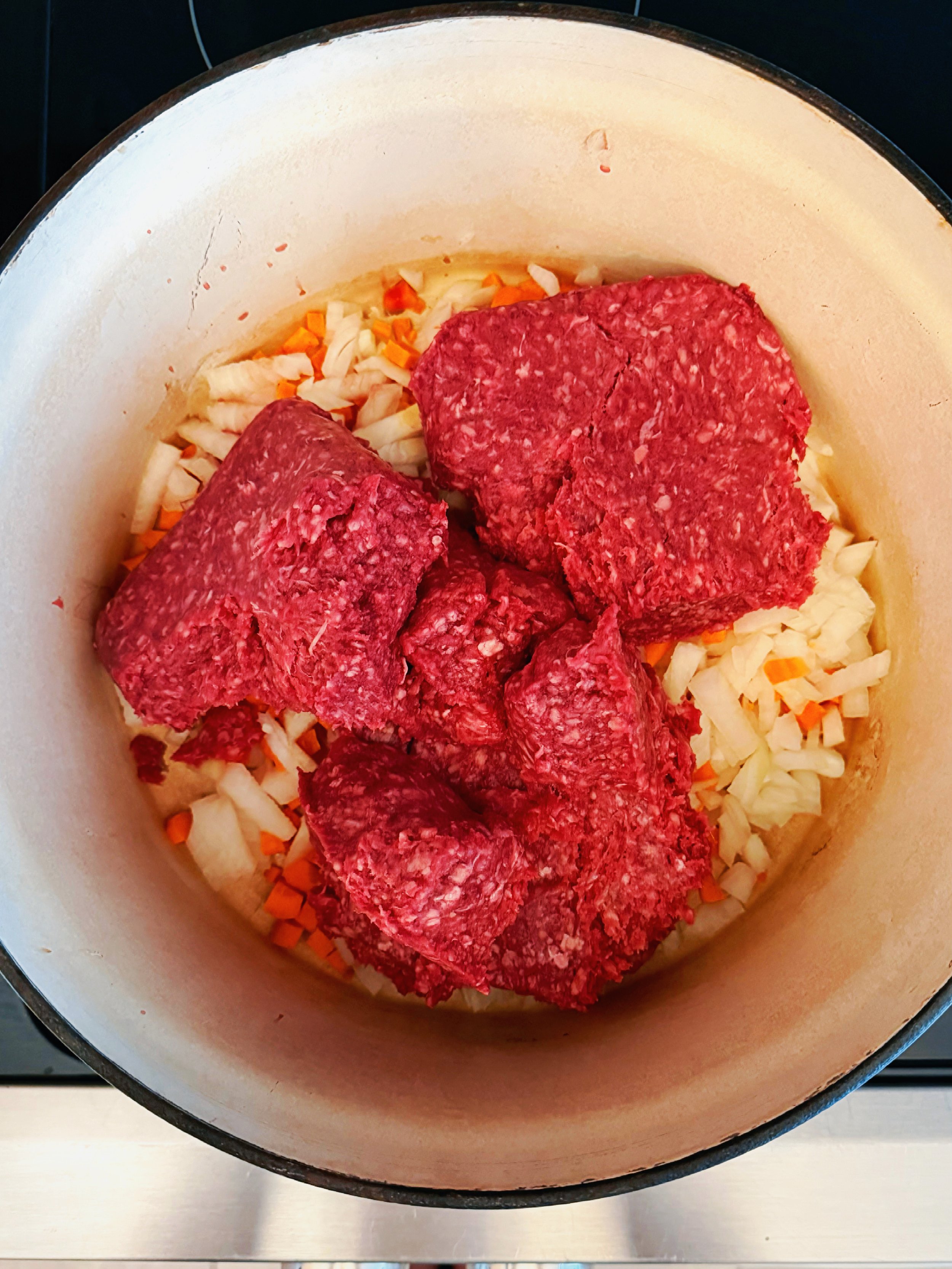
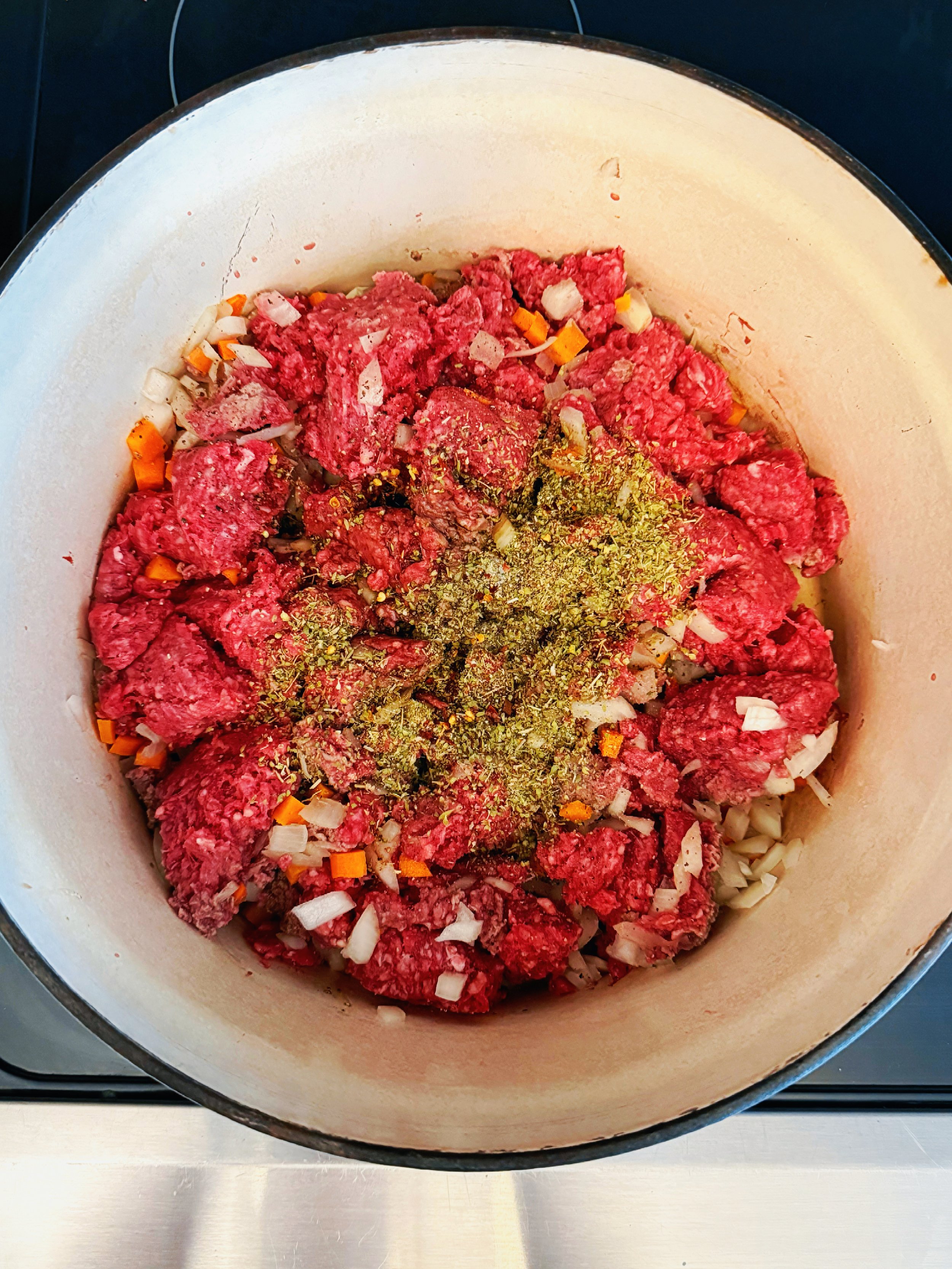
In a large Dutch oven mix together the chopped onions and carrots. Add ground beef, then season with 2 tbsp oregano, 2-3 tbsp Worcestershire sauce, 1/2 tsp red pepper flakes, salt and pepper. Mix everything together. Cook over medium high heat until the beef is browned and vegetables have softened. Stir in the minced garlic towards the end.
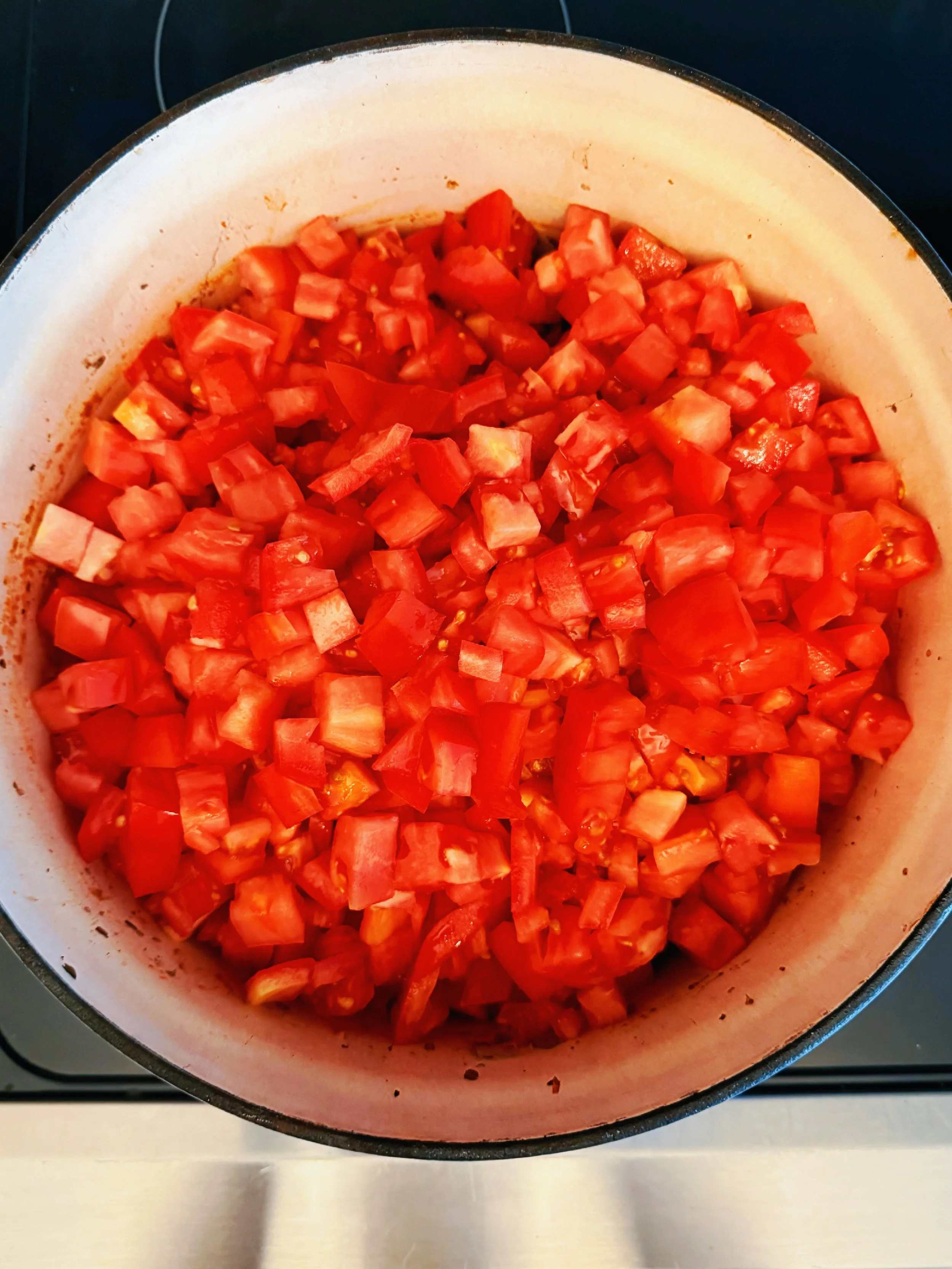
Once the ground beef is fully cooked make a small space to heat up the tomato paste. Cook for 2-3 minutes until it darkens slightly. Add the chopped beefsteak tomatoes and mix together.
Once hot add the bay leaves, fire roasted diced tomatoes, diced tomatoes, and crushed tomatoes. Stir and bring to simmer.
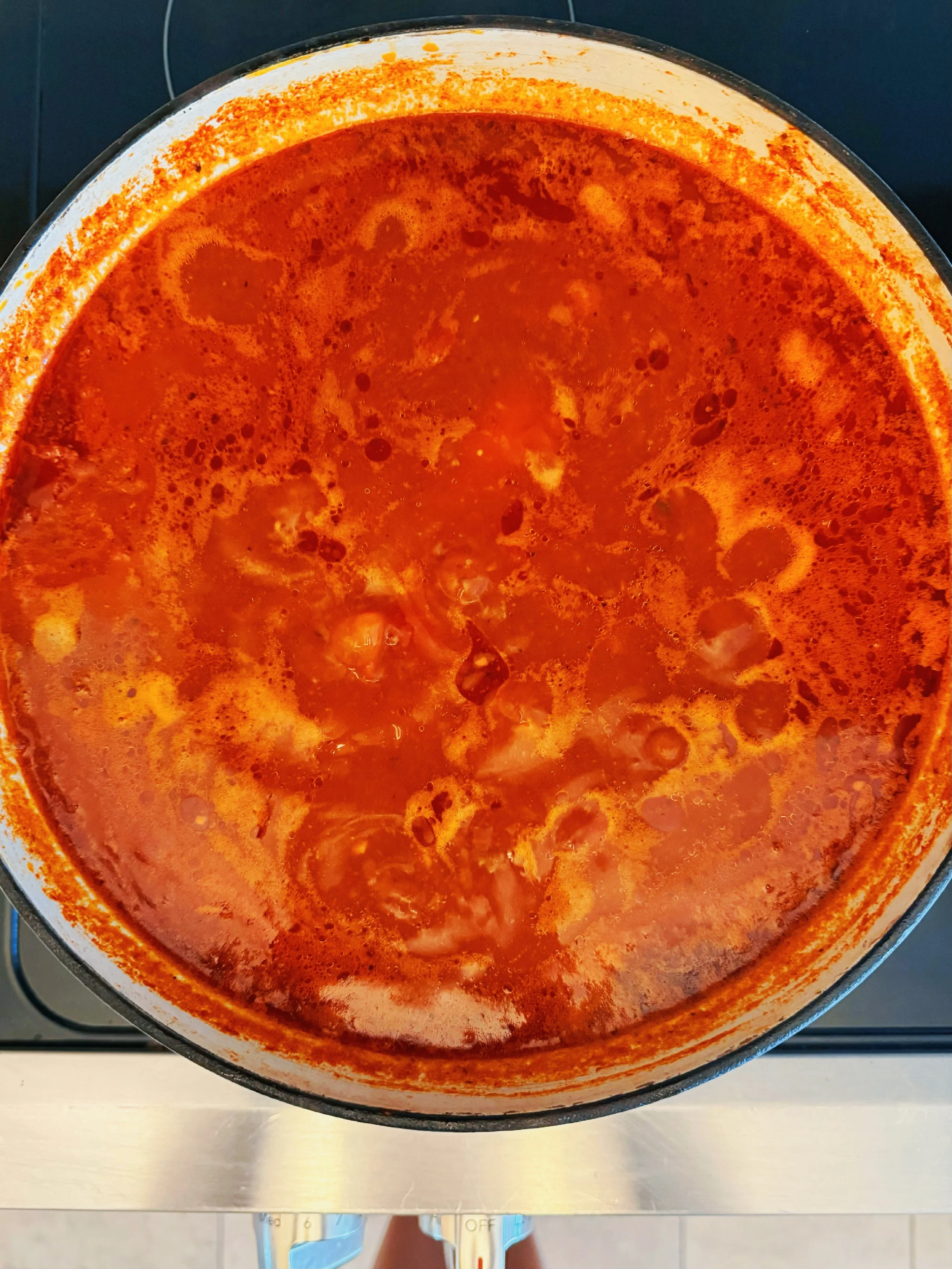
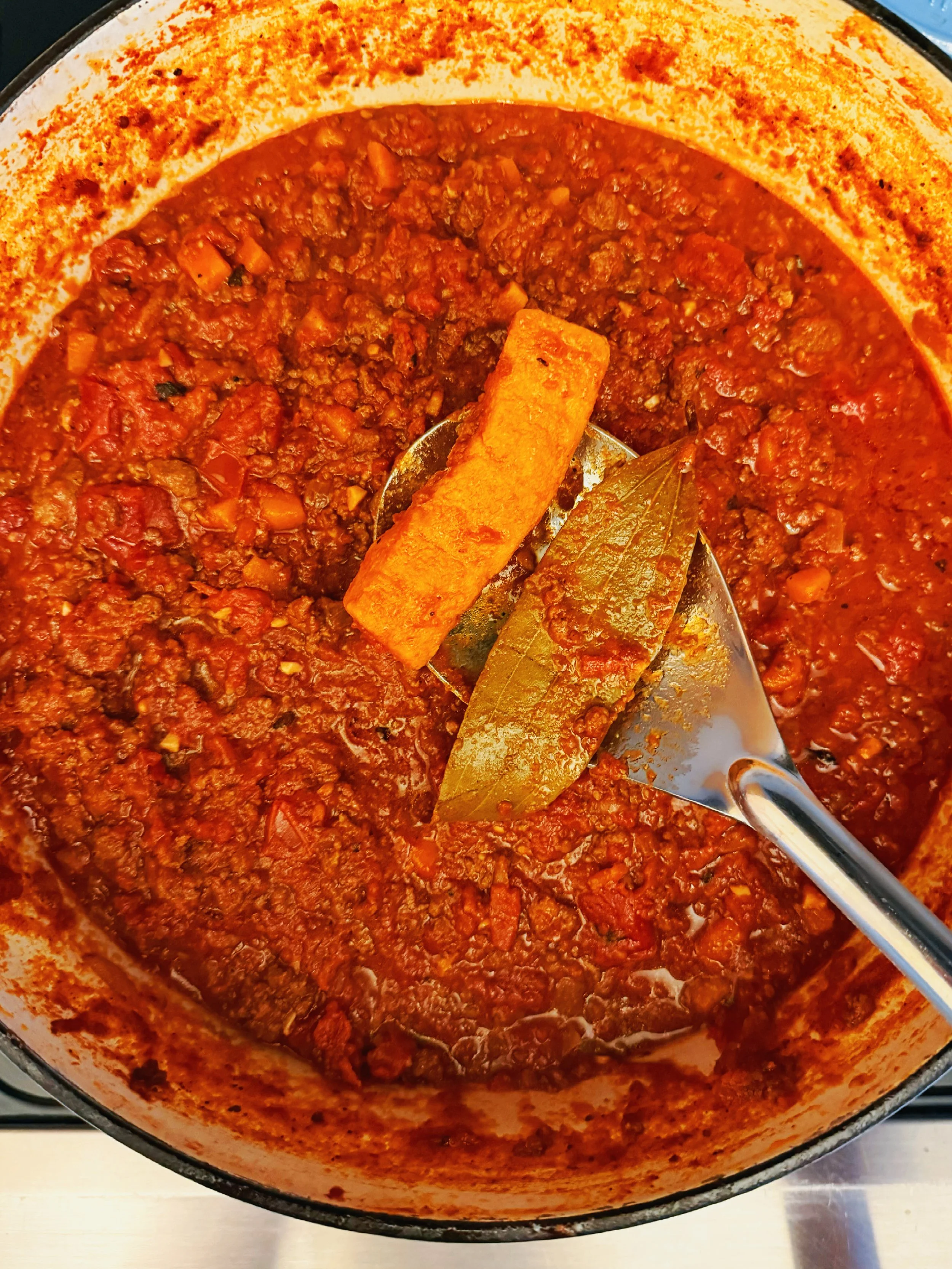
Add the Parmesan rind in the middle and submerge it just below the surface. Maintain a gentle simmer over low heat for 4-6 hours occasionally stirring and keeping the Parmesan rind from sinking to the bottom or sticking to the sides.
Once the sauce has reduced to desired thickness bring a large pot of salted water to boil for the spaghetti and remove the Parmesan rind and bay leaves.
Once the water is at rolling boil cook the spaghetti according to package instructions, usually about 9-11 minutes.
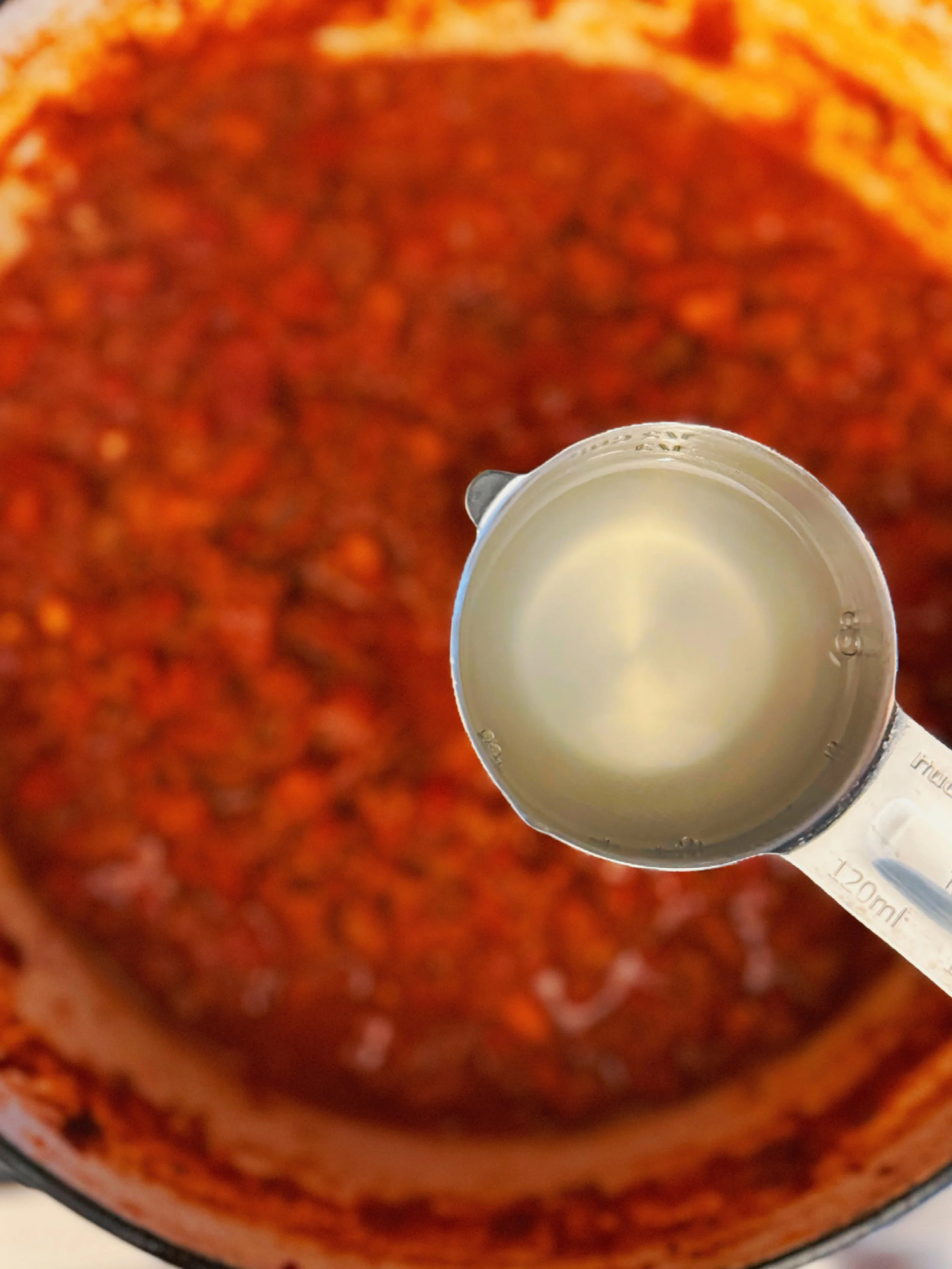
Once the spaghetti is done take 1/4-1/3 cup of the pasta water and stir it in the meat sauce as needed. Strain the spaghetti and add to a large bowl.
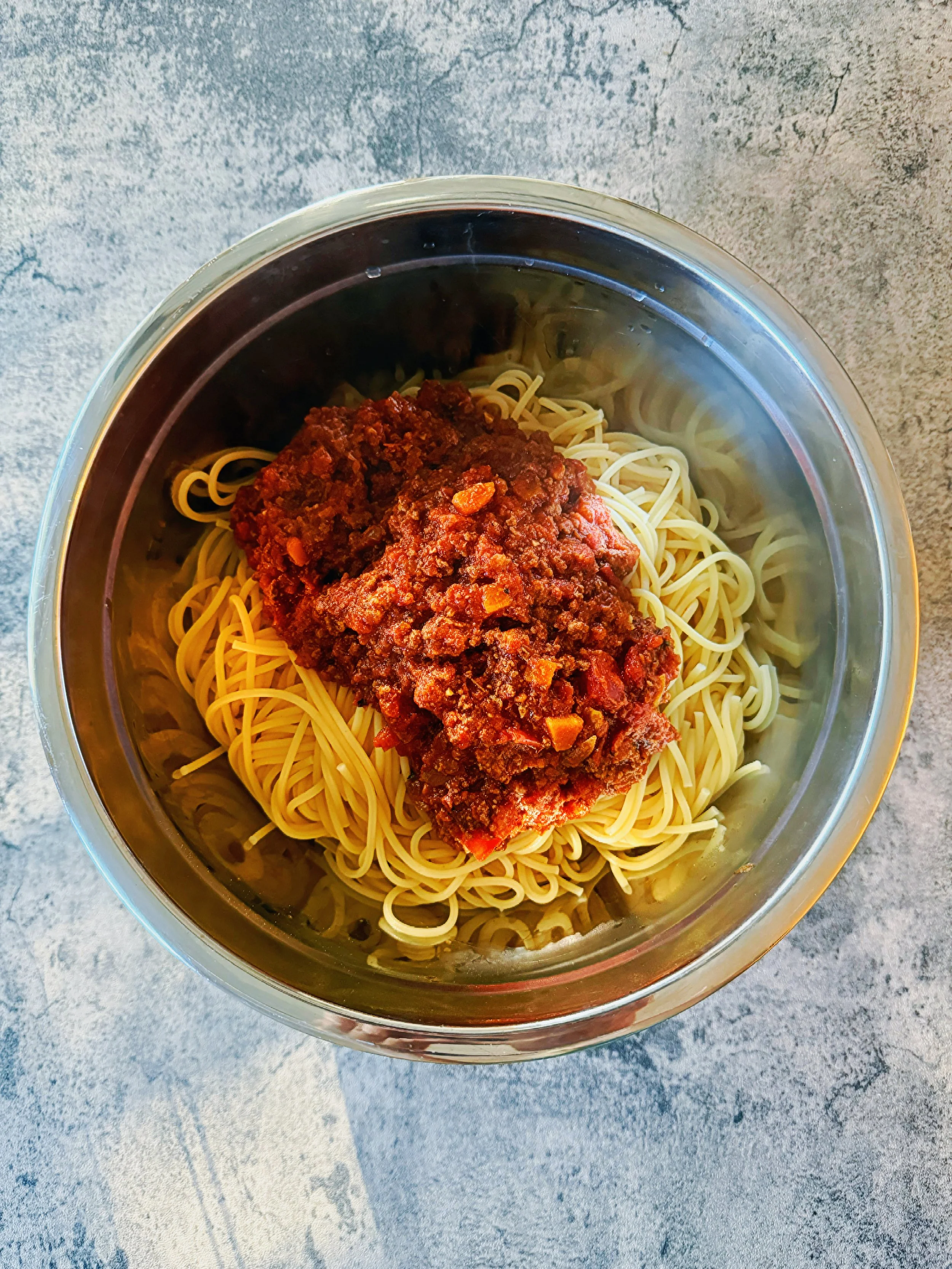
Remove the meat sauce from the heat. Mix in a few cups of the sauce into the spaghetti.
Plate the spaghetti topping it off with more sauce and shredded Parmesan.
Tips
Clean/scrub the Parmesan rind before adding it in the sauce.
This recipe makes a large batch so use a big pot to cook it in. A large heavy bottomed Dutch oven helps contribute heat evenly.
Don’t automatically add sugar. The carrots and fresh tomatoes already contribute natural sweetness.
The sauce also works well in lasagna, stuffed shells, and baked ziti.