
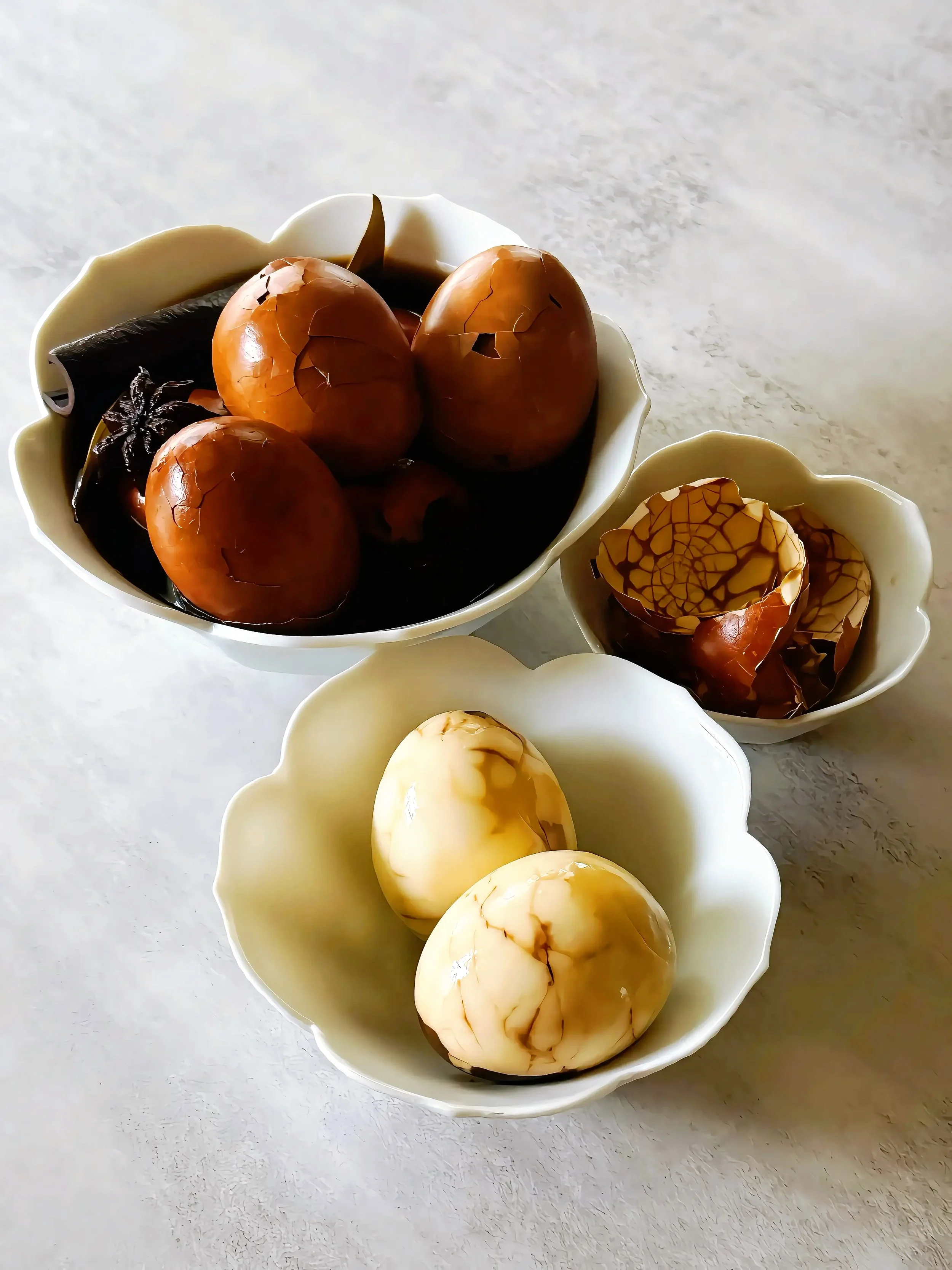
There’s something satisfying about peeling an egg and finding an entirely different pattern underneath. Chinese tea eggs (cha ye dan) get their distinctive marbled appearance from gently cracking the shells before soaking them in a fragrant mixture of black tea, soy sauce, and spices. The marinade works its way through the cracks leaving intricate patterns behind while infusing the eggs with a rich, savory flavor, earthy notes from the tea, and subtle sweetness. They’re a popular everyday snack throughout China commonly found at street stalls and convenience stores. They’re also incredibly easy to make at home with most of the preparation involving a little patience while the eggs marinate.
The universe was once an egg
According to the Chinese creation myth of Pangu the universe began as a vast cosmic egg containing a chaotic mixture of everything that would eventually become heaven and earth. Inside, the giant Pangu grew until he awakened and separated the chaos with the lighter elements rising to form the heavens and the heavier elements sinking to form the earth. He then stood between them keeping the two apart as they continued to expand. In later versions of the myth Pangus body eventually became the natural world with his breath turning into wind, his blood into rivers, and his eyes into the sun and moon. The cosmic egg represents the universe before order existed, making it a symbol of creation emerging from chaos rather than just a symbol of fertility.
The unusual tradition of virgin boy eggs
In Dongyang (a city in Chinas Zhejiang province) there’s a traditional specialty called tongzi dan (often translated as virgin boy eggs). Unlike Chinese tea eggs which are simmered or steeped in tea and spices these eggs are traditionally cooked in urine collected from young boys (generally under the age of 10). The eggs are first boiled in the liquid, then cracked and simmered again for several hours to allow it to penetrate the shells. The practice is rooted in local folk traditions with some residents believing the eggs help prevent heatstroke, improve circulation, or relieve fatigue, though there is no reliable scientific evidence supporting these health claims. Despite how unusual the preparation may seem to outsiders the dish has been recognized as part of Dongyangs local intangible cultural heritage illustrating how different food traditions can develop even within the same country.
Why do overcooked yolks turn green?
Ever notice that grayish-green ring around the yolk of a hard boiled egg? It’s actually the result of a chemical reaction between sulfur and iron. As an egg cooks sulfur containing proteins in the white release hydrogen sulfide which reacts with the iron in the yolk to form iron sulfide. The longer the egg is exposed to high temperatures the more noticeable the discoloration becomes. The reaction happens where the white meets the yolk which is why the greenish color usually appears as a ring rather than throughout the entire yolk. Despite its slightly unappetizing appearance the discoloration is completely harmless and doesn’t mean the egg has spoiled.
The 5 flavors in Chinese cuisine
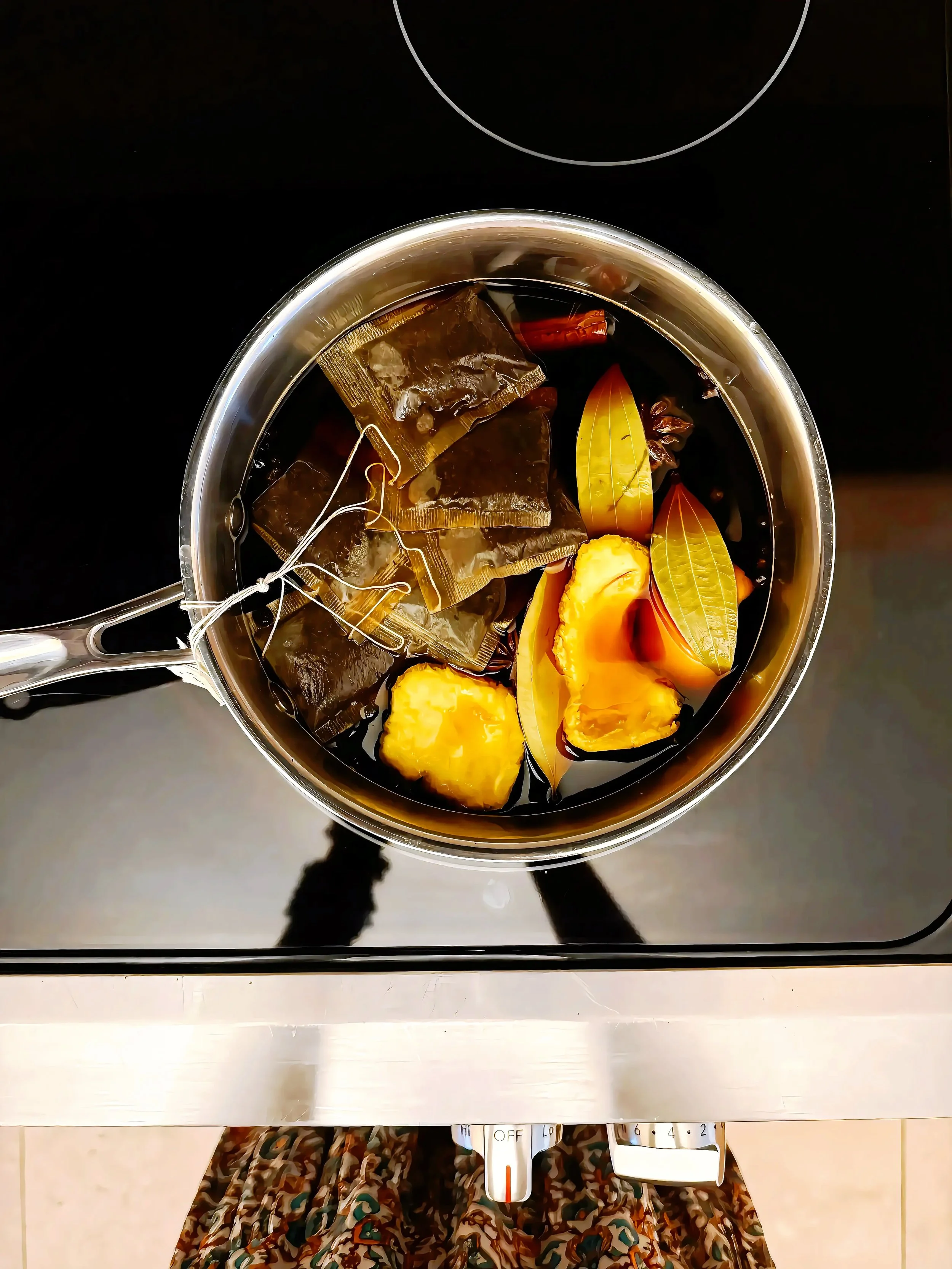
In traditional Chinese philosophy and medicine food was understood through 5 fundamental flavors: sour, bitter, sweet, pungent, and salty. These flavors were associated with the 5 phases (wuxing): wood, fire, earth, metal, and water, and were believed to correspond with different organs and bodily functions. Rather than simply making food taste good balancing flavors was tradtionally thought to help maintain harmony within the body. Pungent refers to the sharp, aromatic qualities of ingredients like ginger and certain spices, rather than just the heat of chili peppers. Chinese tea eggs are a good example of several flavors working together with bitterness from black tea, saltiness from soy sauce, sweetness from sugar, and pungent warmth from ginger and spices. While these traditional associations aren’t the same as modern nutritional science they offer an interesting glimpse into how deeply food and philosphy have been connected throughout Chinese history.
How to make tea eggs?
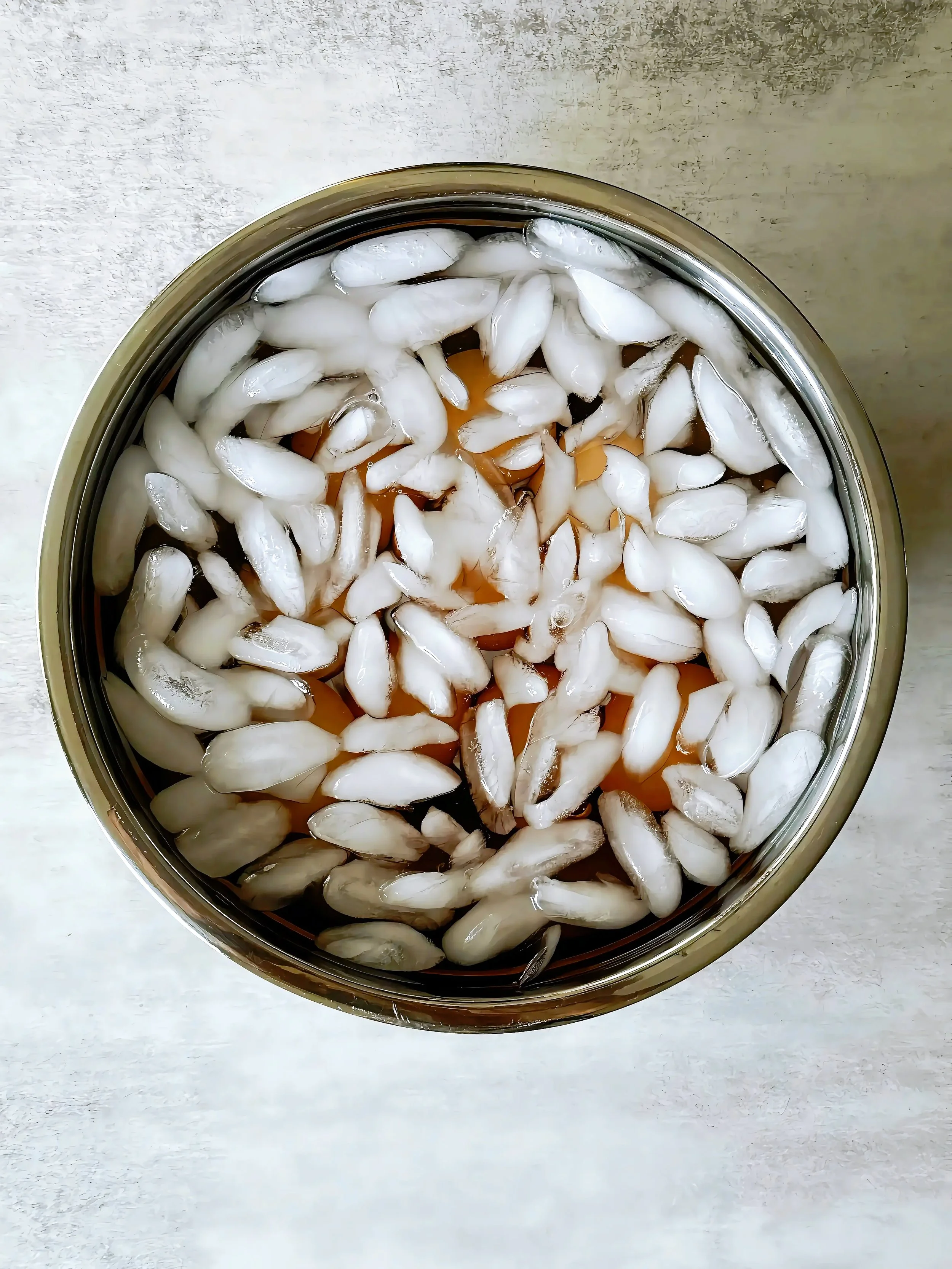
Boil the eggs. Bring a large pot of salted water to boil and cook the eggs for 8-10 minutes. Meanwhile prepare a large bowl of ice water. Transfer the cooked eggs to the ice bath and allow them to cool.
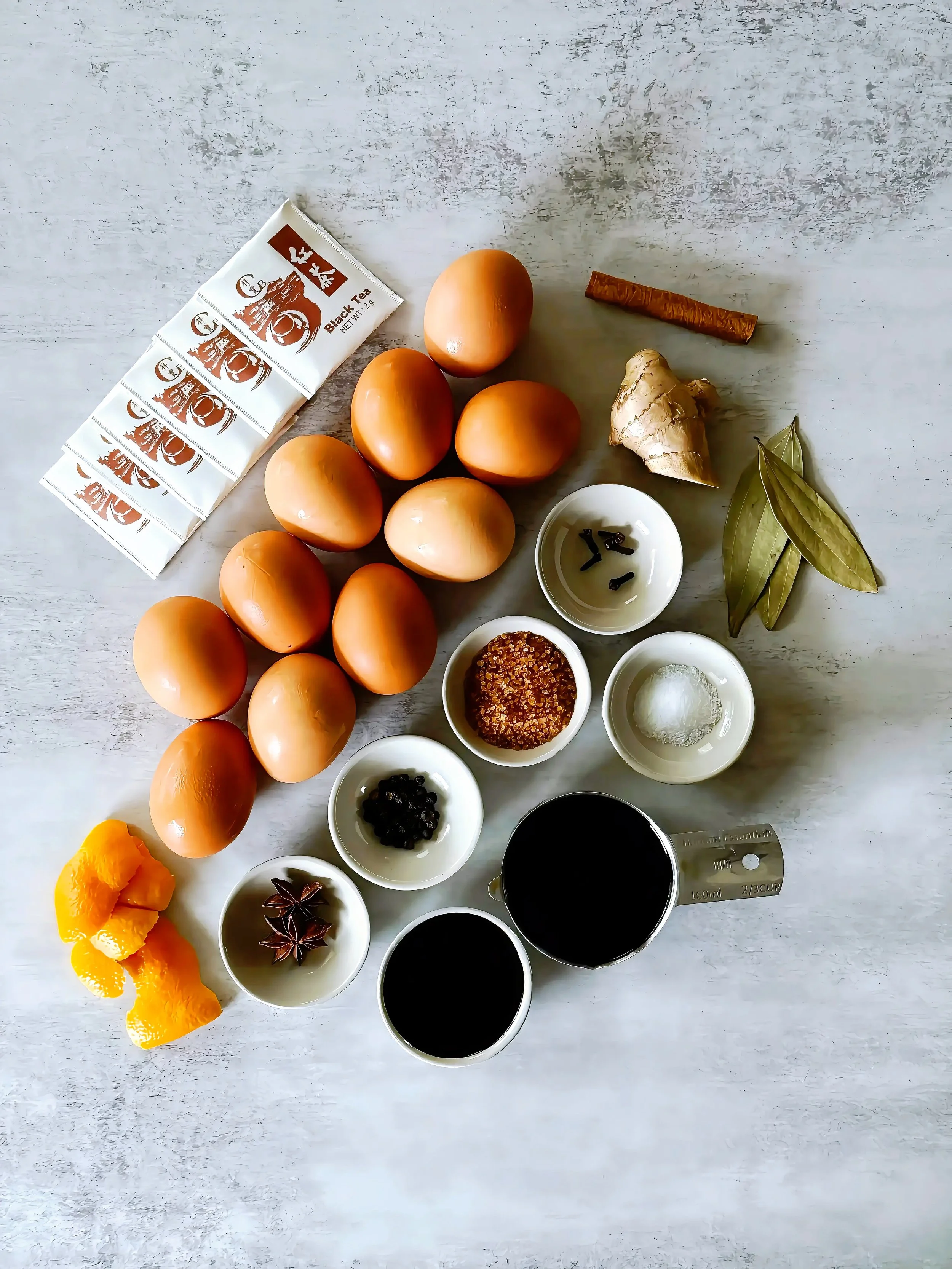
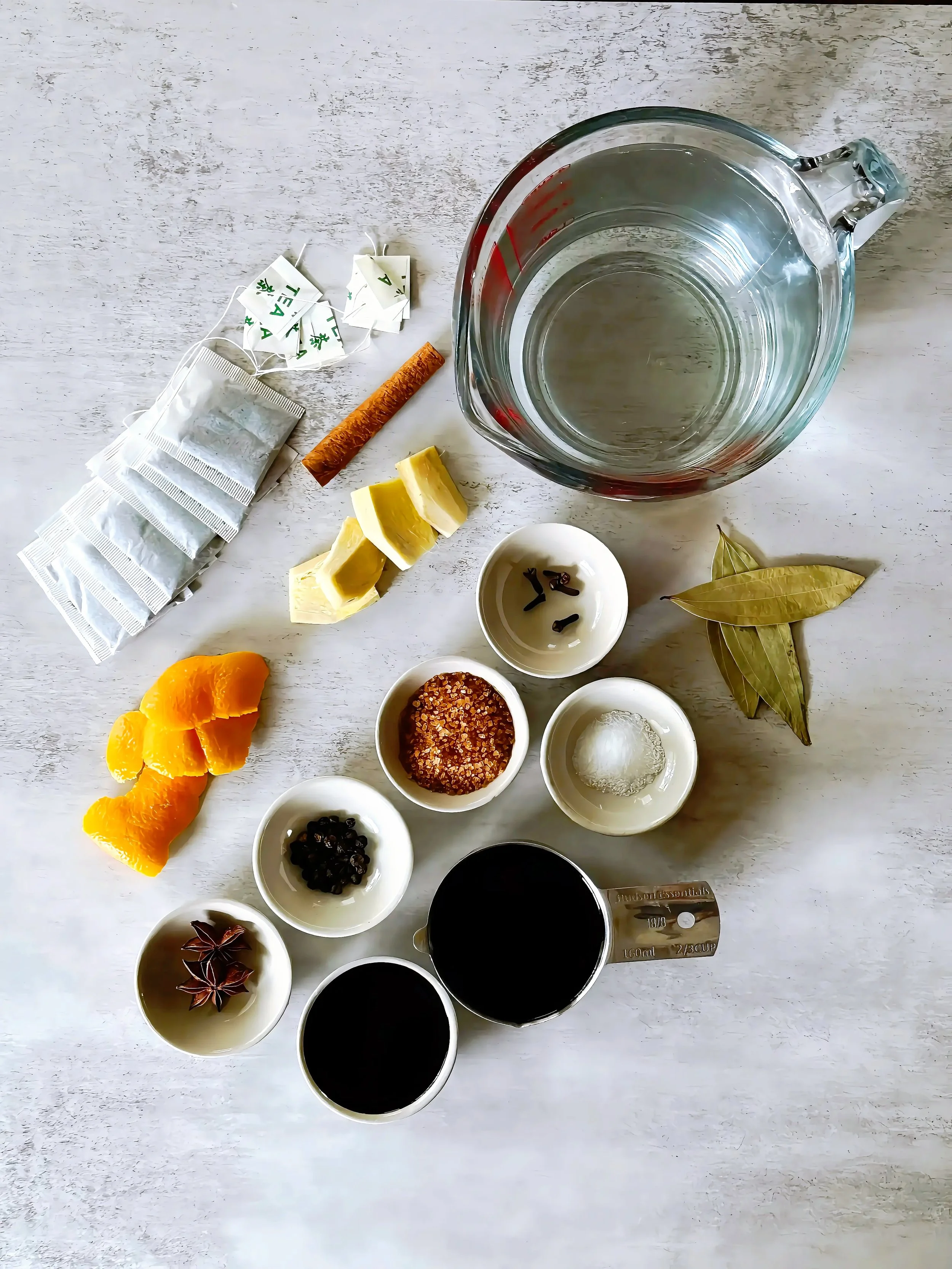
Prepare the marinade. In a separate pot combine the 6-8 black tea bags,1 cinnamon stick, 1/2 tsp whole peppercorns, 2 star anise, 1 tbsp brown sugar, 5 whole cloves, sliced ginger, 1/2 tsp salt, 3 bay leaves, 2/3 cup soy sauce, 2 tbsp dark soy sauce, few pieces of orange peel, and 5 cups water. Bring to a boil then reduce the heat and simmer for 10 minutes.
Remove the pot from the heat and allow the mixture to steep for another 10-20 minutes. Remove the tea bags and orange peel.
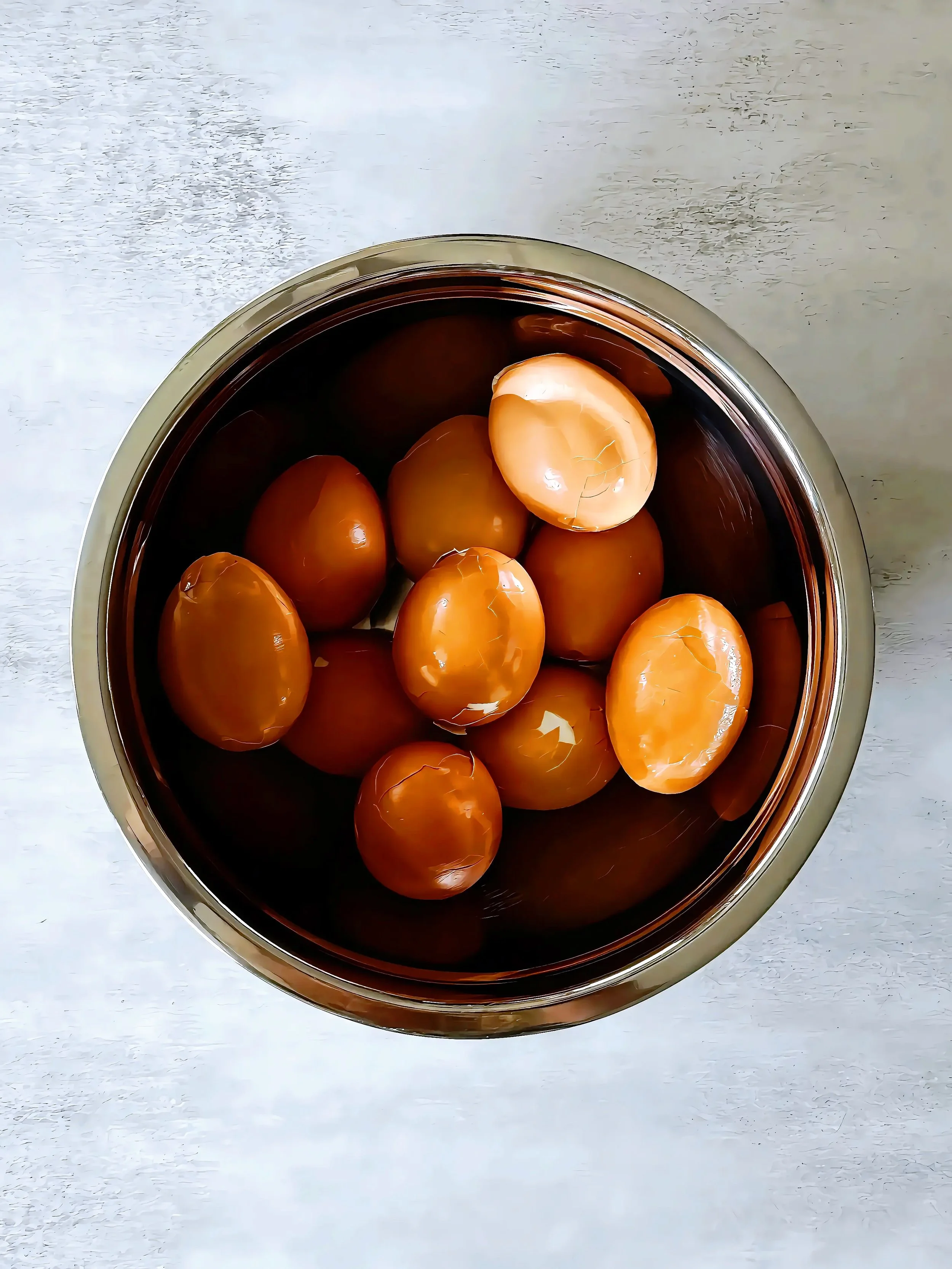
Crack the eggs. Gently tap each egg against a hard surface creating cracks all over the shell without peeling it or damaging the egg white. This creates the characteristic marbled pattern.
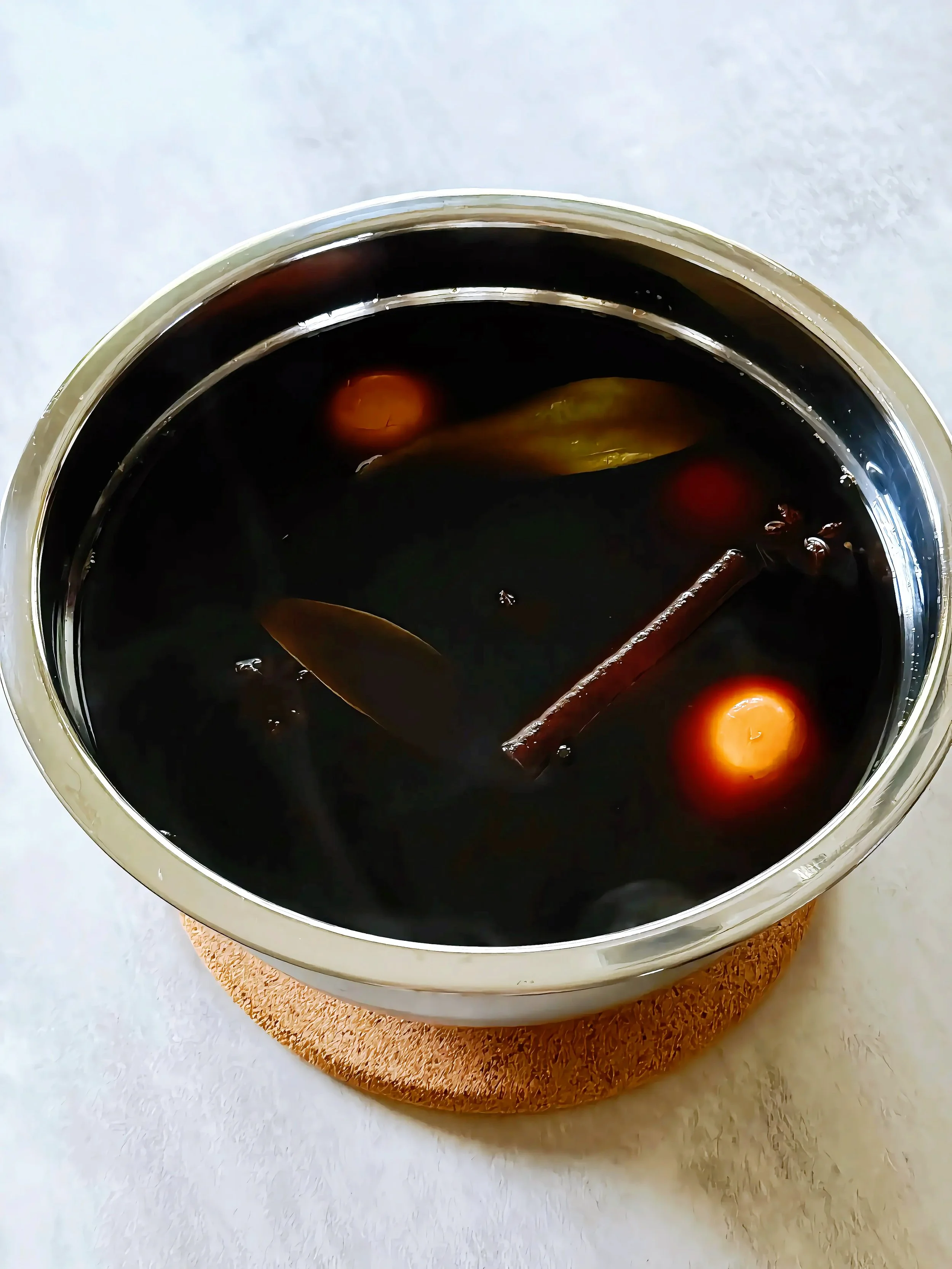
Place the cracked eggs in a bowl and pour the marinade over them. Cover and refrigerate overnight, preferably 12-24 hours.
To serve peel the eggs to reveal the marbled appearance.
Tips
Crack the eggs evenly; the more evenly distributed the cracks the more intricate the marbled pattern will be once peeled.
Use strong black tea like Assam or Ceylon.
Tangerine peel works as a great substitution for the orange peel.
Refrigerate the eggs promptly after preparation and consume within 3-4 days.