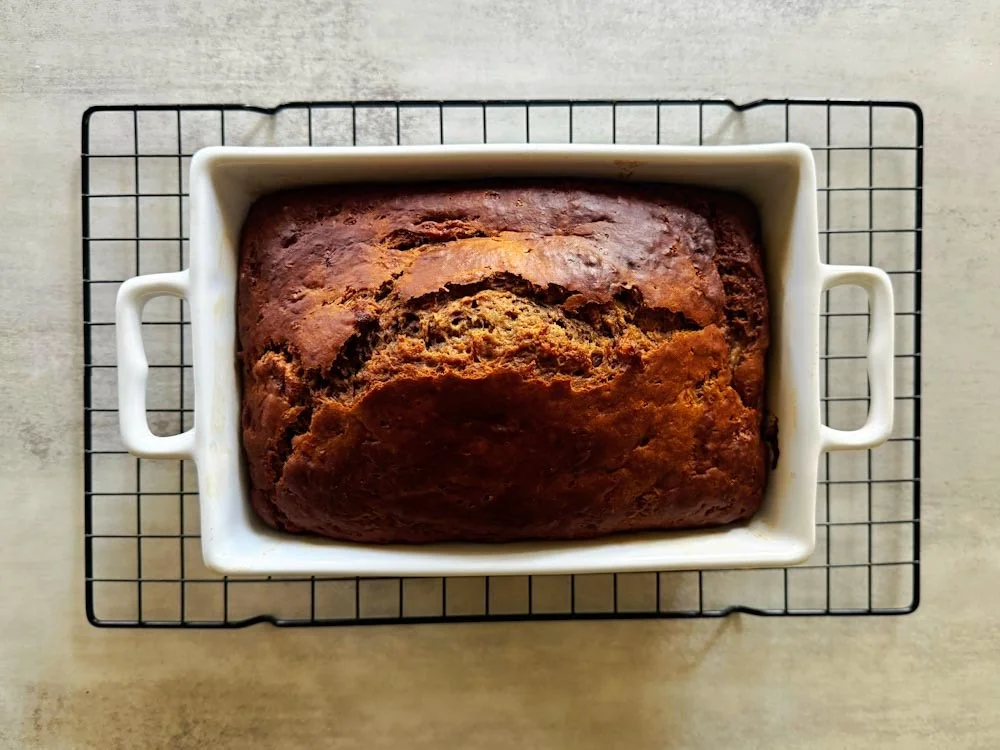
banana bread
This banana bread is soft, moist, and a good excuse to finally use those bananas that have been getting progressively more questionable on the counter. Greek yogurt keeps it tender while a little Nutella adds some extra richness and chocolate hazelnut flavor without taking over the whole loaf.
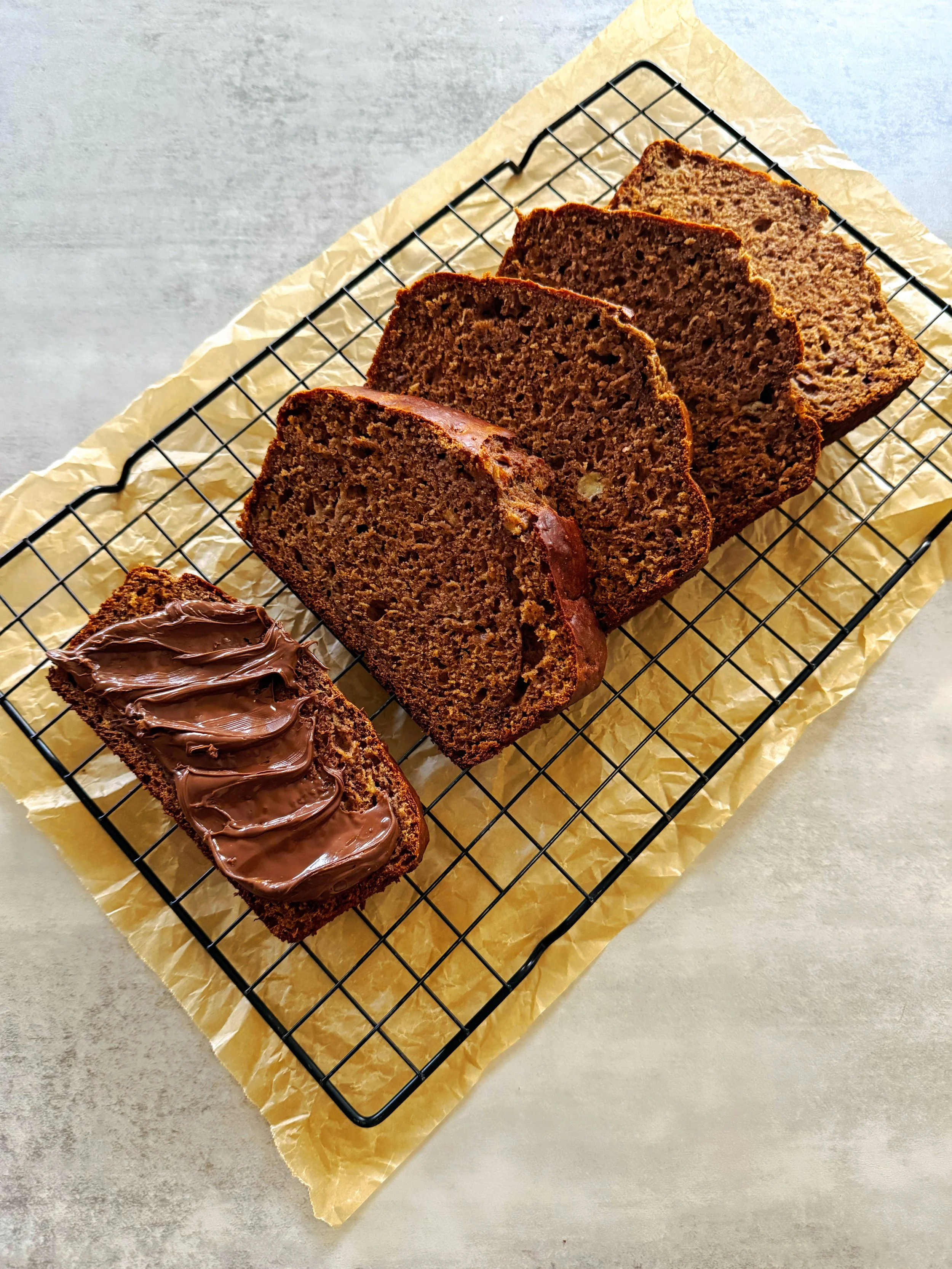
The history of banana bread
Banana bread as we know it is largely an American creation that took off during the 1930s. Bananas had become widely available in the US by then while the Great Depression made wasting overripe fruit especially undesirable. Recipes for banana based breads and cakes existed earlier but banana bread began appearing much more frequently in American cookbooks during this period. Its popularity continued through the mid 20th century eventually turning overripe bananas into something people wait for on purpose.
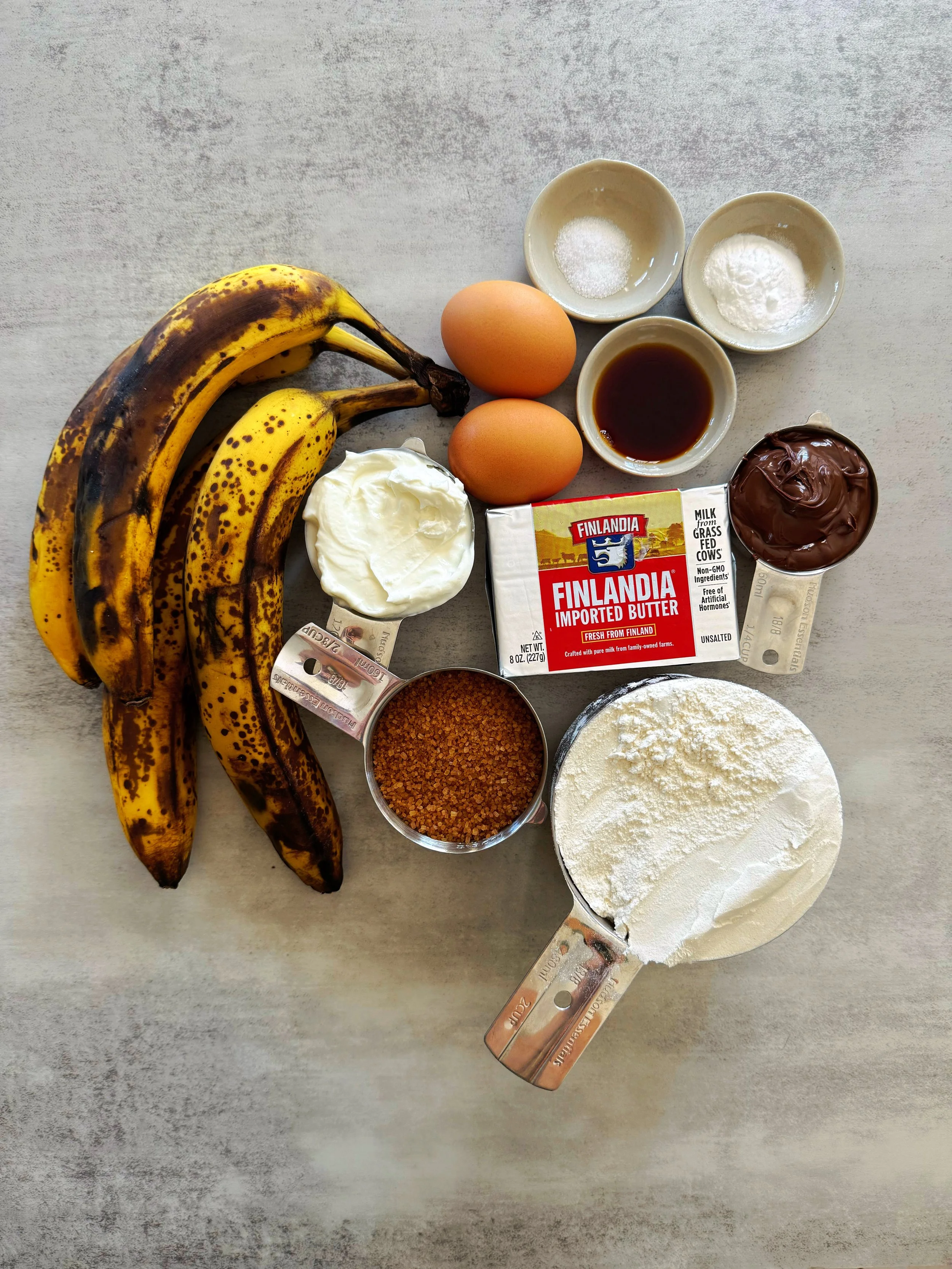
Why using overripe bananas is important
Overripe bananas are important in banana bread because they’re both sweeter and easier to incorporate into the batter. As bananas ripen their starches break down into sugars giving the bread more natural sweetness and a stronger banana flavor. They also soften considerably so they mash easily. Bananas covered in brown spots (or even mostly brown) might not look particularly appealing anymore but they’re usually at their best for baking.
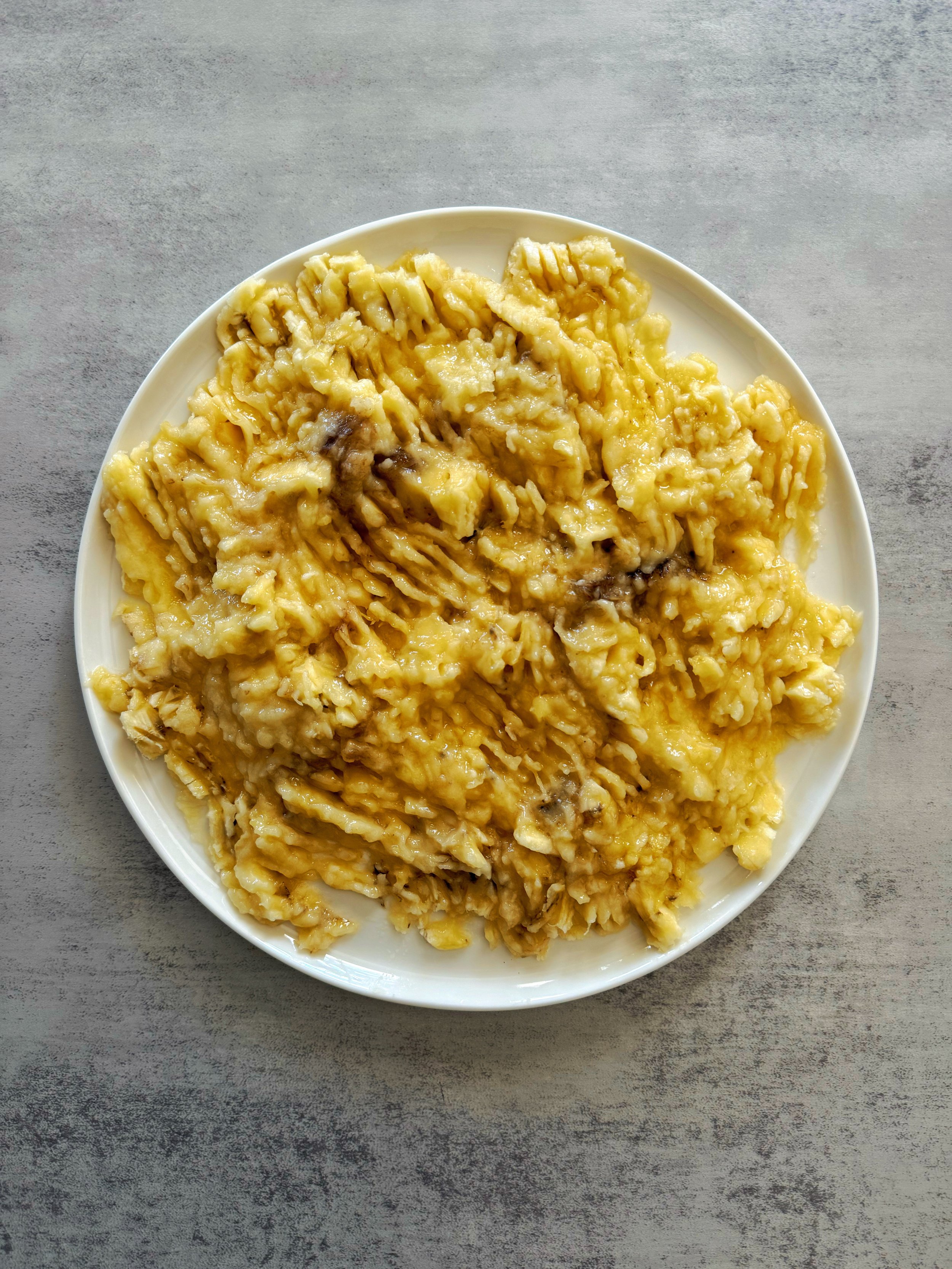
Why is banana bread better the next day?
Banana bread often tastes even better the next day because its moisture and flavors had time to redistribute throughout the loaf. As it rests the crumb becomes softer and more evenly moist. Once completely cooled, keeping it tightly wrapped also prevents moisture from escaping which is why a day old banana bread can taste richer and more tender than it did straight out of the oven.
Brown sugar vs. white sugar
Brown sugar and white sugar affect banana bread a little differently. Brown sugar contains molasses which adds moisture, a deeper caramel like flavor, and usually a softer, slightly denser crumb. White sugar has a cleaner sweetness and tends to produce a somewhat lighter loaf. This recipe relies on brown sugar as the main sweetener with a small amount of white sugar as an optional addition for anyone who prefers a sweeter banana bread.
How to make banana bread?
Preheat oven to 350f and butter a baking dish or loaf pan.
In a small bowl whisk together 2 cups all purpose flour, 1/2 tsp salt, and 1 1/4 tsp baking soda.
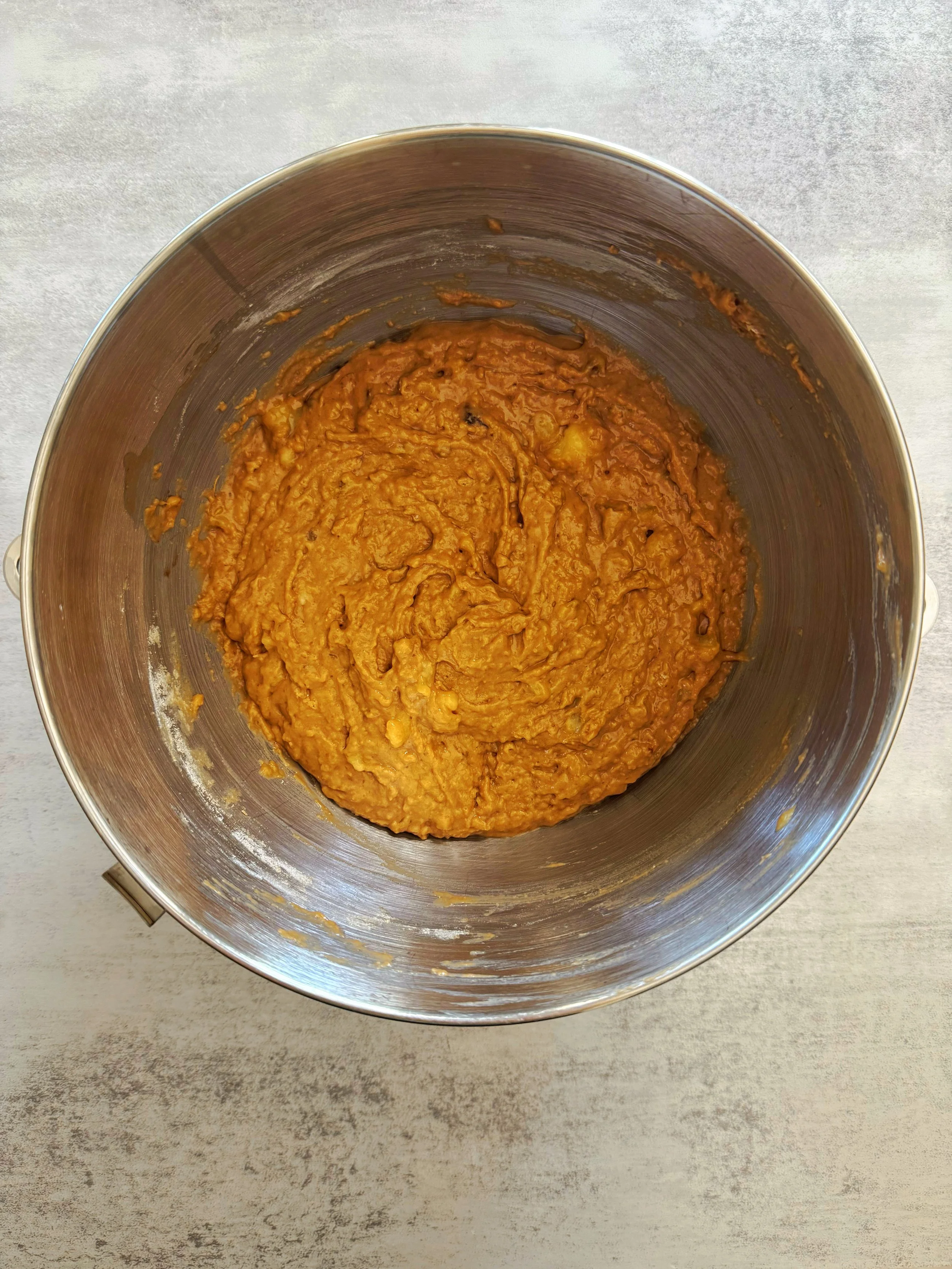
Mash the bananas leaving some chunks, then in a large bowl combine them with 1/2 cup Greek yogurt, 1/3 cup melted butter, 1/2 cup brown sugar (and the additional 1/4 cup sugar if desired), 2 eggs, 1 tbsp vanilla extract, and 1/4-1/3 cup Nutella. Whisk until uniform, then fold in the dry ingredients until everything is just combined and no dry streaks remain.
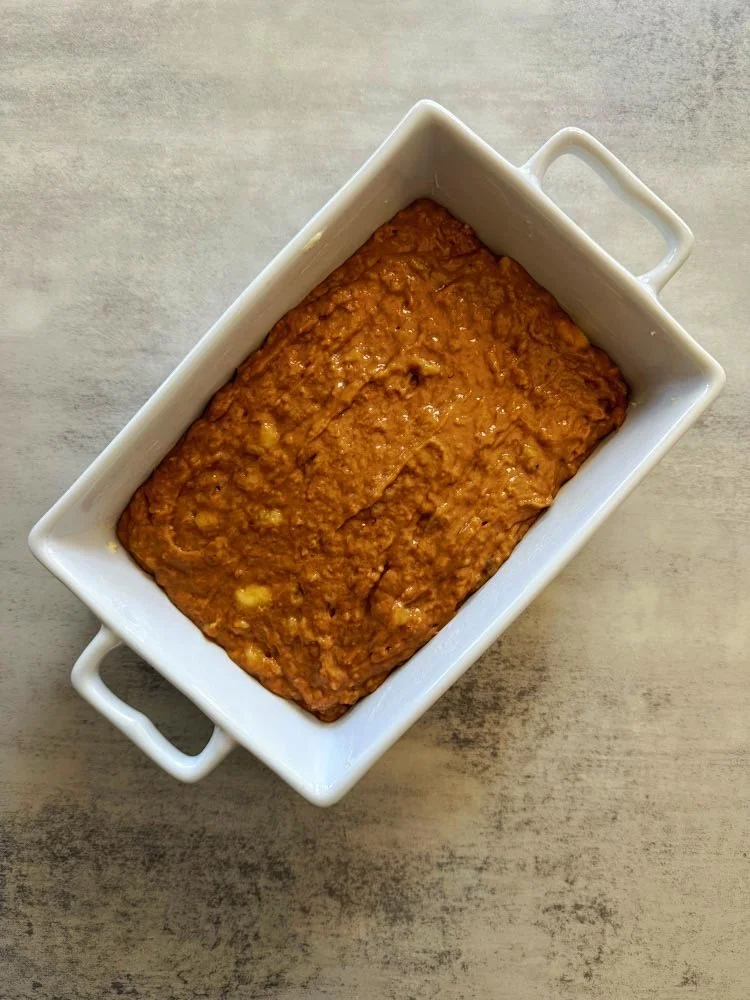
Transfer the batter into your baking dish and bake for 50-65 minutes until a toothpick comes out with a few moist crumbs but no wet batter.
Let the banana bread cool completely before cutting.
Tips
Use overripe bananas with plenty of brown spots or black spots for the best sweetness and banana flavor.
Mash the bananas well but leave a few small chunks.
Let the melted butter cool slightly before mixing it with the eggs.
Use full fat Greek yogurt for the richest, tender bread.
Use the full 1/3 cup Nutella is you want the flavor to come through more noticeably.
The additional ¼ cup white sugar is completely optional; leave it out for a less sweet loaf.
Baking time will depend on the pan. A deep loaf pan will generally take longer than a wider baking dish.
Start checking around 50 minutes. It’s done when a toothpick comes out with a few moist crumbs but no wet batter.
Let it cool completely before slicing. Cutting while hot can make the center seem gummy even when properly baked.
Once cooled wrap it well and let it sit overnight.