
This is proper plov: one pot, no shortcuts, and the kind of meal that makes the whole house smell amazing. Lamb gets browned with freshly ground cumin, coriander, and pepper, then it’s layered - not stirred - with onions, carrots, garlic, bay, chickpeas, and raisins so every stage builds flavor without turning into mush. The rice goes in last and steams on top, soaking up all the lamb fat and spiced broth until it turns fluffy and golden. It’s warm, deeply savory, a little sweet, and exactly why plov is a flex across Central Asia.

What is the history of plov?
Plov (also called pilaf/pulao/polov) is an ancient Silk Road rice dish that spread across Central Asia, the Middle East, and beyond, changing little everywhere it landed. The version most people recognize as Central Asian plov (meat browned first, then layered with onions and carrots, then rice cooked on top to absorb the rich broth) became a signature method in places like Uzbekistan and Tajikistan where it’s treated as both daily food and celebration food. Many historians link one of the earliest written descriptions to the 10th century scholar Avicenna (Ibn Sina) who recorded a pilaf style dish and helped cement it as a respected, “proper” meal rather than just peasant rice. Today plov is basically cultural currency; cooked in huge pots for weddings, holidays, and gatherings.
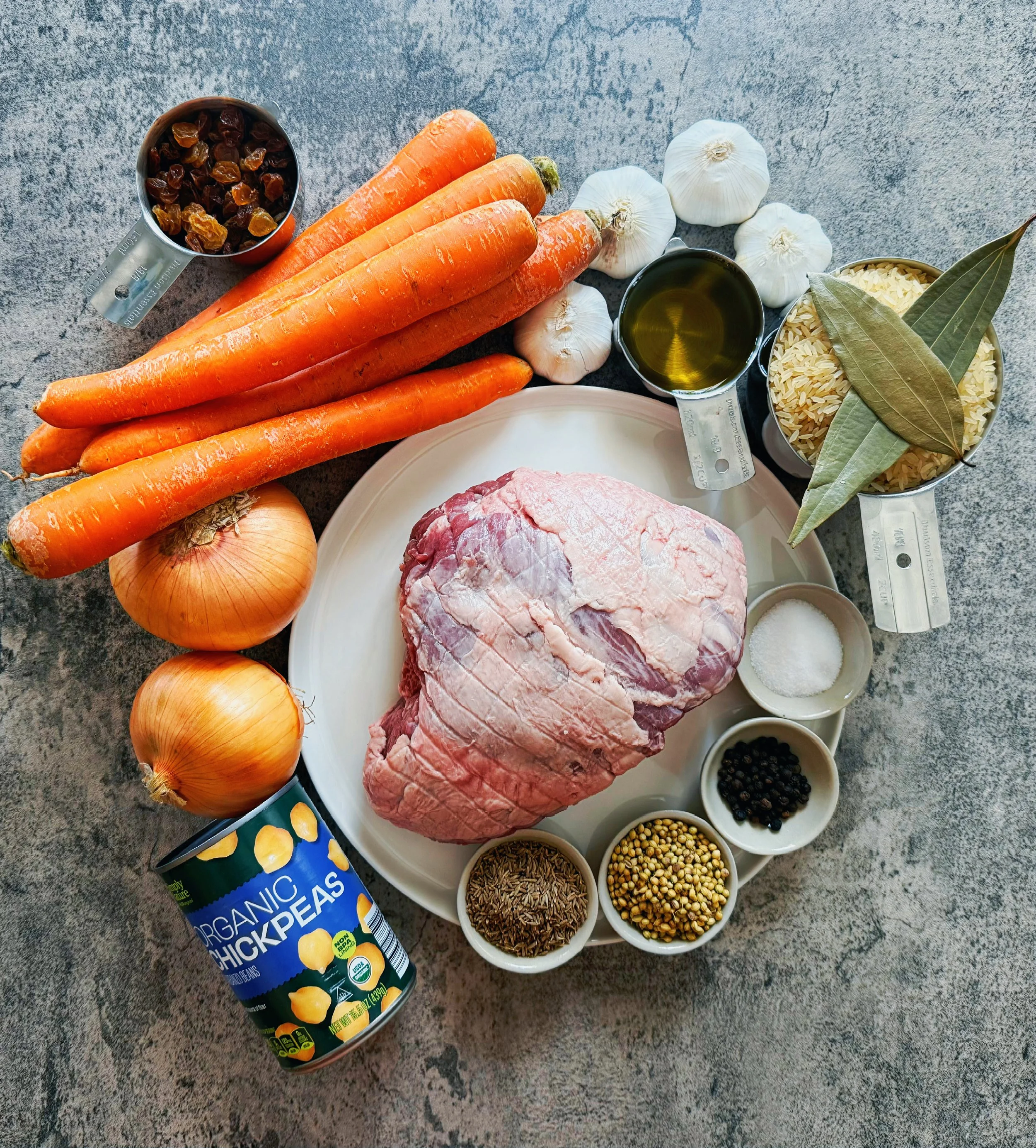
Why are the ingredients cooked in layers?
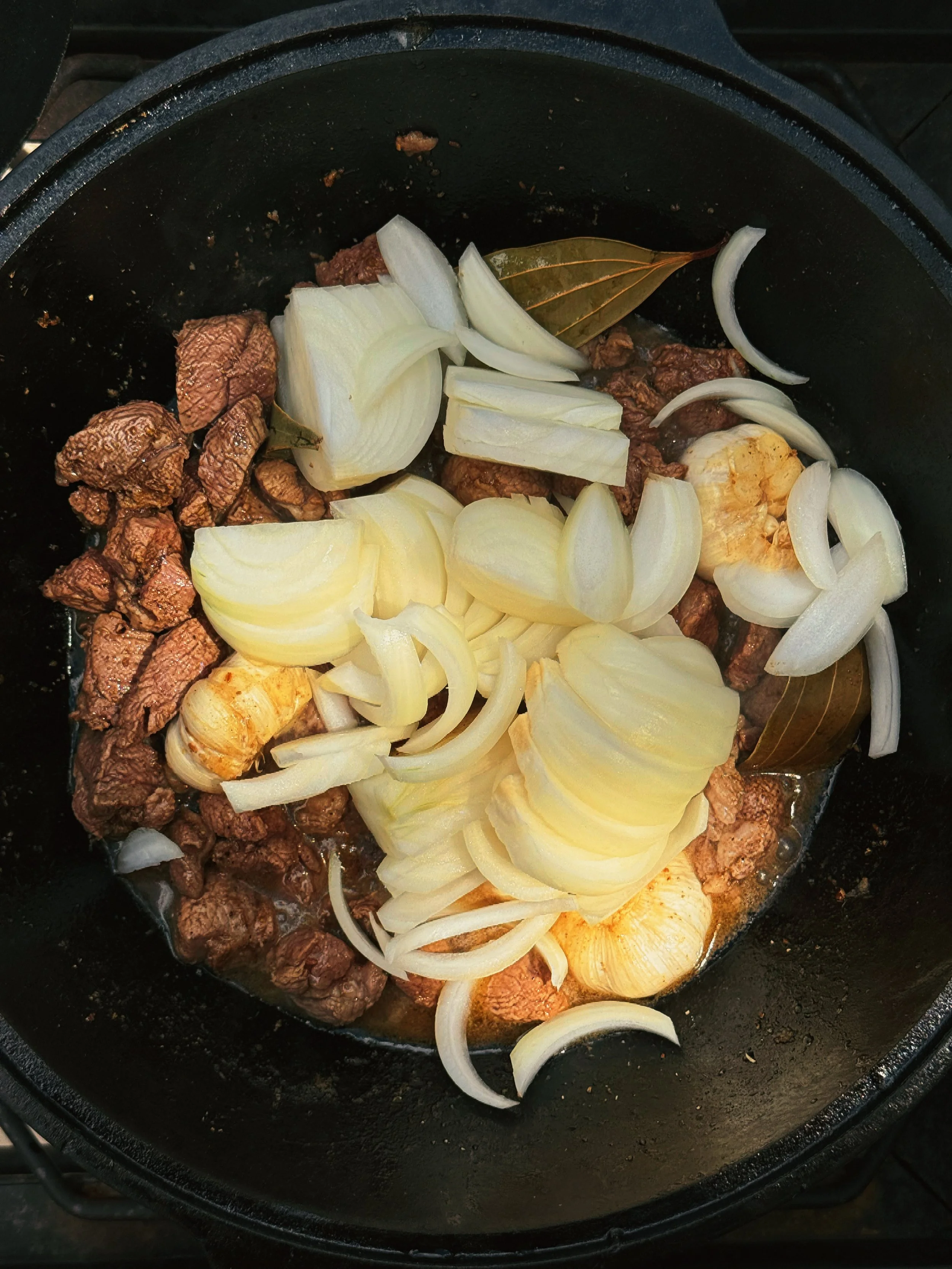
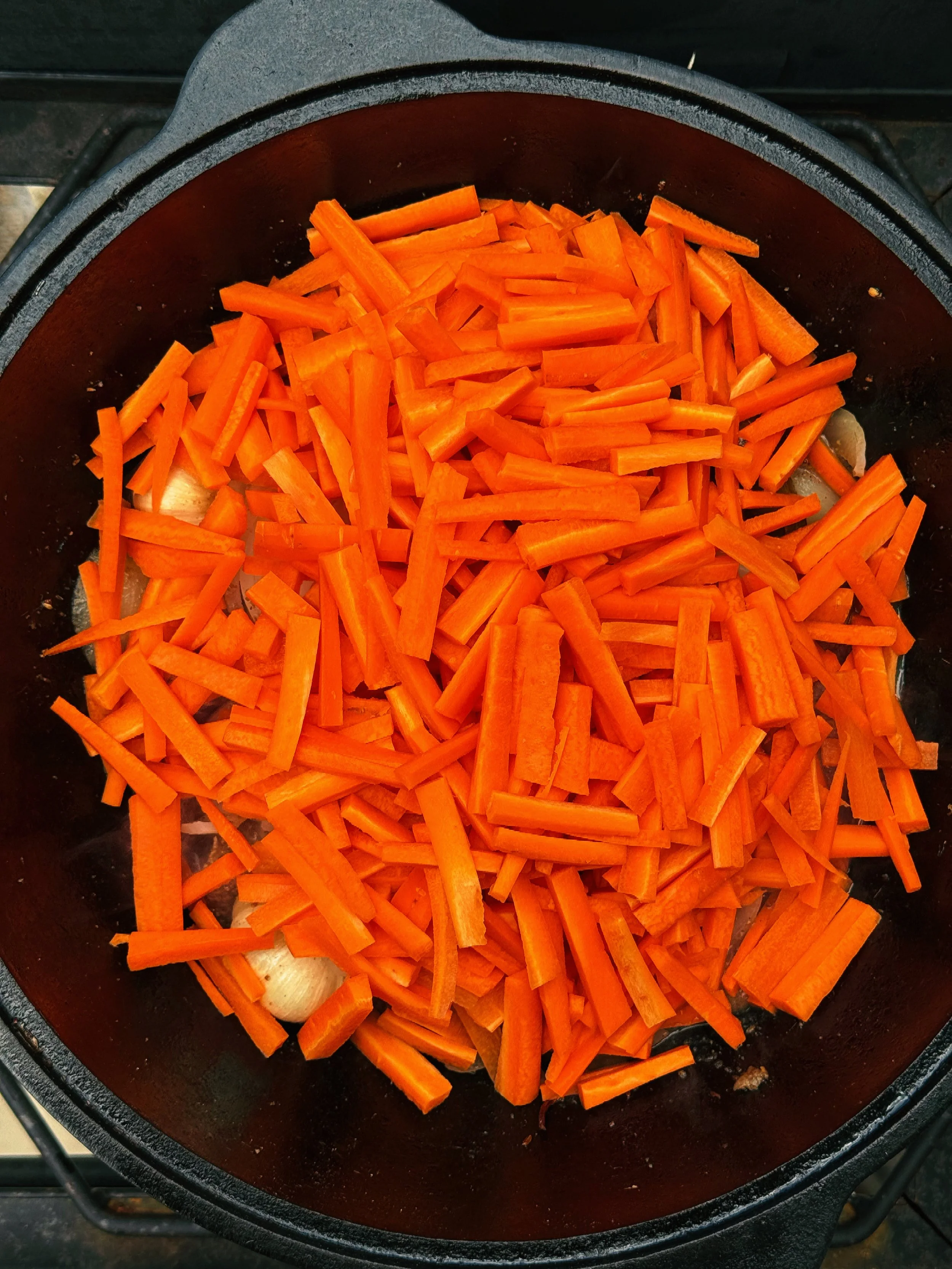
In traditional Uzbek plov the ingredients are cooked in layers rather than just mixed together. Meat, onions, and carrots are cooked first to create the zirvak; a concentrated base where where the fat carries thr flavor of the meat, vegetables, and spices. The rice is then laid over it rather than stirred in creating two distinct cooking environments in the same kazan; the lower layer continues to braise while the above absorbs the rising seasoned liquid and eventually finishes by steaming. Keeping the rice relatively undisturbed also limits the starch release helping the grains remain distinct instead of becoming creamy or sticky. Only toward the end the plov is brought together so each ingredients contributes something different rather than everything cooking into one uniform texture.
Why men traditionally cook large scale plov in Uzbekistan?
In Uzbek culture everyday cooking has traditionally been associated with women but large ceremonial batches of plov have often been prepared by men known as oshpaz. Cooking wedding or community plov can mean feeding hundreds (or even thousands) of people from enormous kazans turning the job into a specialized public role rather than ordinary cooking. Skilled oshpaz learn how to control the fire, fat, liquid, and timing at a scale where written measurements are less useful than experience. The tradition also reflects the historically gendered division between private household work and public ceremonial life: women frequently prepared plov at home while men became more visible as the cooks at large gatherings. As a result mastery of ceremonial plov developed into a respected craft with accomplished oshpaz gaining reputations within their communities.
Why plov is more than just rice pilaf
Pilaf is an umbrella term covering countless dishes from the Balkans and Middle East through South and Central Asia while plov refers to traditions that developed their own recognizable forms across Central Asia. In Uzbekistan especially plov has become closely associated with hospitality, community, and even regional identity; different cities are known for their own versions and the dish can communicate where it was made and what occasion it was made for. Its importance is significant enough that UNESCO recognizes Uzbekistans Palov culture and tradition as intangible cultural heritage. In that sense calling it simply rice pilaf is a little like calling a specific regional bread just “bread”; technically related but missing much of what the name represents.
Why plov is traditionally cooked in a kazan
A kazan is especially suited for plov because its shape manages several kinds of cooking in one pot. The wide opening provides plenty of surface area for browning meat and onions and allows moisture to evaporate quickly while the deep rounded body holds enough liquid for the zirvak and creates a thick bed for the rice above it. Traditionally made from heavy cast iron a kazan stores and distributes heat steadily (particularly useful when cooking over an open fire). Its curved sides also make it easier to work with very large quantities without crushing or excessively stirring the rice. The result is a vessel capable of frying, simmering, absorbing, and steaming in succession which is how plov is built.
Why plov is traditionally served with achichuk
Plov is deliberately rich so its traditional accompaniments tend to provide contrast rather than more richness. Achichuk is a simple Uzbek salad of thinly sliced ripe tomatoes and onions sometimes made with herbs. The tomatoes contribute acidity and fresh juice while the raw onion adds sharpness and crunch cutting through the fat of the meat and oil and refreshing the palate between bites. It typically doesn’t need an elaborate dressing; the liquid released by salted tomatoes essentially creates its own. The simplicity is the point; achichuk doesn’t compete with the heavily flavored plov but makes it feel more balanced.
Why plov rice is soaked and washed
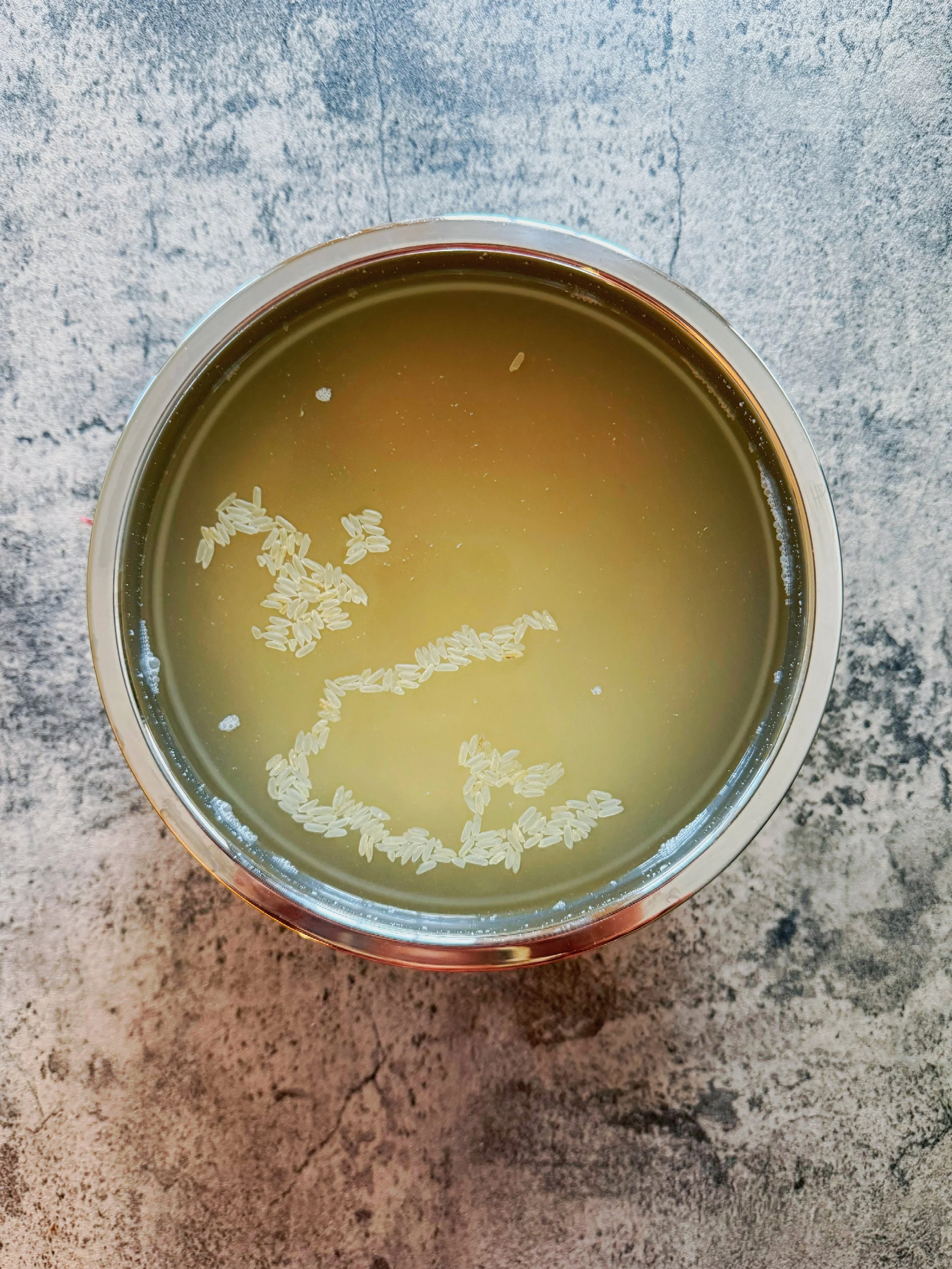
Thoroughly washing the rice removes loose surface starch which would otherwise thicken the cooking liquid and encourage the grains to stick together. That matters in plov where distinct, separate grains are part of the desired texture. Soaking serves a different purpose: it allows the grains to absorb water before they meet the rich zirvak. Prehydrated rice cooks more evenly and needs less time and liquid to become tender reducing the chance that the outside will turn soft while the center remains firm. Together washing and soaking prepare the rice to absorb the flavors of the plov while still retaining its individual structure.
How to make plov?
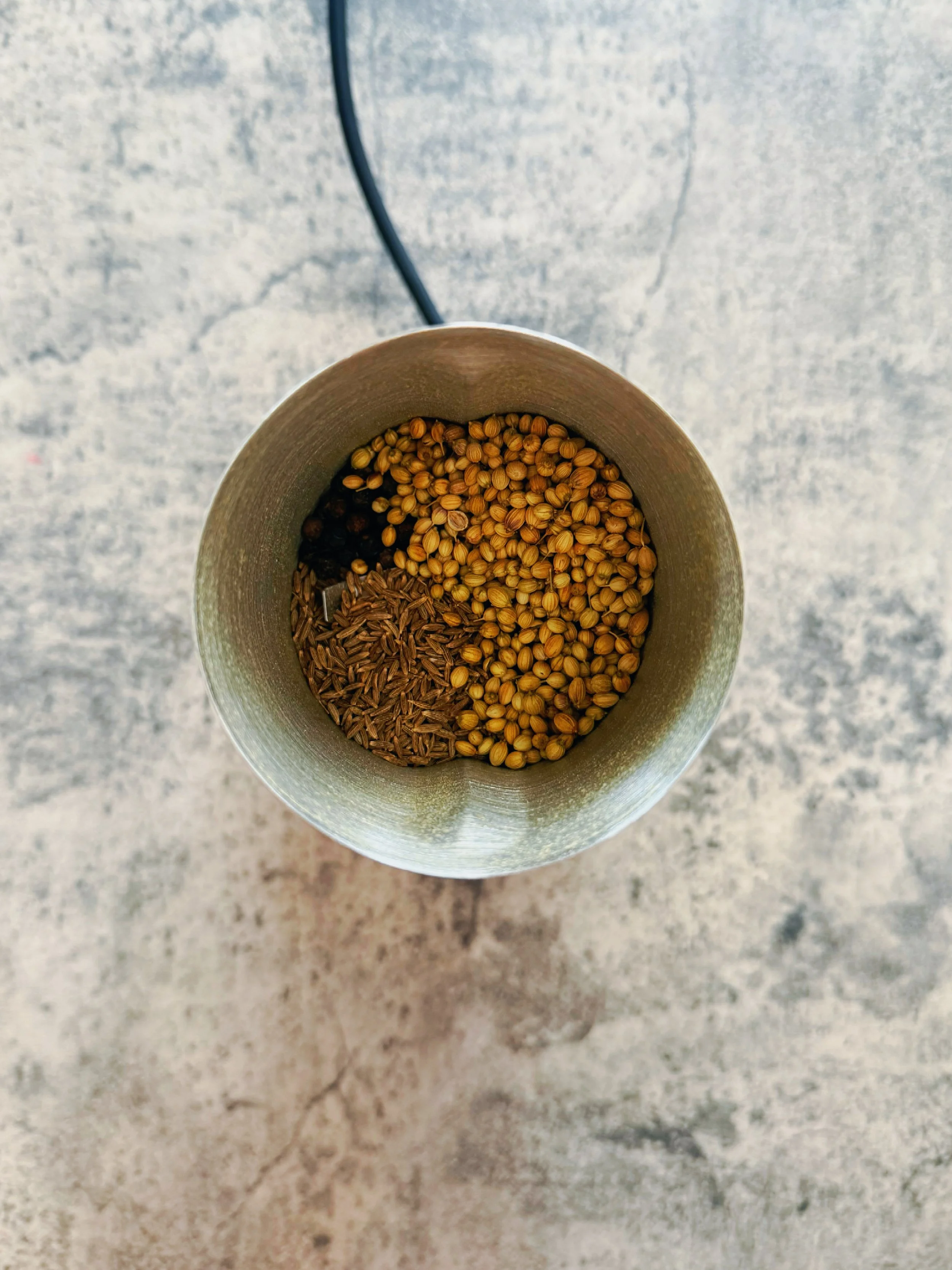
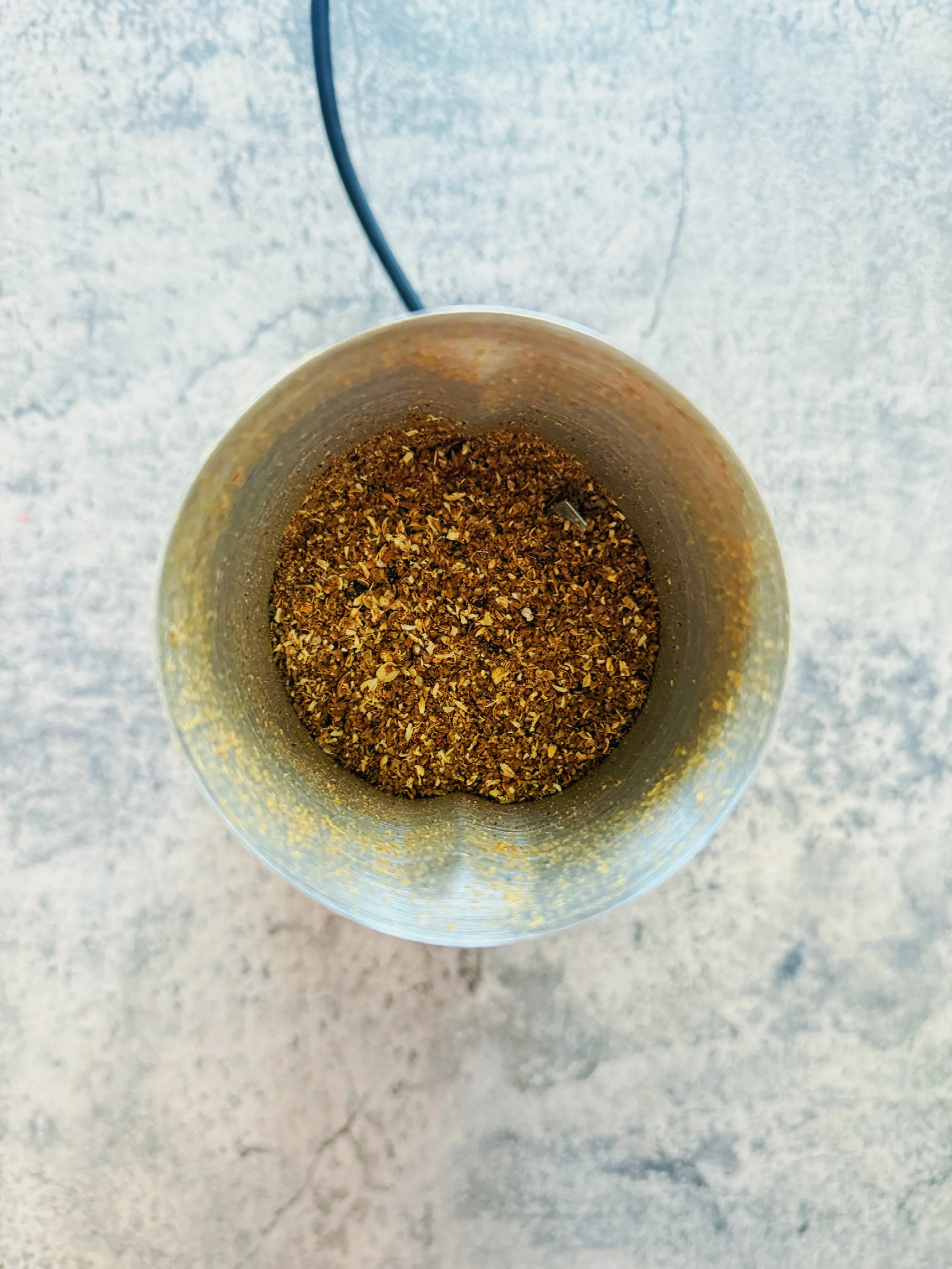
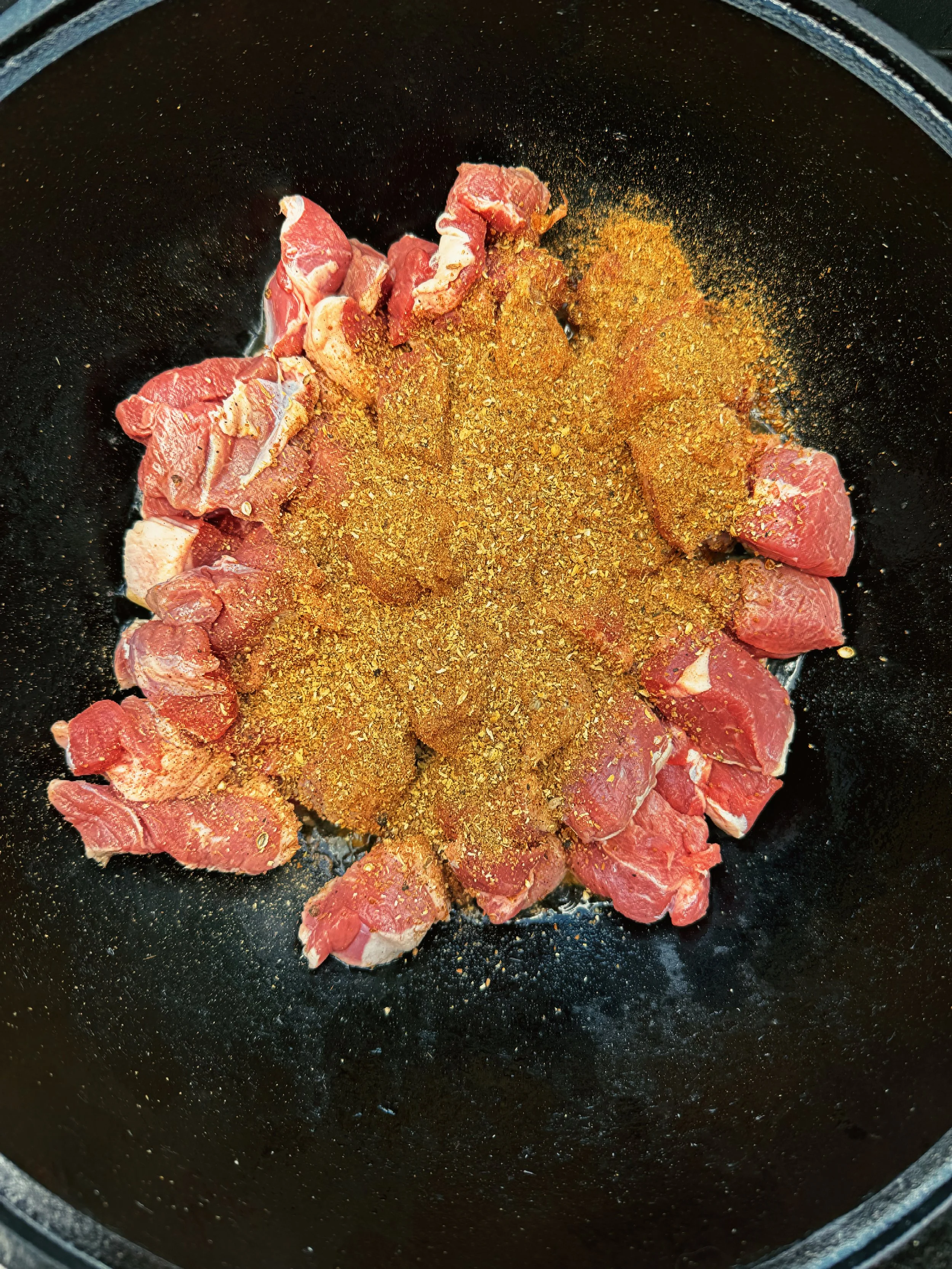
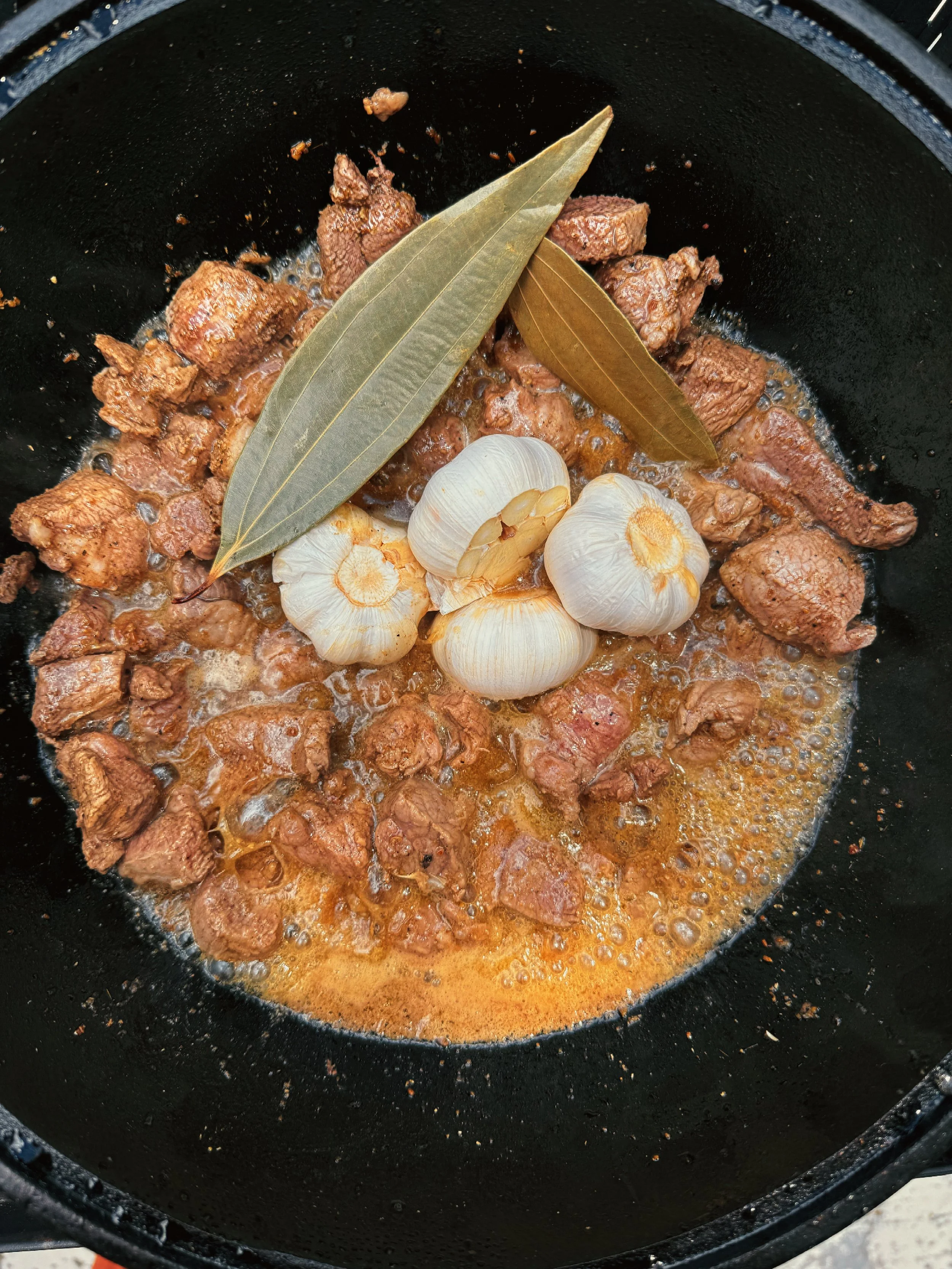
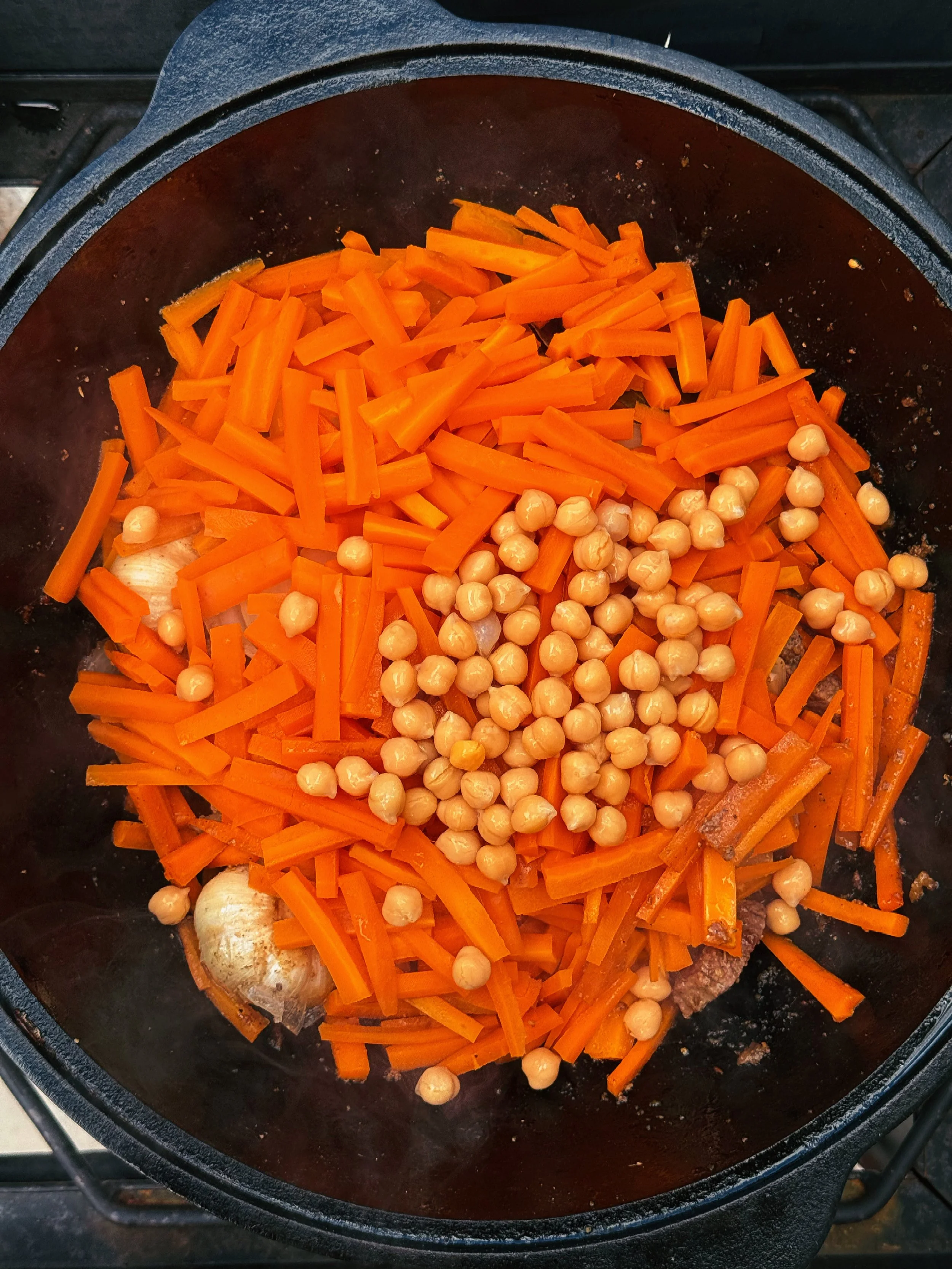
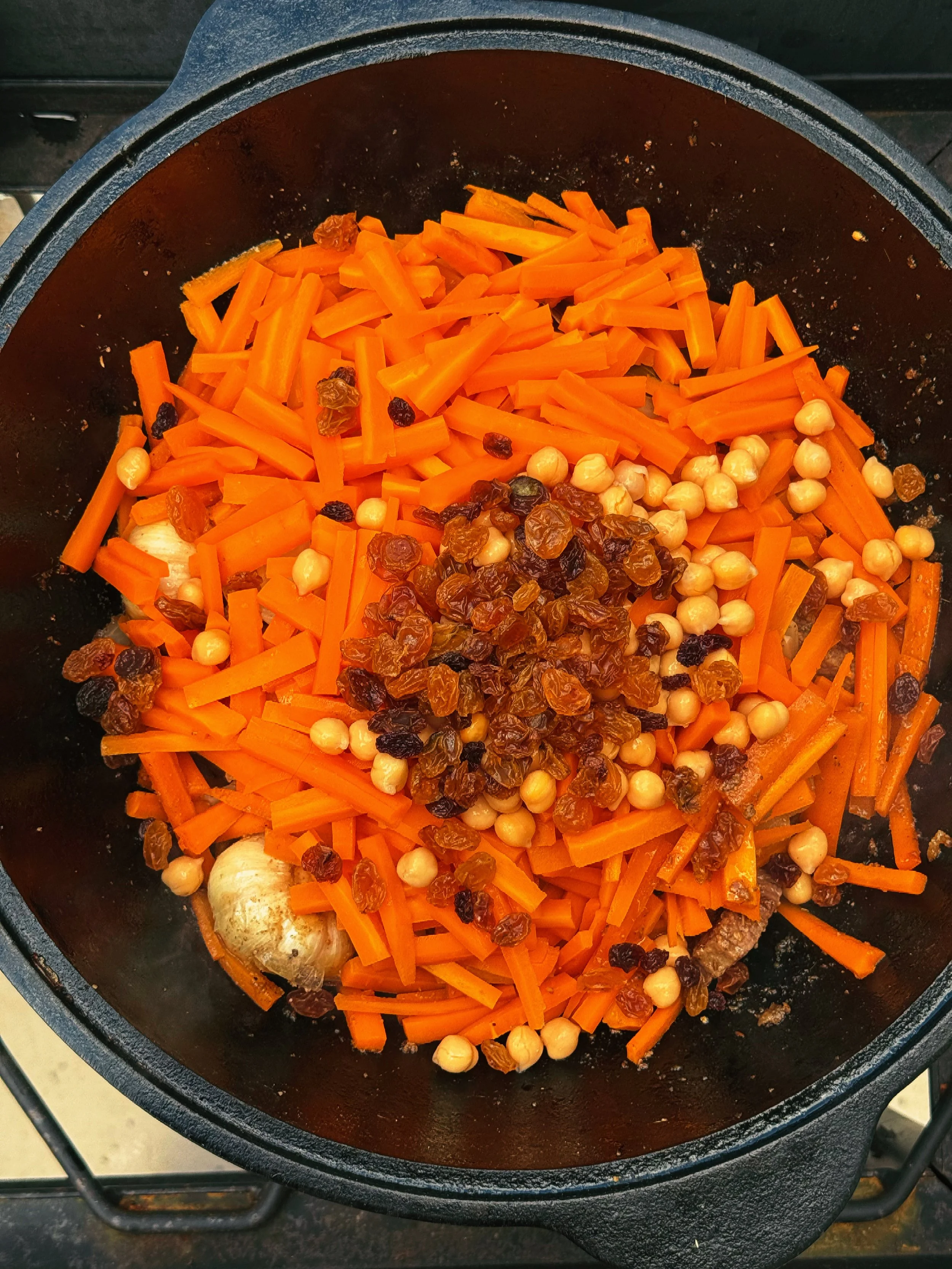
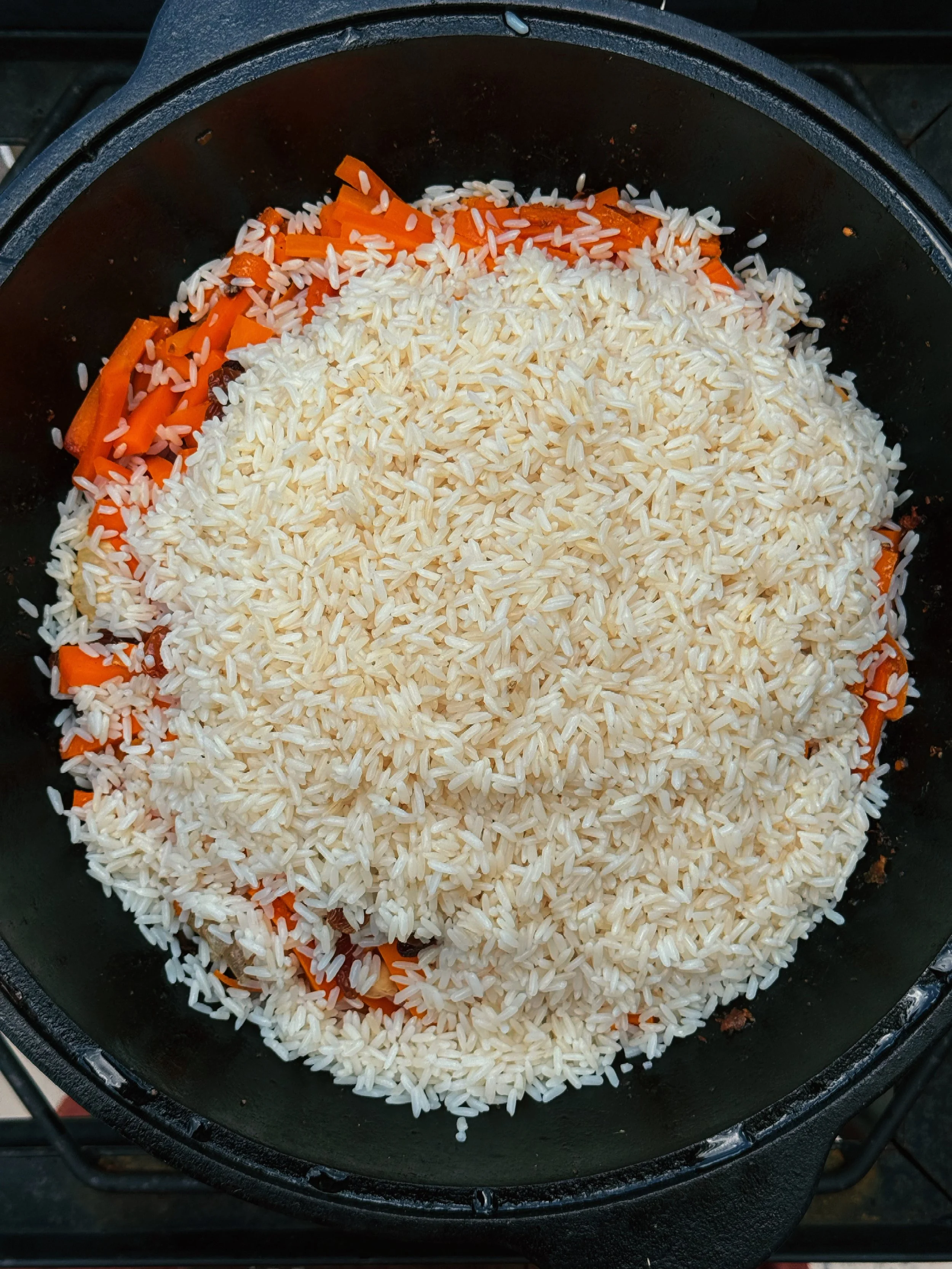
In a spice grinder coarsely ground coriander seed, cumin, and peppercorns. Set aside. Place rice in a bowl and cover with warm water. Set aside. Heat olive oil in a Kazan or Dutch oven over medium high heat. Once the oil is hot stir in lamb pieces and the ground spices, and cook for about 10 minutes until evenly browned. Stir in the heads of garlic and bay leaves. Lower the heat to medium and add sliced onions as an even layer and cover. Cook for about 10 minutes and scrape the sides upward so nothing sticks but without mixing everything together. Add julienned carrots as an even layer, cover, and cook for another 10 minutes. Scrape the sides again and add a layer of garbanzo beans and raisins. Cover and cook for 20 minutes occasionally scraping the sides and bottom. Rinse the rice until the water runs clean. Add it as a pile in the middle and cover. Every few minutes move the rice around without spreading it to the edges. Then pour the boiling water on the sides and cover. Keep moving the rice around every few minutes. Once the rice is almost cooked spread it as an even layer all the way to the edges and cover for a few minutes. Then mix everything together and season with salt. Serve immediately!
Recommended products to make this recipe
*This page contains affiliate links. If you choose to purchase after clicking a link, I may receive a commission at no extra cost to you.

