
lavender crème brûlée
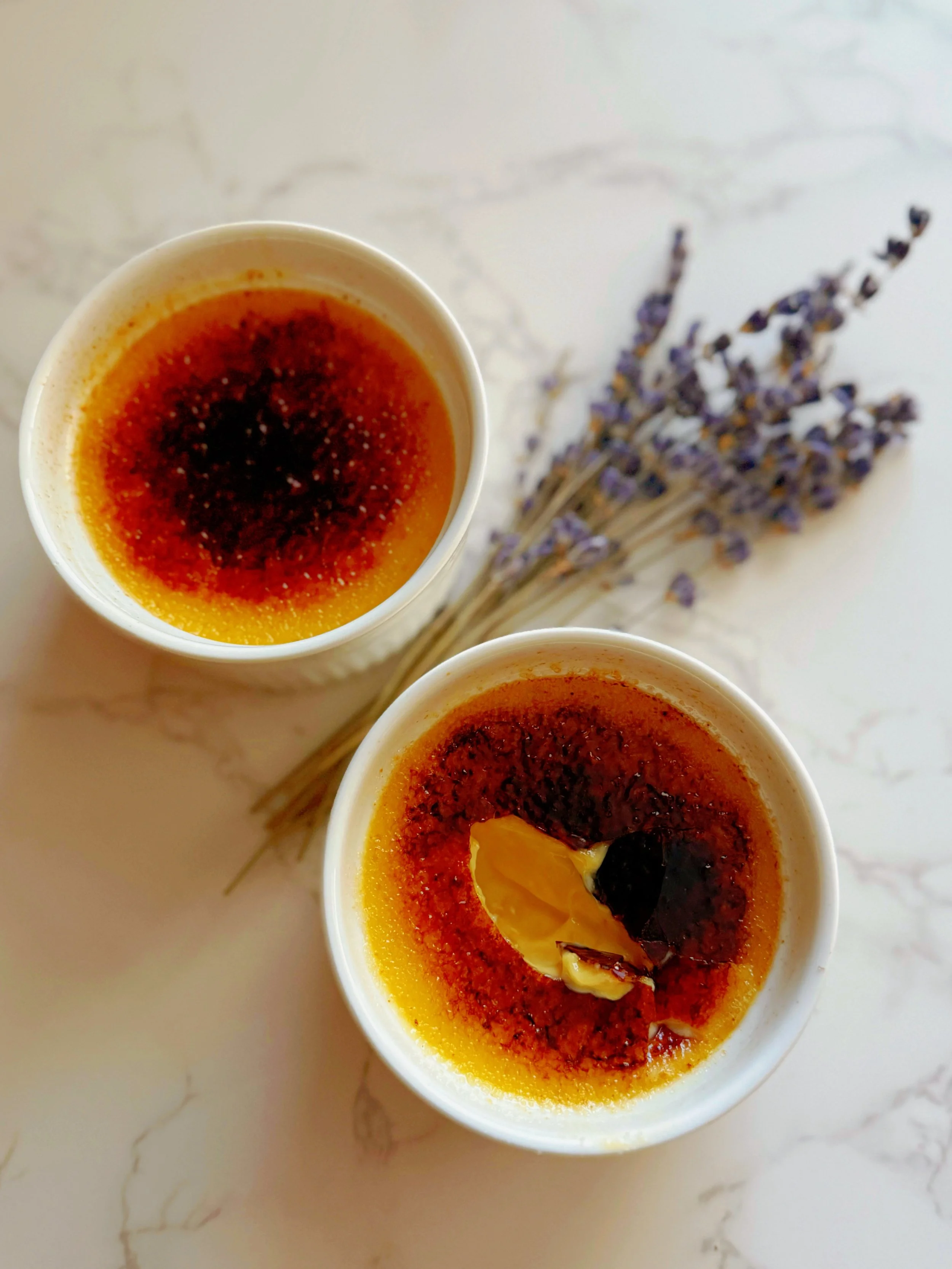
Lavender crème brûlée transforms a classic French custard into something softly aromatic and unexpected, balancing rich creaminess with delicate floral notes. Slowly infusing the cream with lavender allows the flavor to bloom gently rather than overpower, creating a dessert that feels elegant yet calming; familiar in structure but elevated through subtle fragrance. Finished with the signature crackling caramelized sugar top, this version brings together texture, aroma, and restraint, letting the floral element enhance the custard rather than dominate it.
What is the history of crème brûlée?
Crème brûlée (meaning burnt cream in French) is a classic custard dessert known for its silky texture and crisp caramelized sugar topping, though its exact origins are debated. Versions of baked custards with caramelized tops appeared in European kitchens as early as the 17th century with France, England (where a similar dish called Trinity Cream existed), and Spain all claiming influence. The French version became especially associated with refined restaurant cuisine gaining widespread popularity in the late 20th century as a symbol of elegant yet simple dessert making; built from humble ingredients like cream, eggs, and sugar but elevated through precise technique and texture contrast.
Lavenders history in desserts
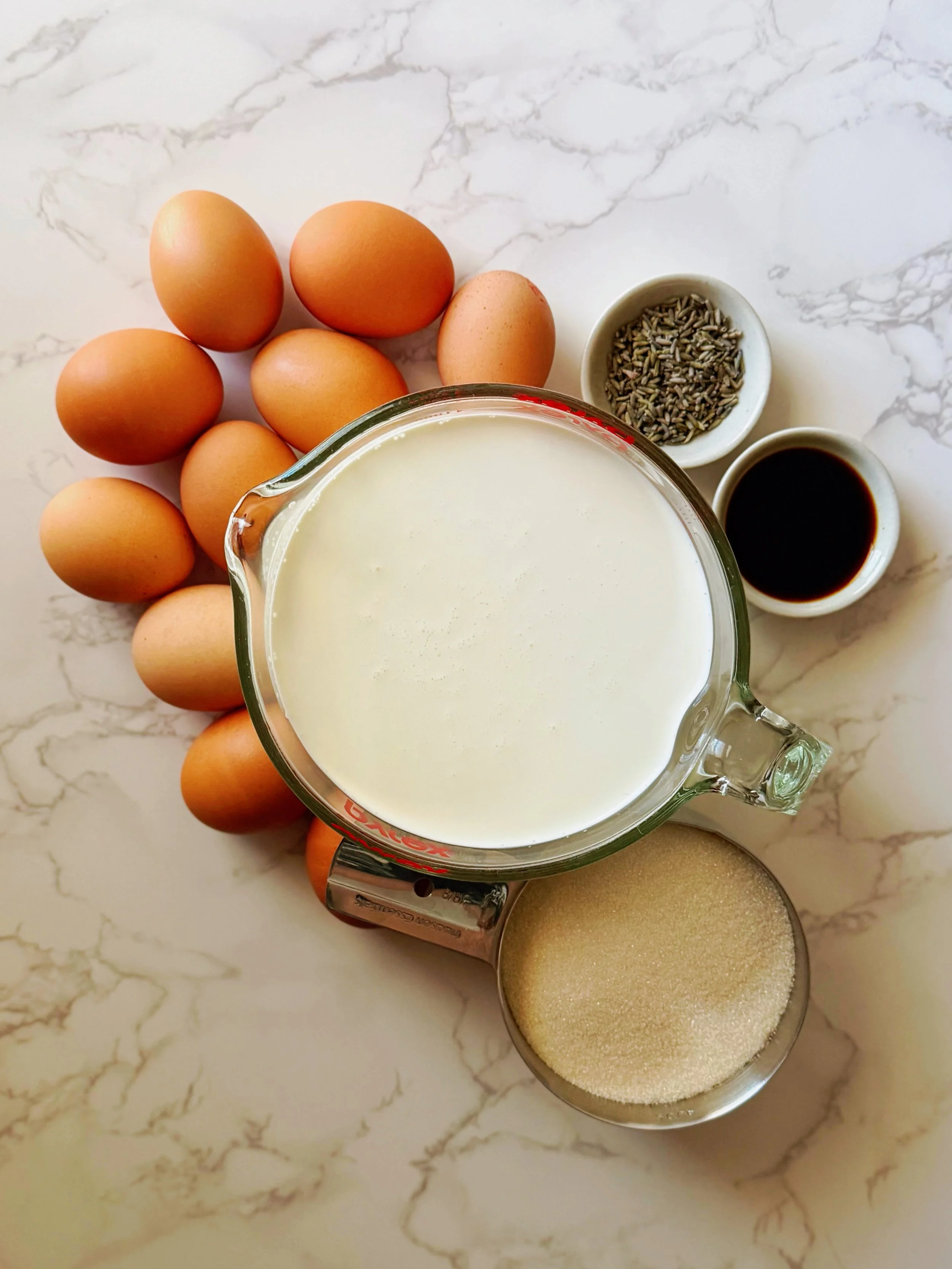
Lavender has a long history in culinary traditions, particularly across the Mediterranean where it was valued not only for fragrance but also for its calming properties and delicate floral flavor. In regions of France (especially Provence) lavender became associated with sweet applications like syrups, honey, baked goods, and custards, often used sparingly to add subtle aromatic complexity rather than overt perfume. Historically floral ingredients were a way to elevate simple ingredients into refined desserts and today lavender continues that tradition bringing a gentle botanical note that pairs naturally with creamy bases like ice cream, panna cotta, and crème brûlée.
What is the purpose of tempering eggs?
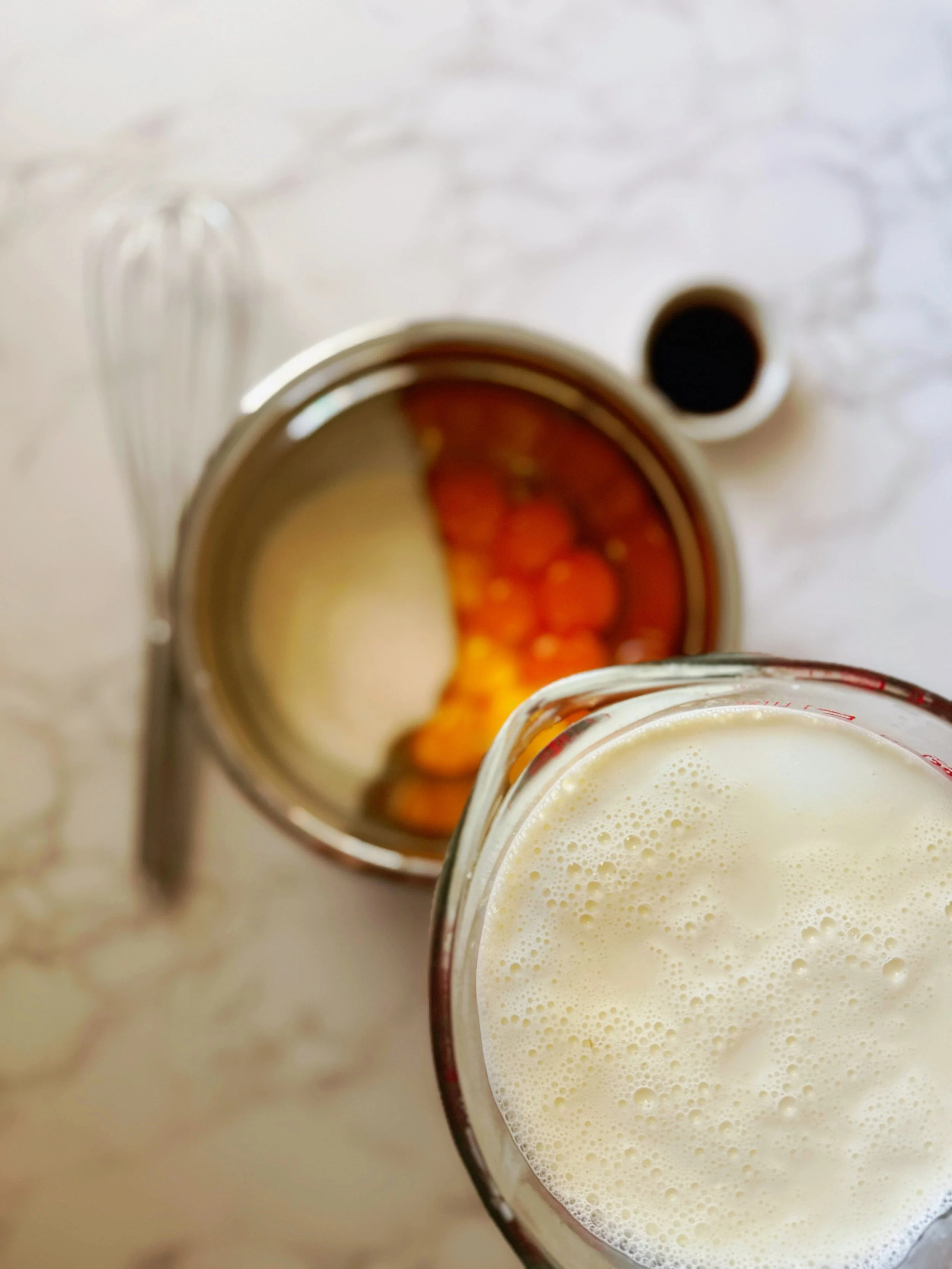
Tempering eggs is a classic culinary technique developed to safely combine delicate egg yolks with hot liquids without scrambling them, a method that dates back to traditional custard making in European kitchens where precise control of texture was essential. By slowly introducing heat while whisking the proteins in the eggs warm gradually, allowing them to thicken sauces and custards smoothly instead of curdling. Historically this technique became fundamental in French pastry and sauce making, forming the foundation of recipes like crème brûlée, crème anglaise, and pastry cream, where achieving a silky, stable texture depends on careful temperature management rather than high heat.
What is the history of custards?
Custards date back to medieval European cooking where eggs were prized for their ability to thicken and stabilize both sweet and savory dishes long before modern starches were widely used. Early custard-like preparations appeared in the Middle Ages as fillings for pies and tarts, often baked in pastry shells and flavored with spices like nutmeg and saffron, reflecting the influence of expanding spice trade routes. Over time French and English culinary traditions refined custards into the smooth, delicate desserts we recognize today; from baked crème brûlée to stirred custards like crème anglaise, transforming a practical egg thickening technique into one of the foundations of classical pastry and dessert making.
How to make lavender crème brûlée?
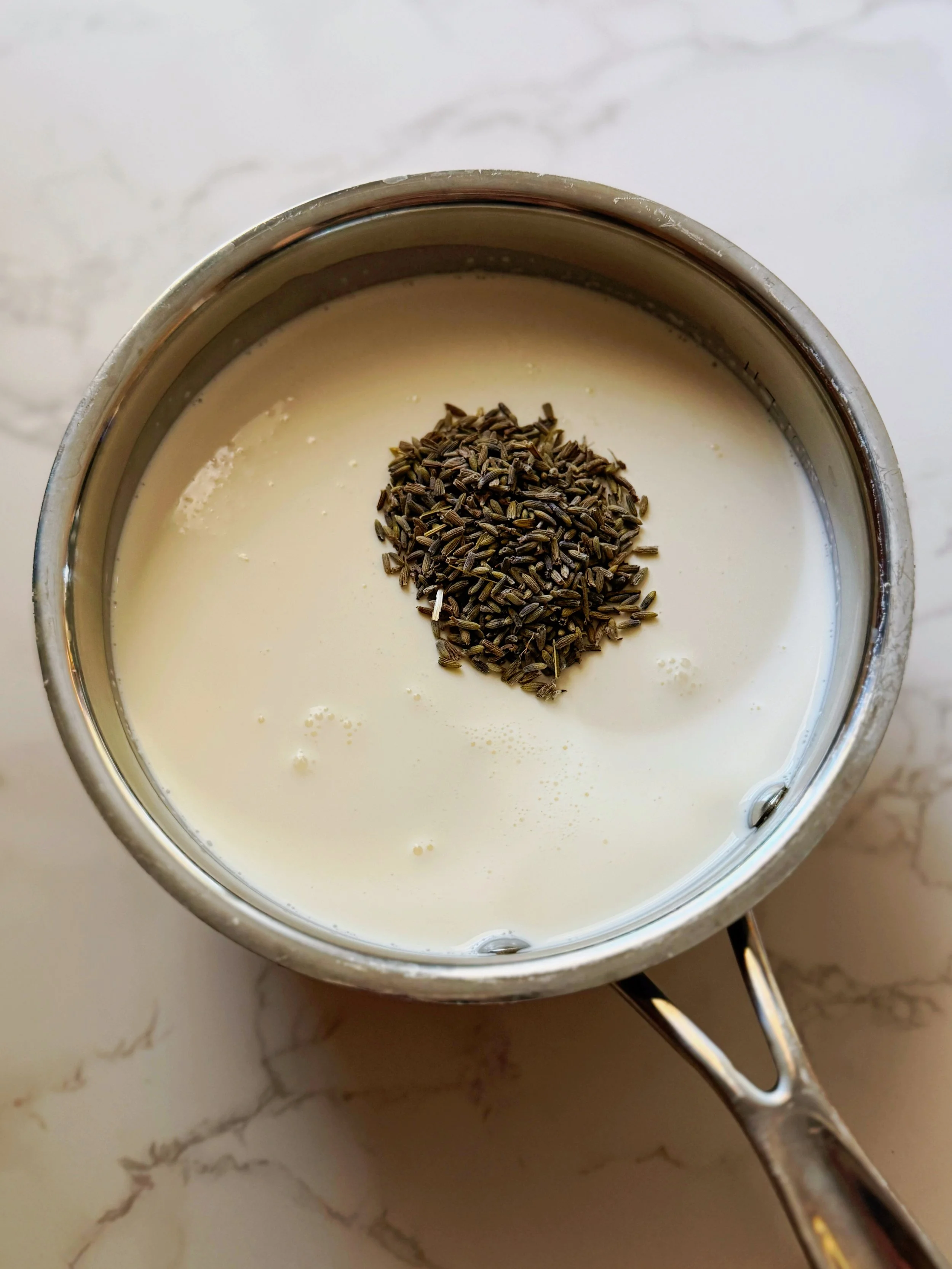
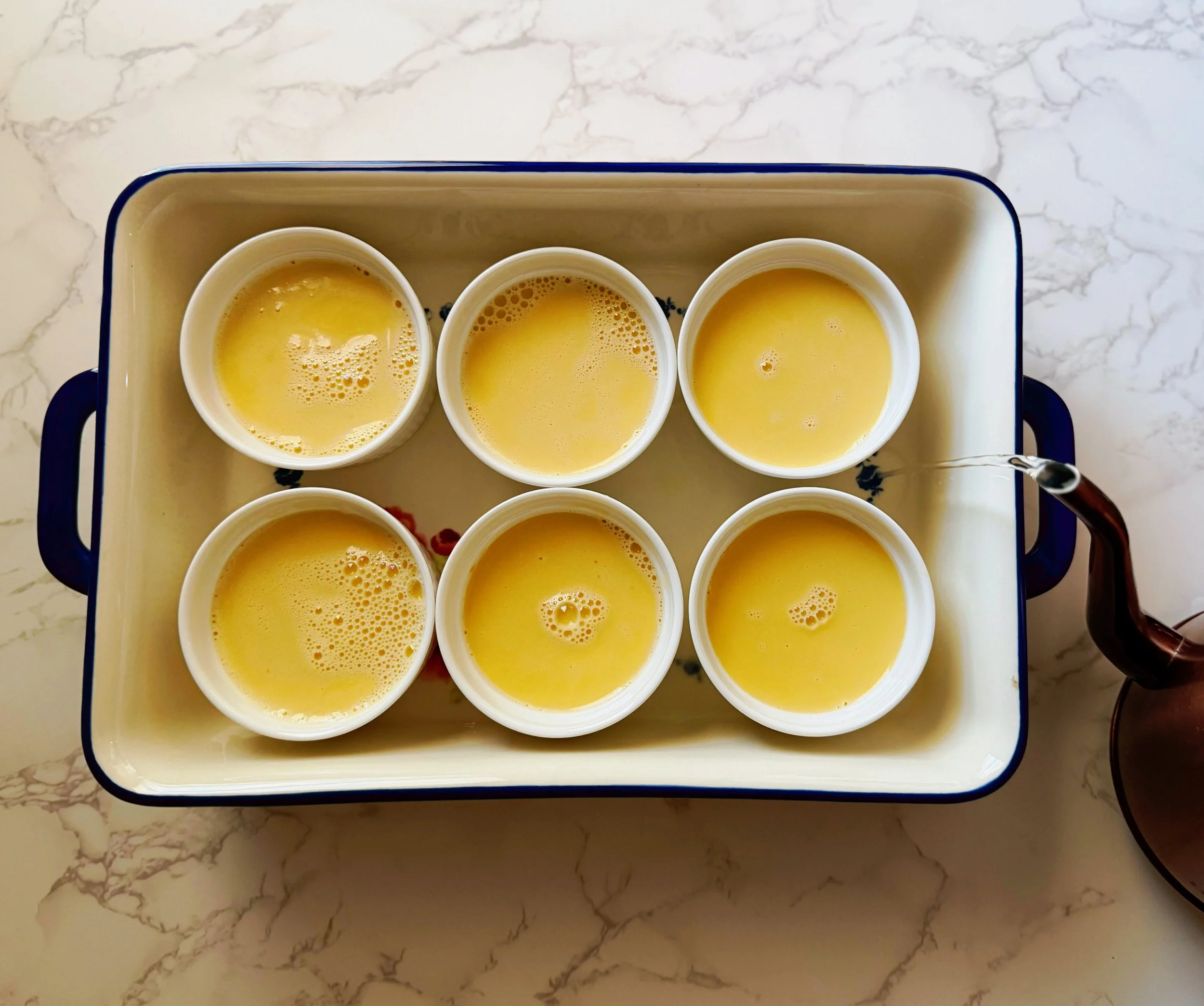
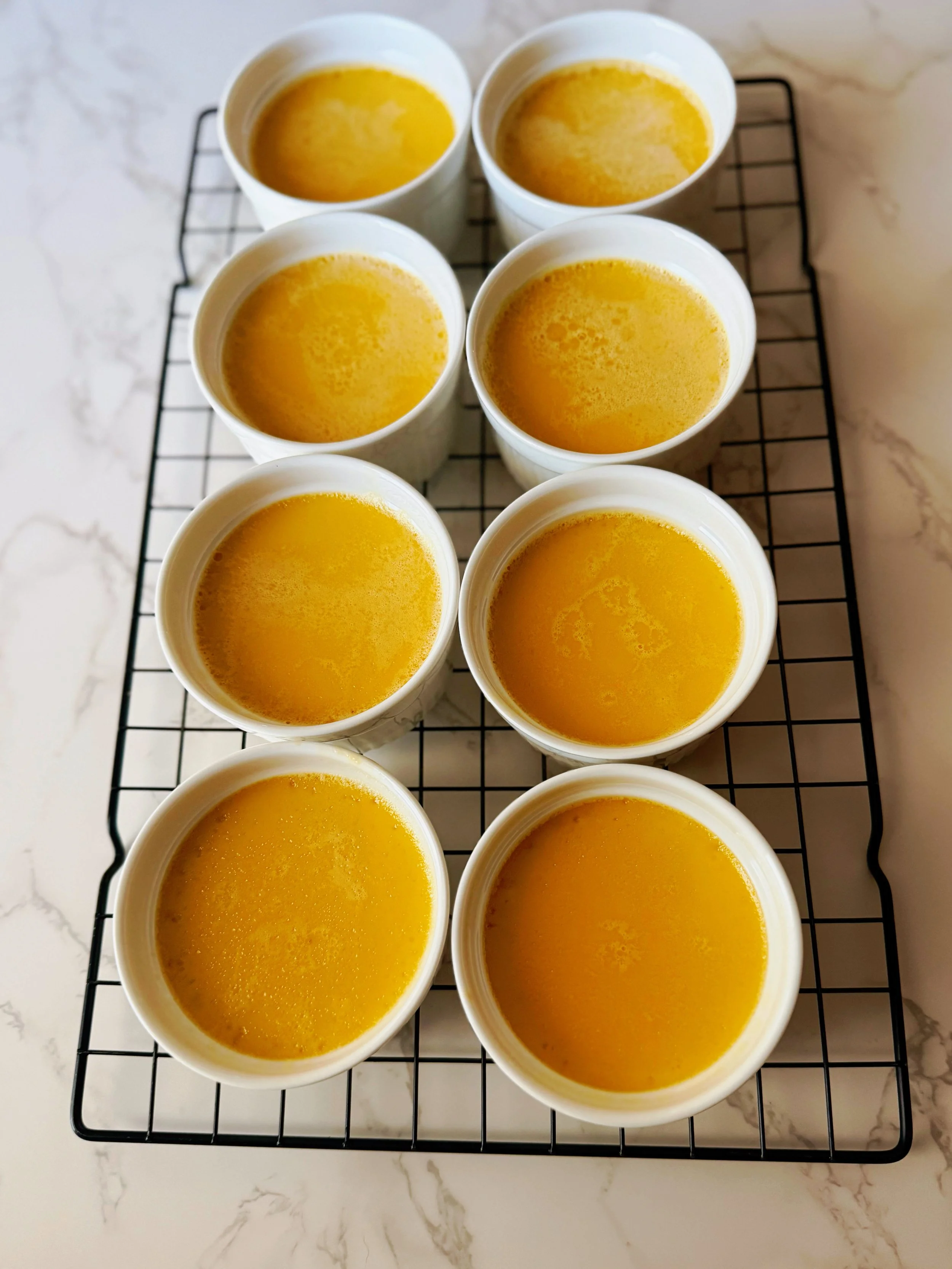
Preheat oven to 325f. Bring 4 cups of heavy cream to simmer. Stir in lavender buds and continue to simmer for 10 minutes, then turn off the heat and let the lavender buds steep for another 10 minutes.Then strain through fine sieve and discard the solids. Whisk egg yolks together with 3/4 cup of sugar and a pinch of salt. Temper the yolks by slowly drizzling in the hot cream while vigorously whisking. Then stir in the vanilla extract. Strain through a fine sieve. Place ramekins in a baking dish and fill them evenly. Then pour hot water in the baking dish until it reaches halfway up the ramekins. Bake for 35-40 minutes until edges are set and centers gently wobble. Cool completely, then refrigerate for 4 hours. Spread a thin layer of sugar on top and torch until caramelized. Let it rest 1-2 minutes and serve.

Tips
Use culinary grade lavender.
Keep cream at gentle simmer; never boiling.
Temper slowly while whisking constantly to prevent scrambled eggs.
For flawless surface skim off the bubbles before baking.
Let the caramelized top rest 1-2 minutes before serving so it hardens properly.