
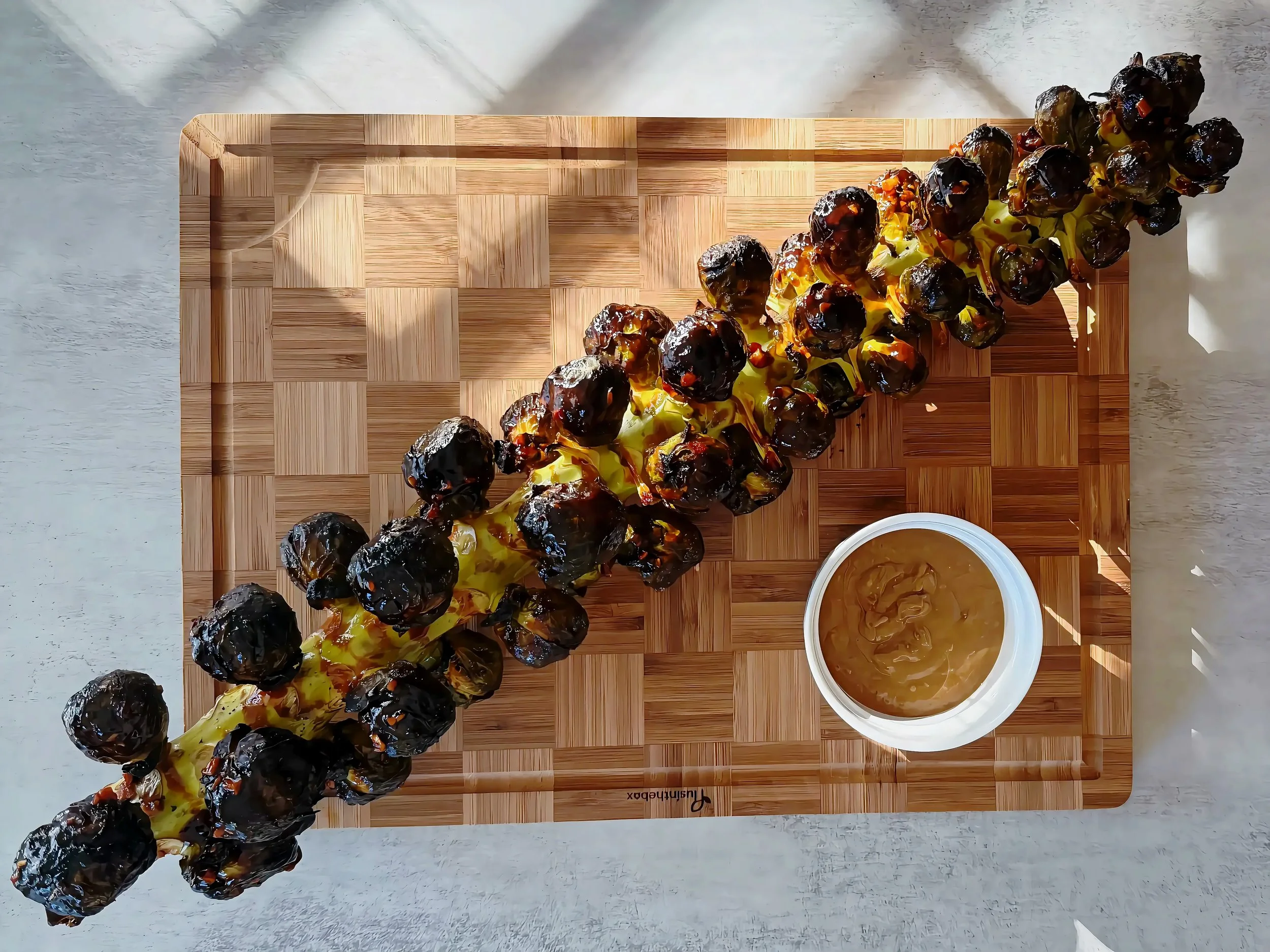
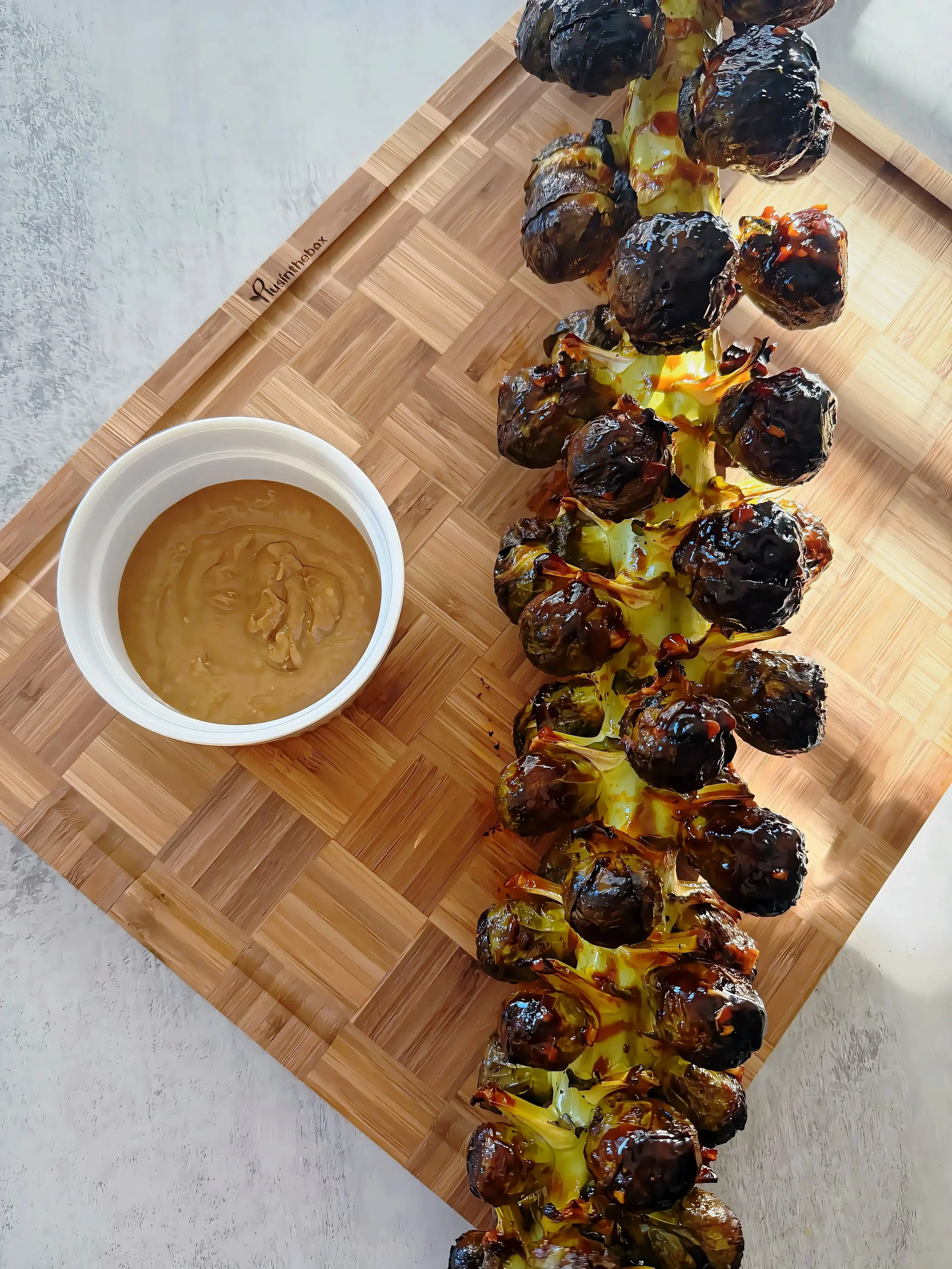
This whole roasted Brussels sprout stalk is coated in a sweet and savory gochujang glaze made with honey, garlic, and sesame oil, then roasted until tender with caramelized edges. Served with a creamy peanut lime dipping sauce it’s a fun and flavorful way to turn Brussels sprouts into a showstopping side dish.
Whether you love or hate Brussels sprouts might come down to your genes
Variations in a bitter taste receptor gene called TAS2R38 affect how sensitive you are to certain bitter compounds found in cruciferous vegetables like Brussels sprouts, broccoli, and cabbage. Some people inherit versions of this gene that make them especially sensitive to bitterness while others barely notice it. This means two people can eat the exact same Brussels sprout and experience surprisingly different flavors. Though genetics aren’t the only factor; cooking methods and personal preferences also play a role.
Peanuts were once buried with the dead in ancient Peru
Long before they became a popular snack peanuts were cultivated in South America and held cultural significance among civilizations like the Moche who flourished along Perus northern coast between roughly 100 and 800 CE. Archaeologists have discovered peanuts in ancient burial sites where food, pottery, jewelry, and other valuable objects were placed alongside the deceased. Peanuts also appeared in Moche artwork including ceramics and metal ornaments suggesting they held symbolic importance beyond simply being a food source. These burial offerings are generally interpreted as provisions for the afterlife reflecting the belief that death was a transition rather than an end.
The history of Brussels sprouts is really a story of human manipulation
Brussels sprouts, broccoli, cauliflower, kale, and cabbage might look like completely different vegetables but they’re actually all varieties of the same species (Brassica oleracea). Over thousands of years humans selectively bred wild cabbage plants to emphasize different features. Kale was developed for its leaves, broccoli for its flowering shoots, cauliflower for its compact flower clusters, cabbage for its tightly packed leaves, and Brussels sprouts for the small buds growing along the stem. It’s a fascinating example of how selective breeding can transform a single species into vegetables that look and taste remarkably different without modern genetic engineering.
Honey was once used to preserve the dead
Long before modern embalming techniques some ancient cultures took advantage of honeys natural preservative properties including its low moisture content and acidity which inhibit the growth of many micro organisms. Ancient Greek and Roman writers described bodies being immersed in honey to slow decomposition when transporting the deceased over long distances. Greek historian Herodotus wrote about Babylonians burying their dead in honey, and Roman writers like Statius and Pliny the Elder noted honey's ability to prevent decay. According to the contemporary Greek historian Xenophon (in his work Hellenica) the Spartan king Agesipolis (who died in 380 BCE) was preserved in honey so his body could be returned home for burial. While this was never universal burial practice it shows how something we now associate with sweetness was once used in the rather gruesome business of preserving human remains.
How to make gochujang brussels sprouts with peanut dipping sauce
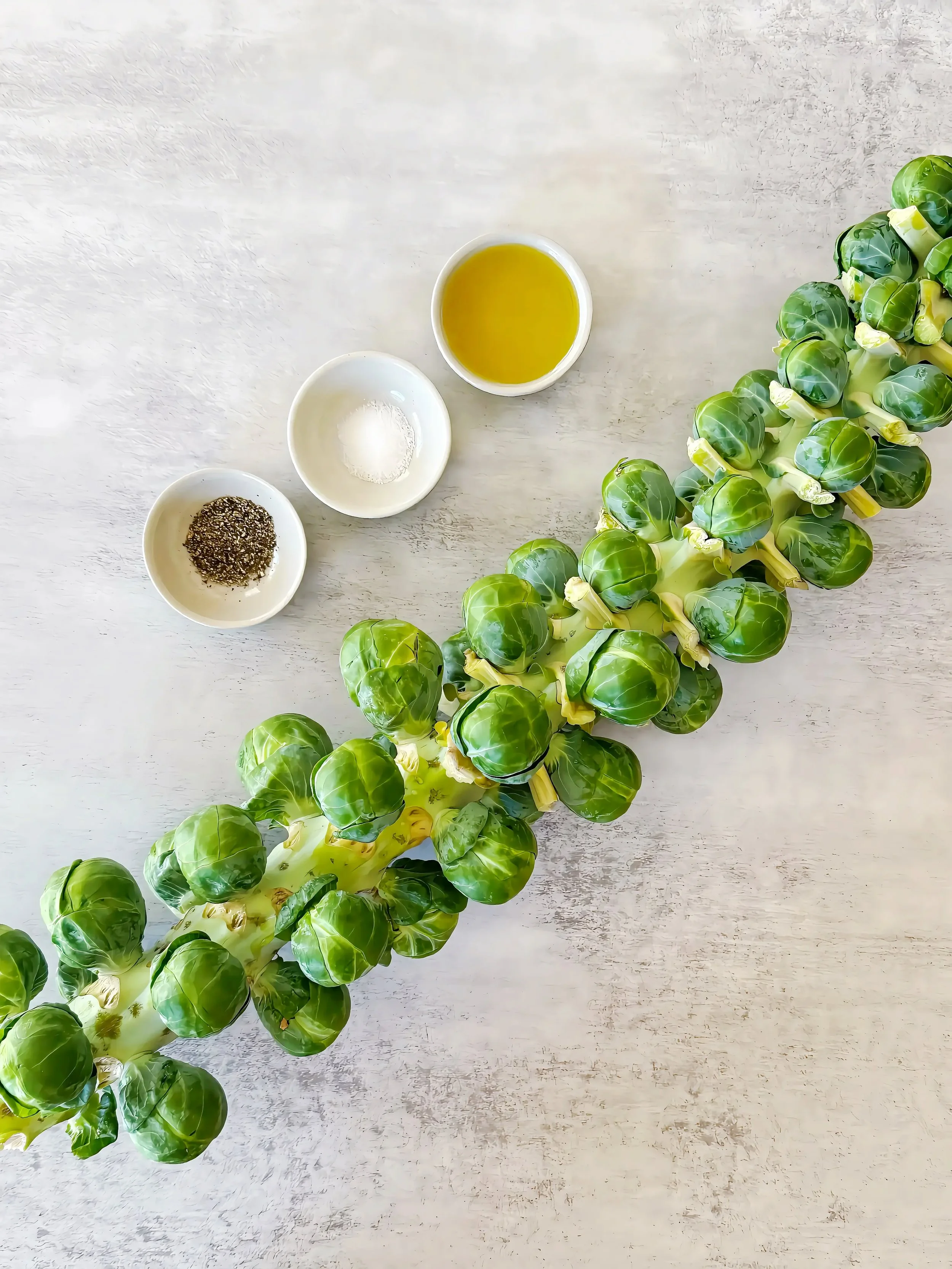
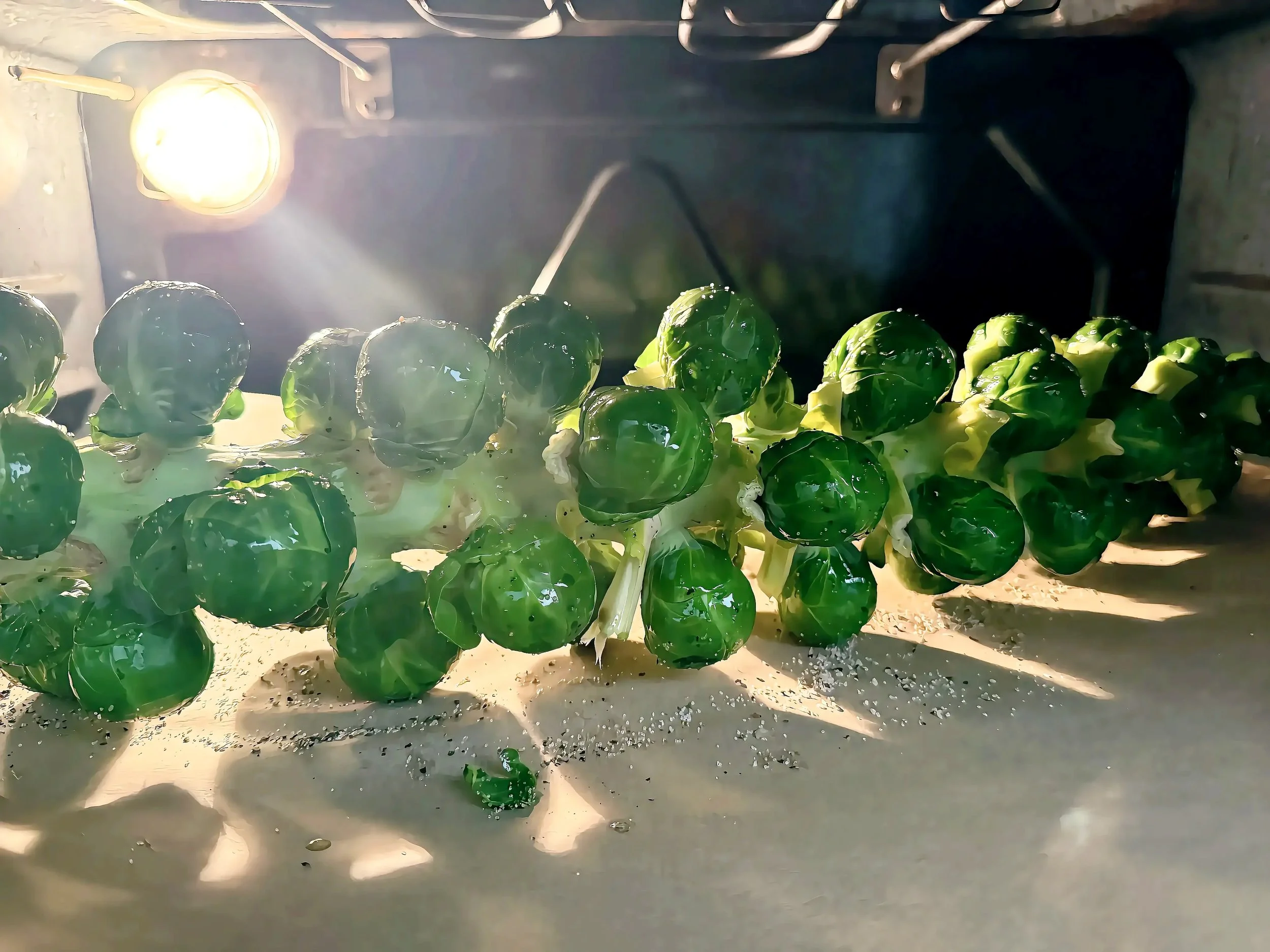
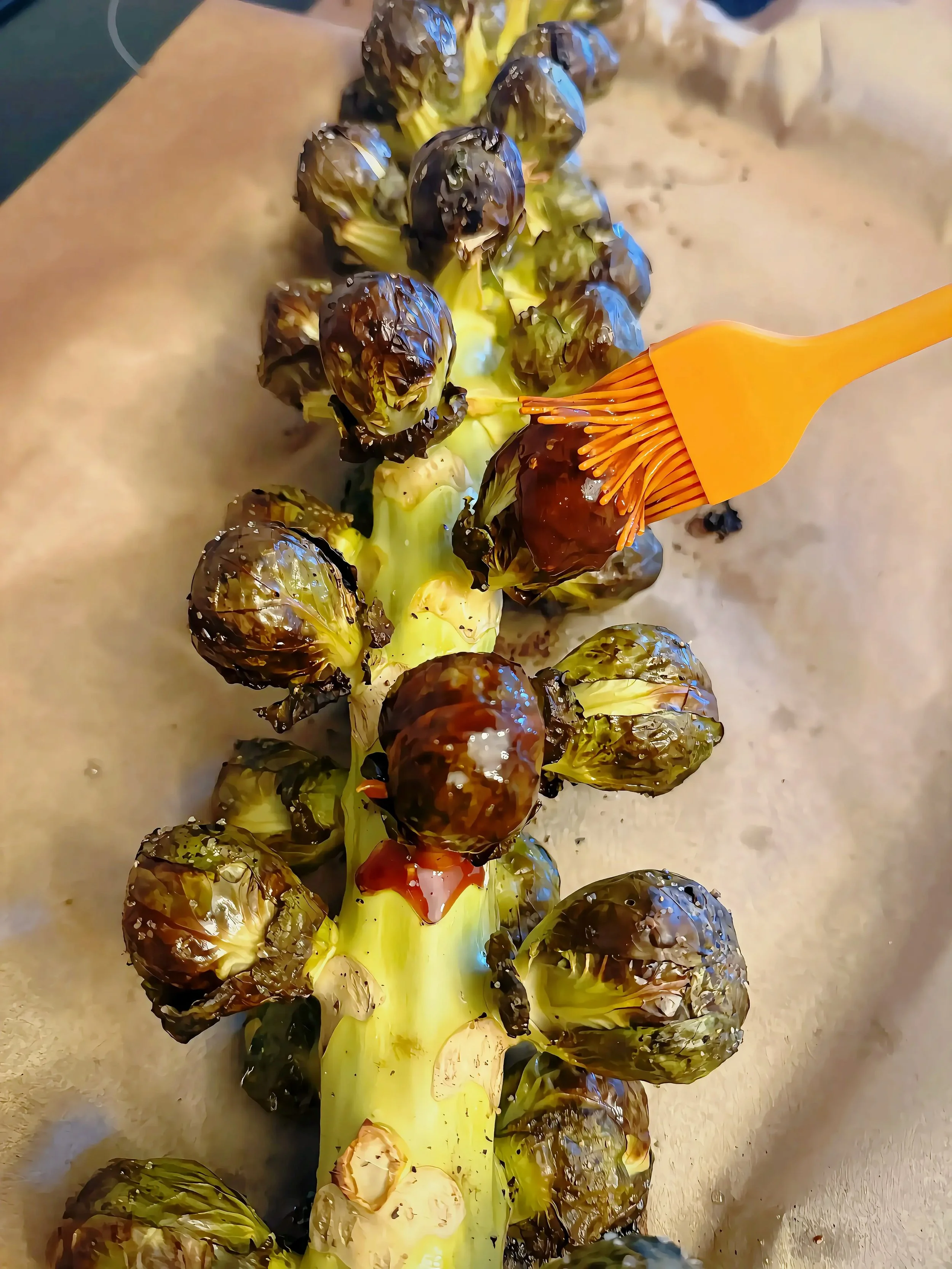
Preheat oven to 400f and line a baking sheet with parchment paper. Rinse the entire stalk and pat dry. Brush the sprouts with olive oil and season evenly with salt and pepper.
Place the stalk on a prepared baking sheet and bake for about 40 minutes, turning every 10 minutes until the sprouts begin to brown and soften.
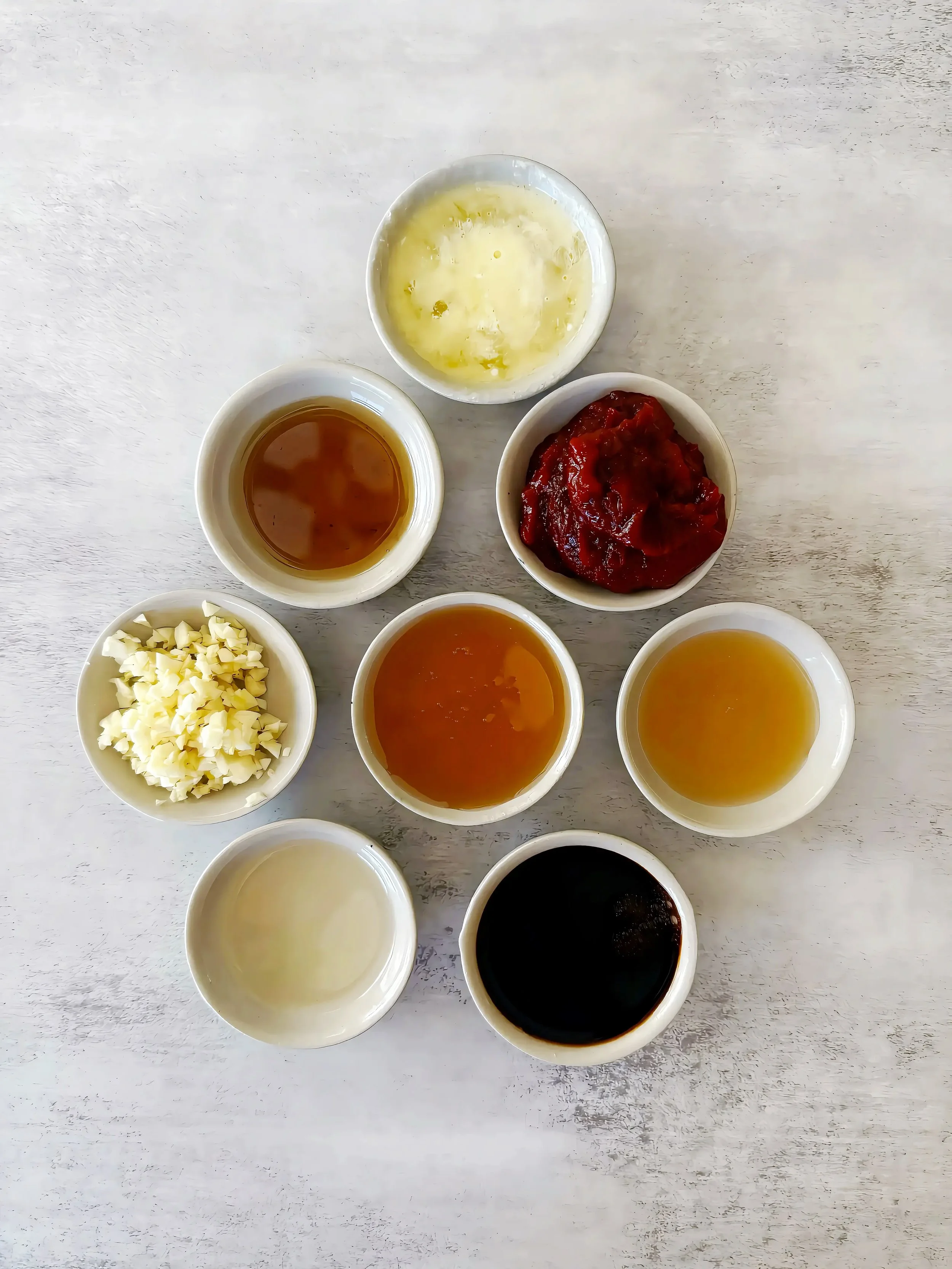
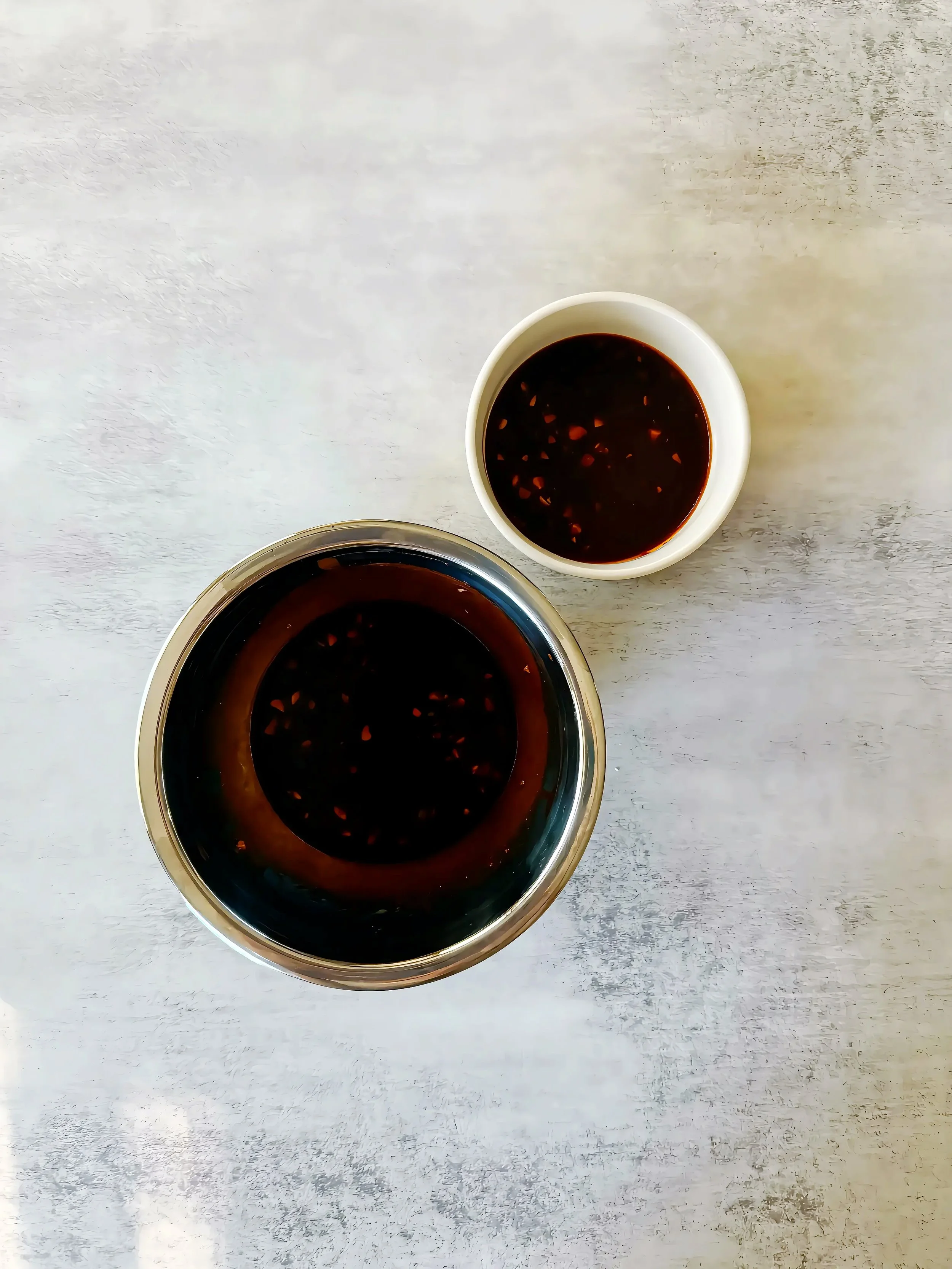
Meanwhile prepare the glaze. Whisk together 3 tbsp gochujang, 3 tbsp honey, 2 tbsp soy sauce, 1 tbsp rice vinegar, 1 tbsp toasted sesame oil, minced garlic cloves, and 2 tbsp melted butter until smooth.
Reserve about 1/3 of the glaze, then brush the remaining glaze generously over all the sprouts. Return to oven for another 10 minutes until the sprouts are tender and glossy.
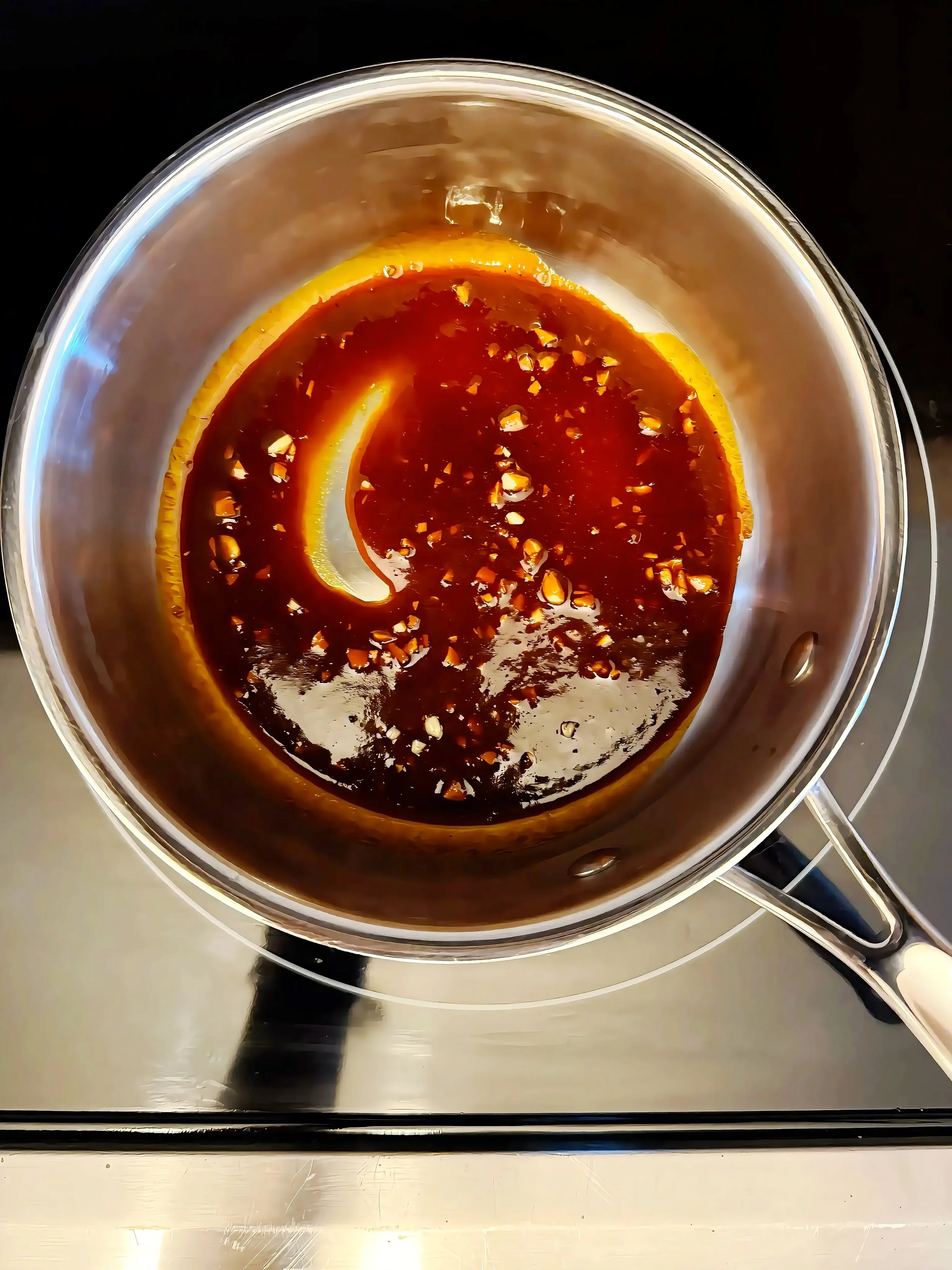
Meanwhile transfer the reserved glaze to a small sauce pan and simmer over medium low heat for a few minutes until slightly thickened.
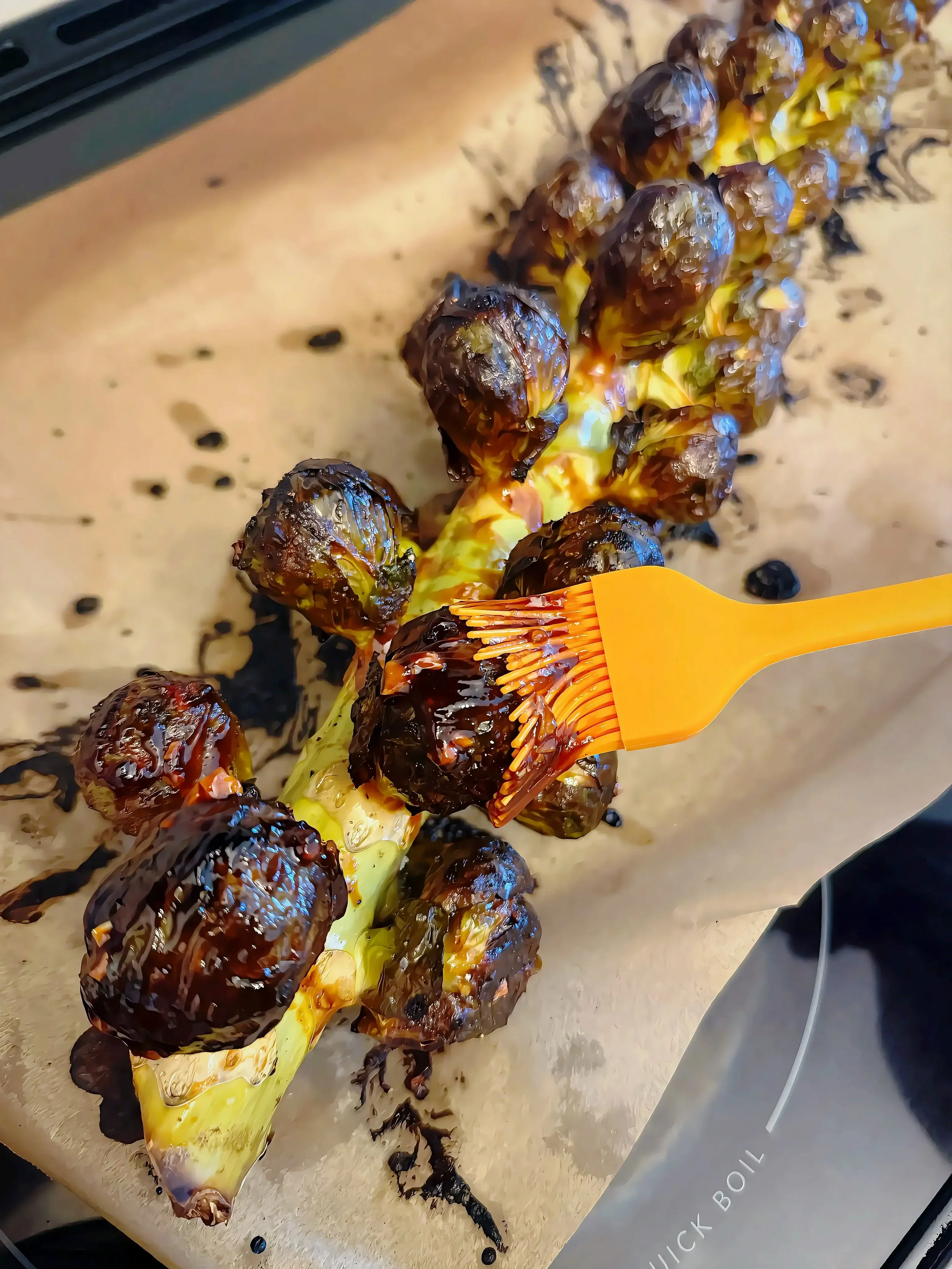
Once the sprouts are done brush them with the thickened glaze. Transfer on a serving platter.
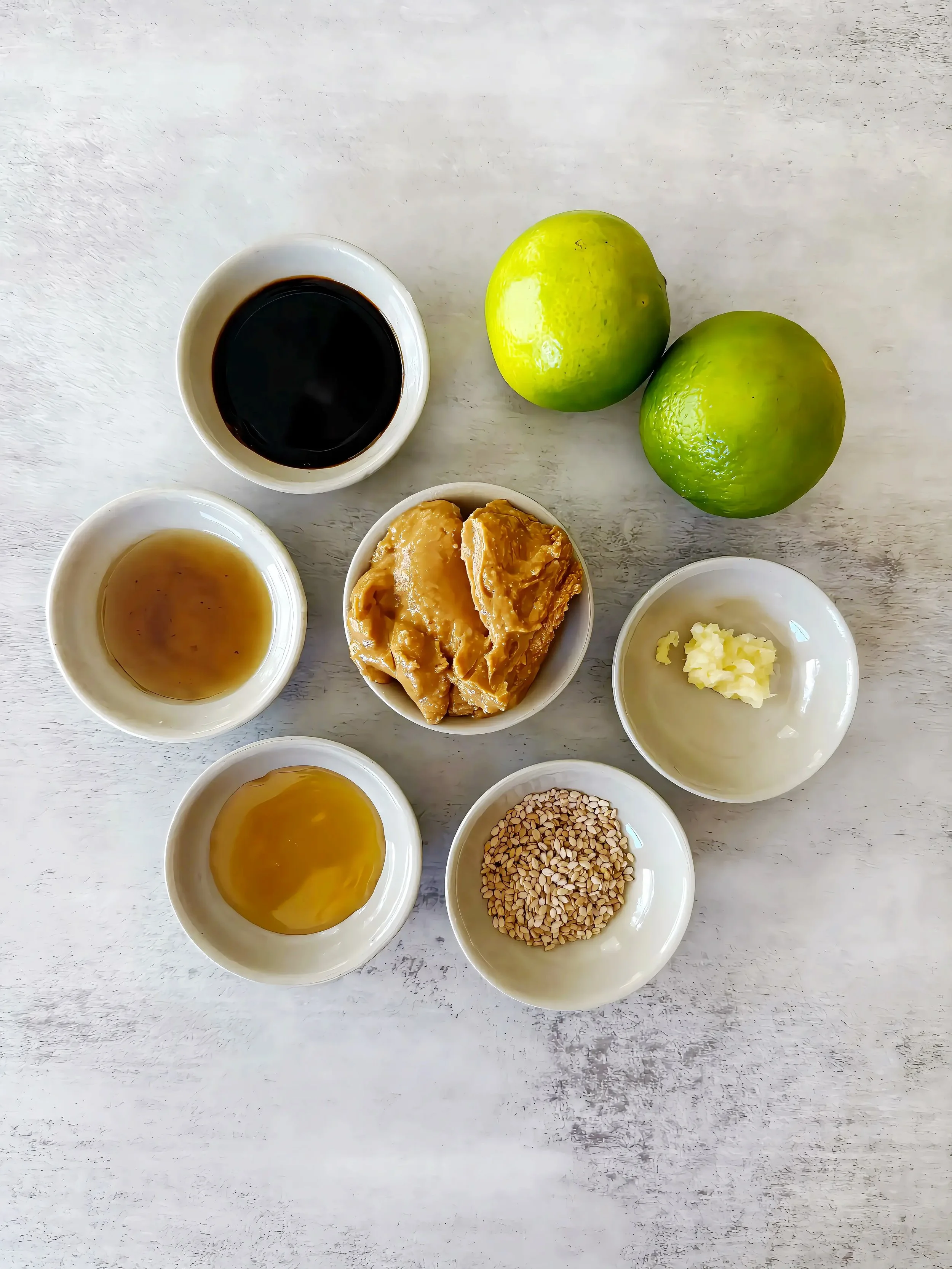
Make the peanut dipping sauce. In a small bowl whisk together 3 tbsp peanut butter, juice of 2 limes, 1 tbsp soy sauce, 1 tsp toasted sesame oil, 1 tsp honey, 1 garlic clove, grated, 1 tsp sesame seeds. Gradually add warm water until the sauce reaches your desired dipping consistency.
Tips
After rinsing pat the stalk completely dry. Excess moisture can cause them to steam instead of roast.
Cooking times vary depending on the size of the sprouts. Pierce a larger sprout with a knife to check tenderness before adding the glaze.
Don’t eat the central stalk. The thick woody stalk is primarily for presentation.