
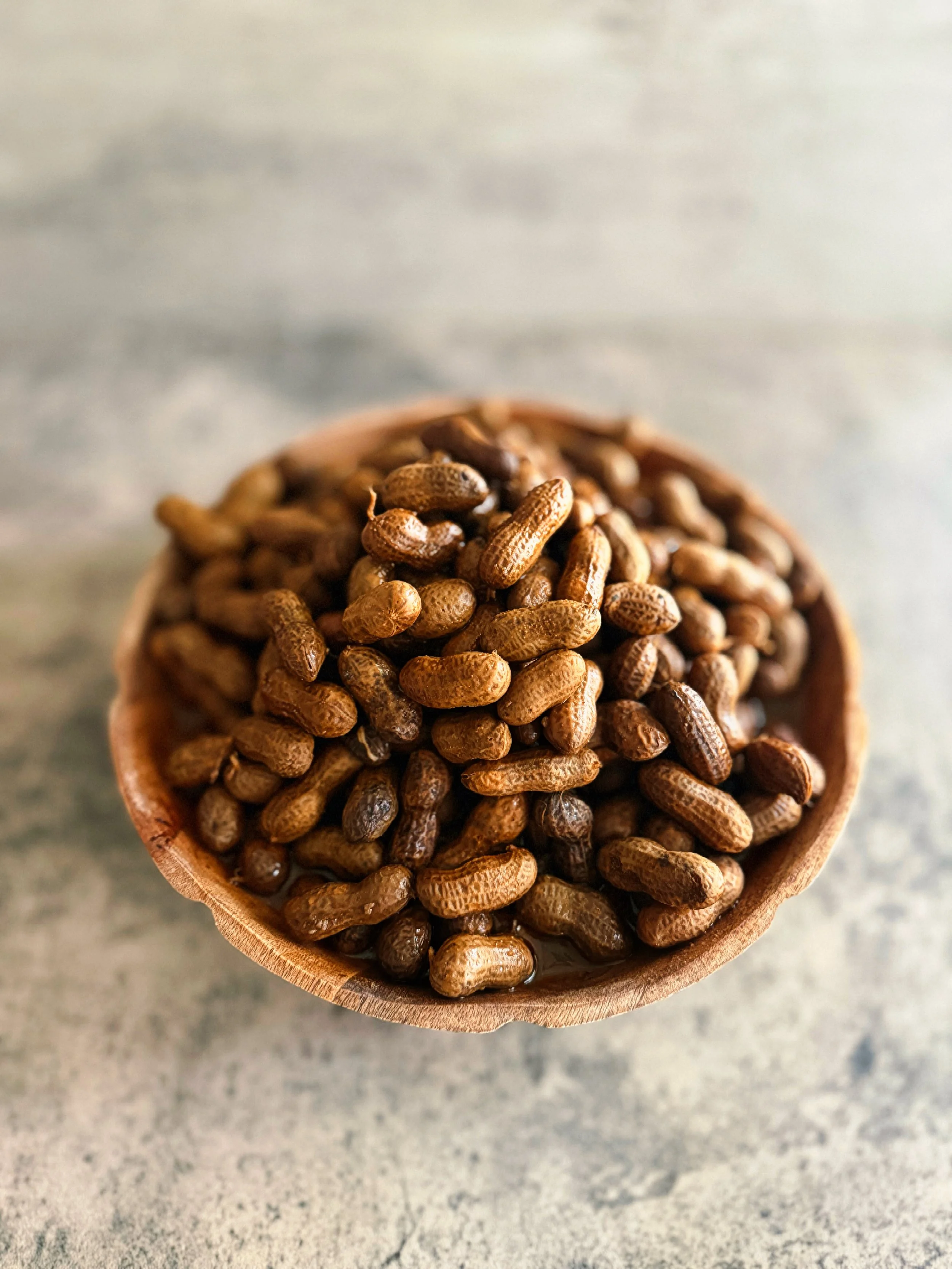
Boiled peanuts are a Southern staple especially across Florida, Georgia, and the Carolinas where you’ll find them everywhere from roadside stands to gas stations. These cook low and slow until the raw peanuts are tender, salty, and soaked through with seasoned brine.
Little peanut trivia
Peanuts aren’t actually nuts; they’re legumes putting them in the same botanical family as beans and lentils.
Peanuts grow underground. After pollination a stem called ‘peg’ grows downward and pushes the developing peanut pod into the soil.
Peanuts originated in South America, traveled through global trade routes to Africa and were later brought to North America during the transatlantic slave trade.
Peanuts were once considered food for livestock and poorer Americans. Their status changed in the 19th and 20th century as commercial peanut foods expanded.
Peanuts flower above ground but fruit underground. The plant produces small yellow flowers.
Peanuts are self pollinating.
Green peanuts vs. raw peanuts
Despite the name green peanuts aren’t actually green. They’re freshly harvested peanuts that haven’t been dried so they still contain a high amount of moisture. Raw peanuts have also not been roasted or cooked but they’ve been dried after harvest which gives them a much lower moisture content. That different matters for boiled peanuts: green peanuts soften relatively quickly while dried raw peanuts can take 6-8 hours of simmering to reach a tender texture.
Are boiled peanuts healthy?
Peanuts are packed with protein, healthy fats, fiber, vitamin E, niacin, folate, and magnesium. The protein and healthy fats help keep you full while vitamin E and other antioxidants support healthy skin. Peanuts also contain biotin which is a nutrient involved in maintaining normal hair and skin. The main thing to watch with boiled peanuts is sodium since they spend hours soaking up a pretty salty brine.
The African roots of boiled peanuts
While boiled peanuts are strongly associated with the American South today the tradition has deeper ties to West and Central Africa. Peanuts originated in South America but were introduced to Africa by Portuguese traders where they became widely grown and incorporated into local cooking. Enslaved Africans later brought both peanuts and established ways of preparing groundnuts (including boiling) to the American South. That influence can still be seen in Southern food culture today, down to the old Southern nickname “goober” which comes from the Kongo word ‘nguba’ for peanut.
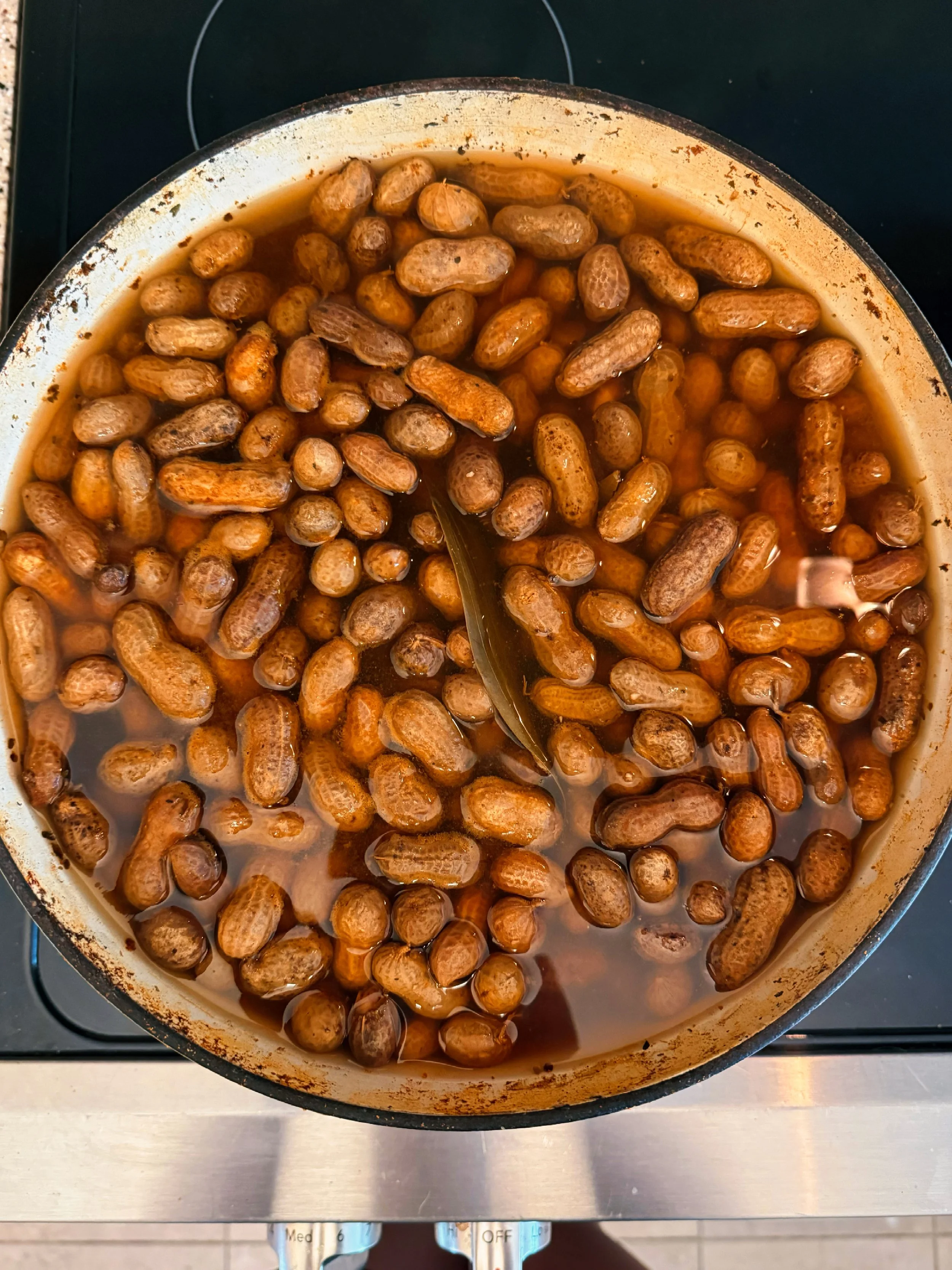
How to make boiled peanuts?
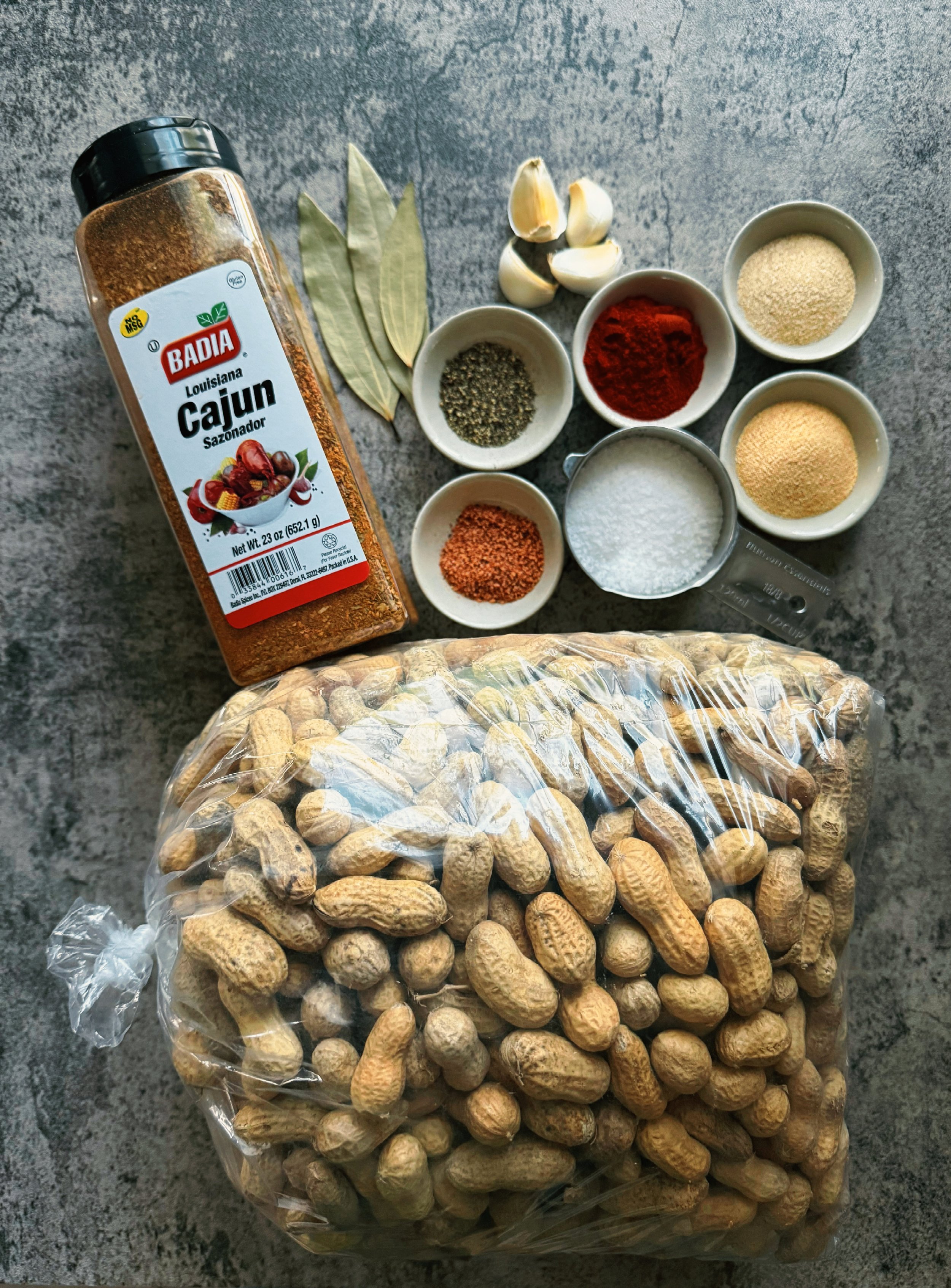
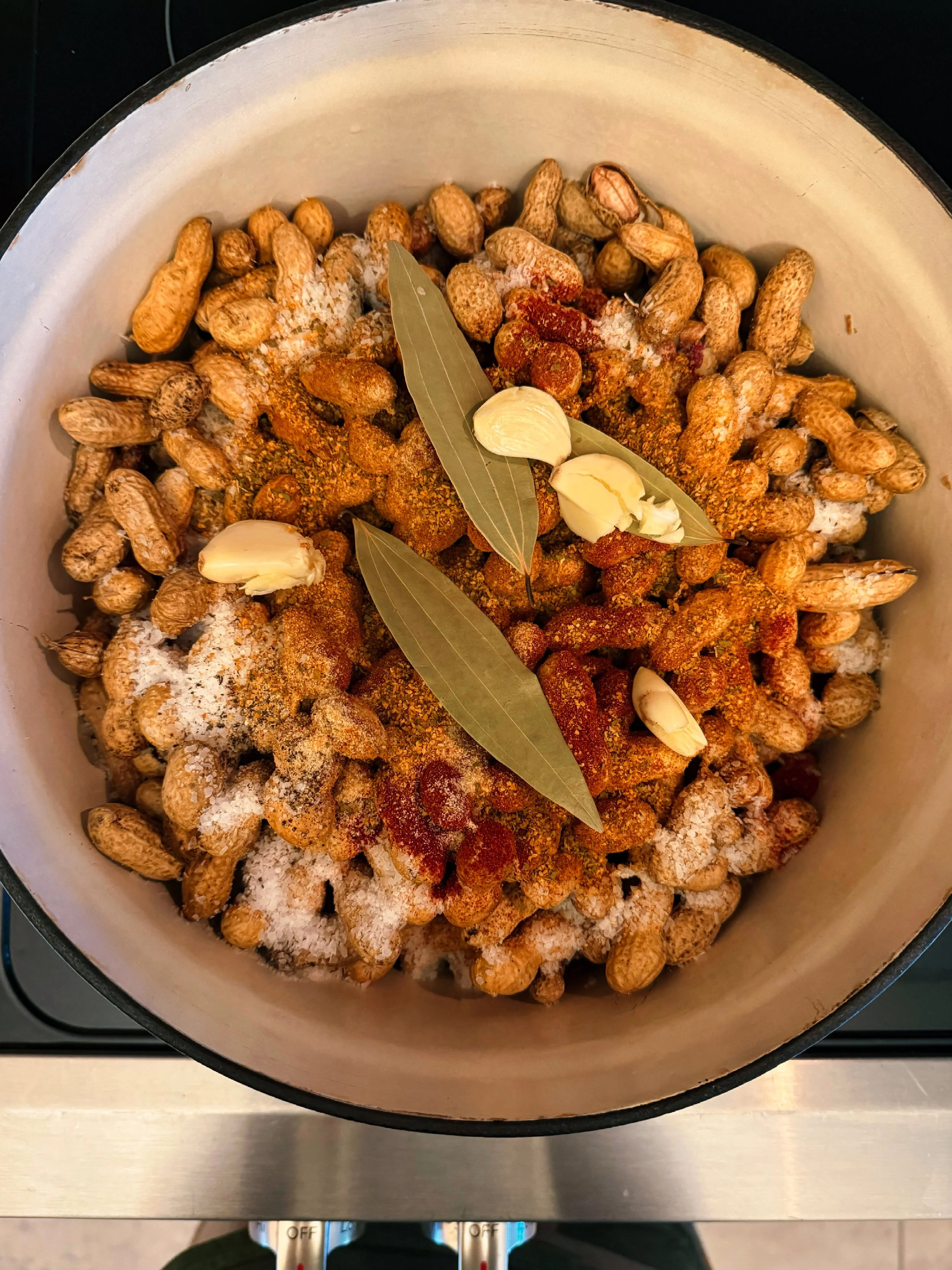
Add the washed peanuts in a large pot or Dutch oven with 1/3 cup salt, 4-6 tbsp Louisiana Cajun seasoning, 1 tbsp garlic powder, 1 tbsp onion powder, 1 tbsp paprika, 1 1/2 tsp pepper, 1 tbsp Slap Ya Mama seasoning, 4 garlic cloves, and 3 bay leaves.
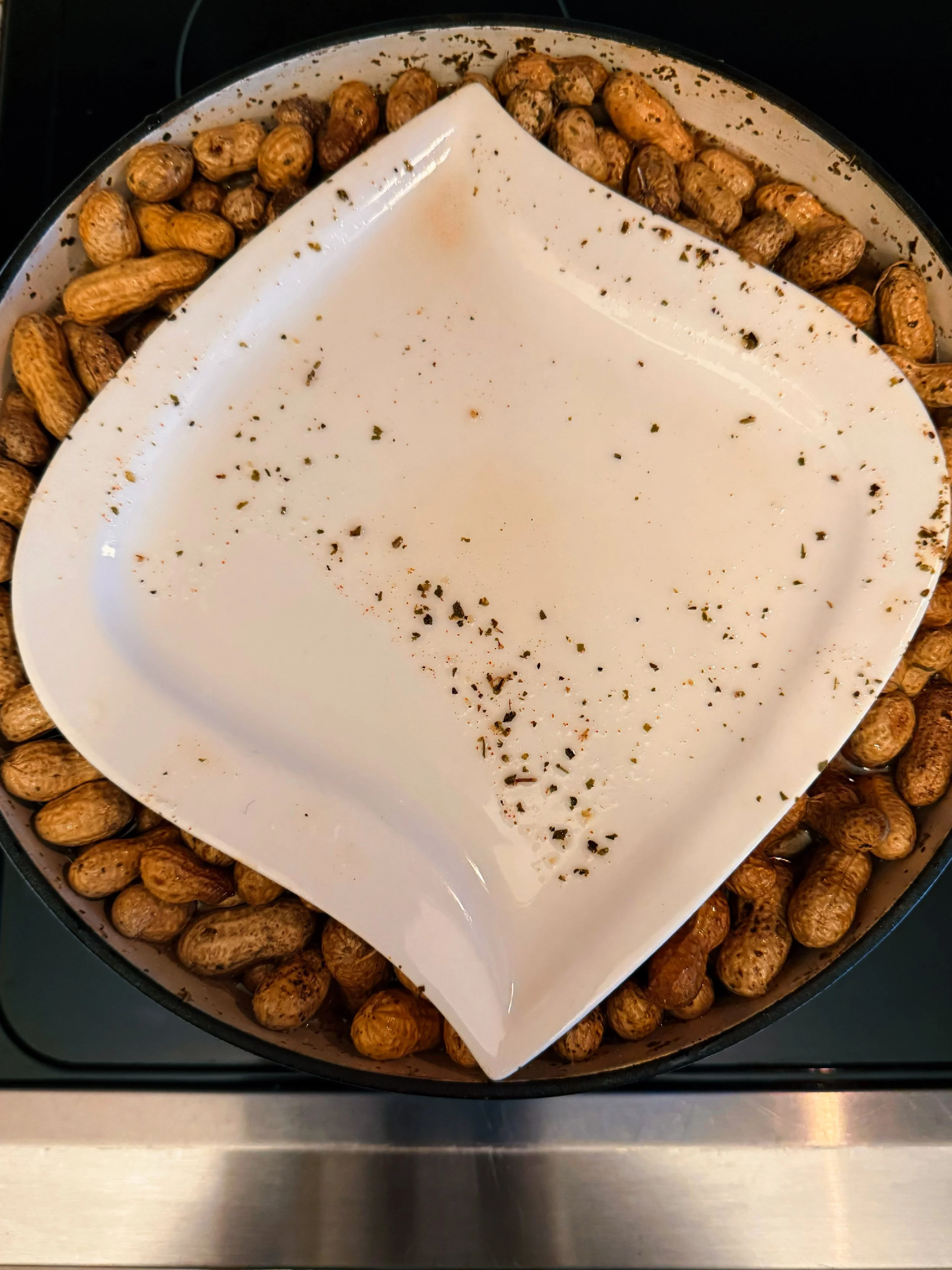
Fill the pot with water and bring to boil. Lower the heat to a gentle simmer, then place a heatproof plate on top to help submerge the peanuts.
Cover and simmer for about 6-8 hours or until very tender. Keep adding water as needed and check the seasoning. The brine should taste noticeably salty and well seasoned since the seasoning has to penetrate the shells.
Let them sit in the brine for about an hour after cooking.
Tips
Keep the peanuts submerged. They’ll float especially early on.
Use raw or green peanuts, not roasted. Roasted peanuts won’t absorb the brine or soften the same way.
Keep it at a gentle simmer.
Start checking around 6 hours. You want the peanuts completely tender inside.
For stronger flavor soak them longer.
Store them like cooked food. Boiled peanuts aren’t shelf stable like roasted peanuts, refrigerate with their brine.