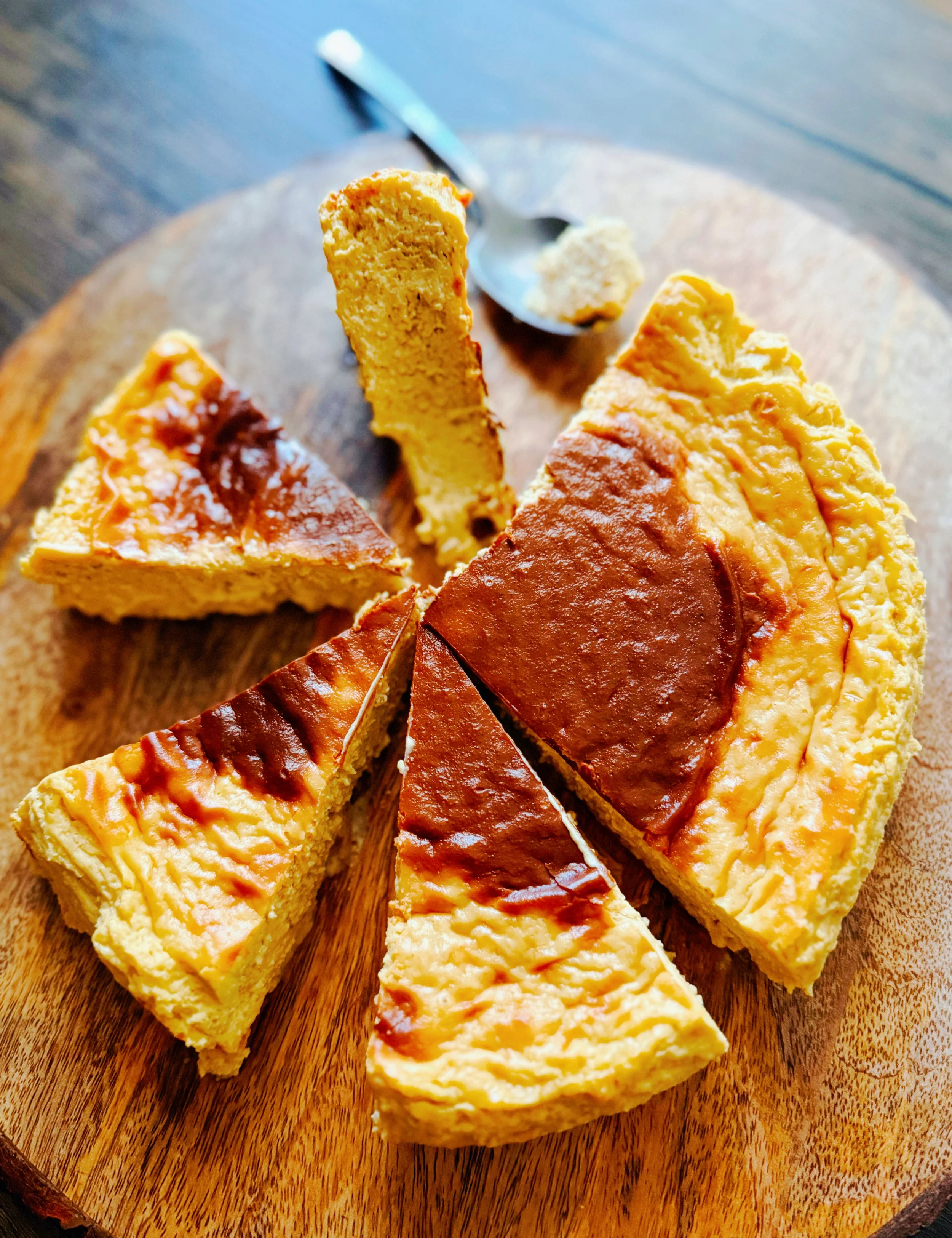
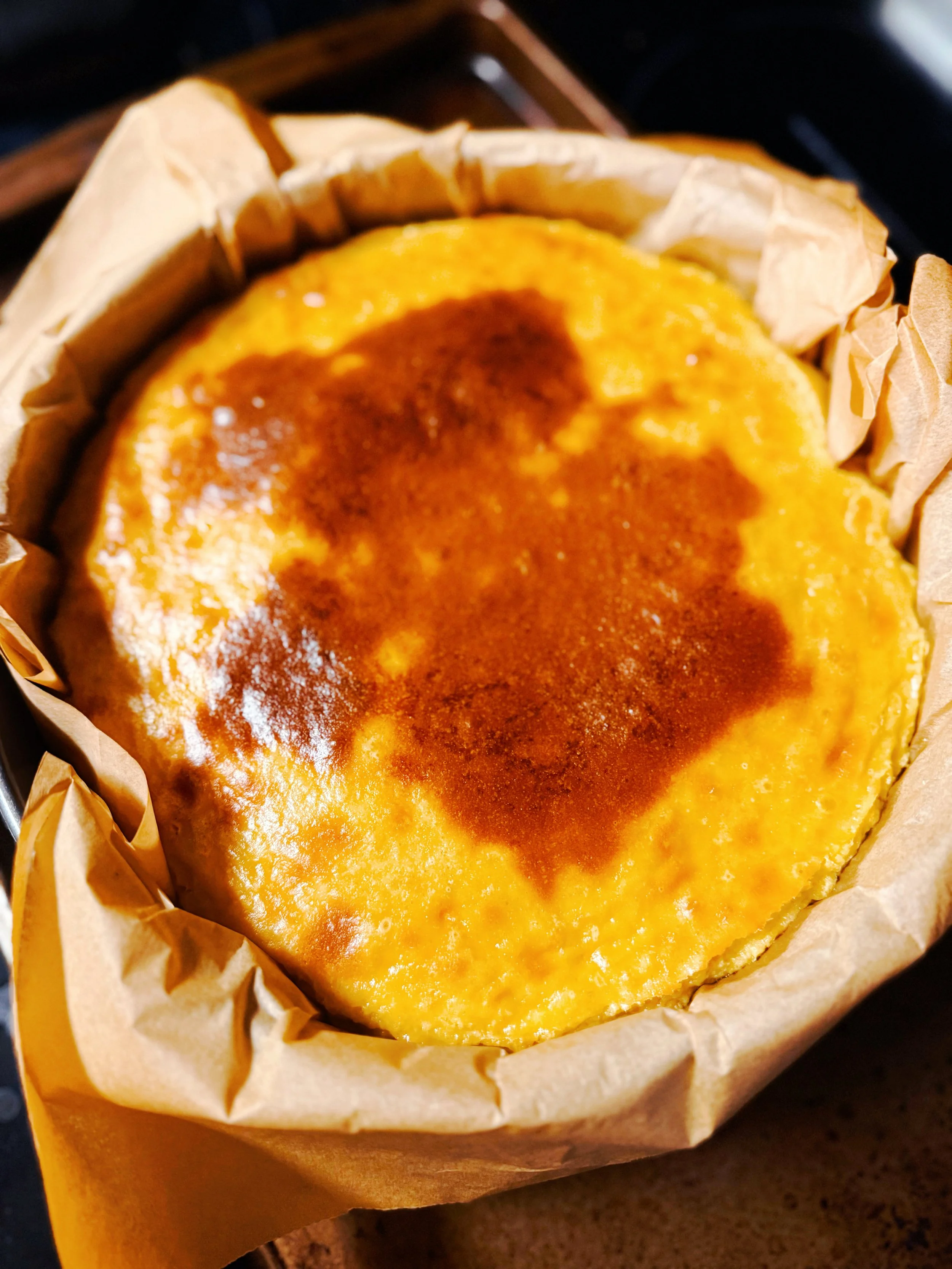
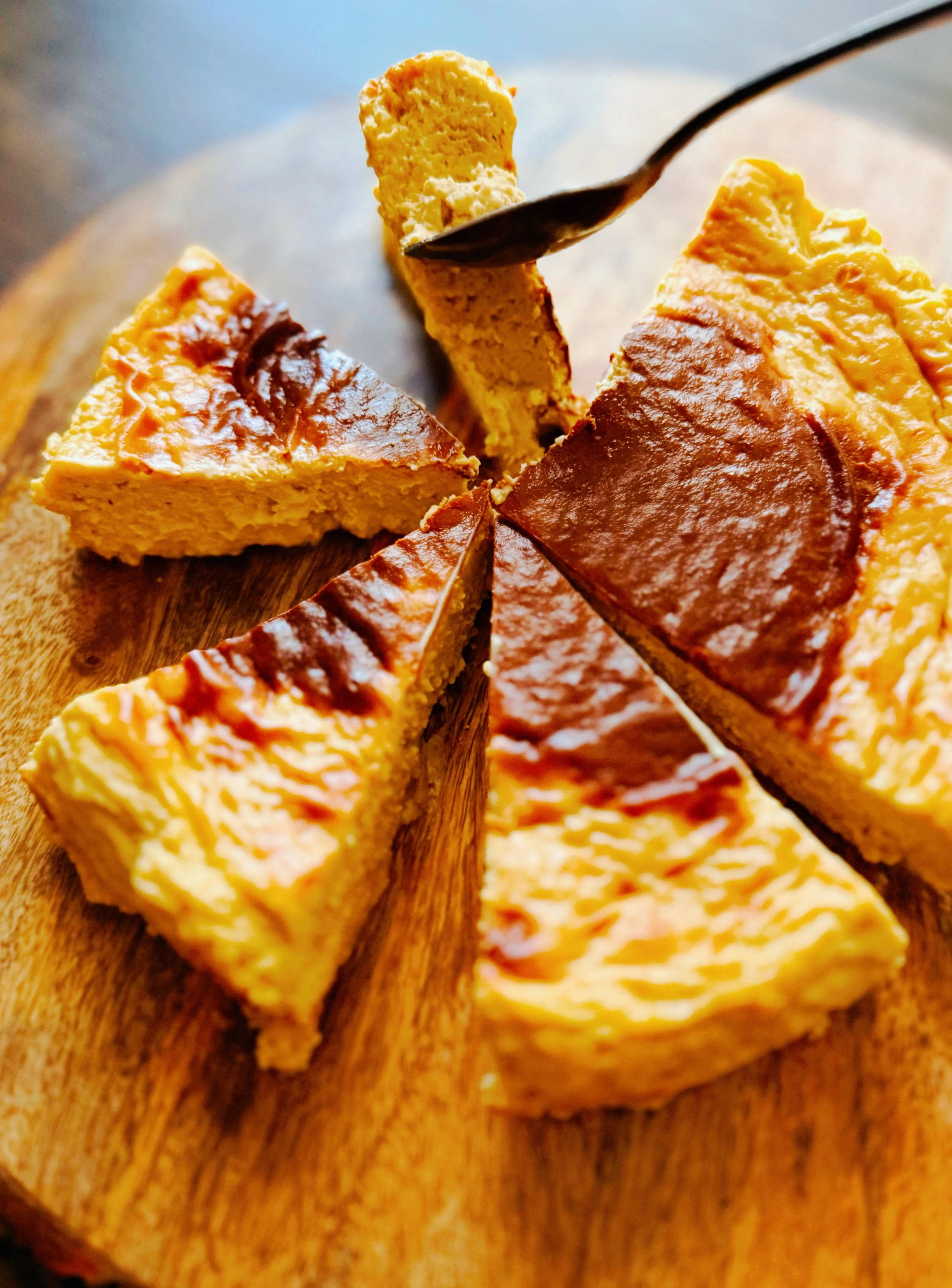
This mango cheesecake leans into everything good about ripe mangoes: sweet, fragrant, and tropical. The filling blends fresh mango with cream cheese, eggs, and mango sweetened condensed milk creating a custardy batter that bakes into something rich but still bright. Like a Basque style cheesecake it’s baked hot so the top caramelizes while the center stays soft. After a night in the fridge it settles into a dense, creamy slice that tastes even more mango forward the next day.
What makes Basque cheesecake different from other cheesecakes?
Basque cheesecake stands apart from most cheesecakes because it breaks the usual rules on purpose. It originated in San Sebastian, Spain in the 1990s where a small restaurant called La Vina began baking cheesecakes at very high heat. Instead of the pale delicate look of the classic New York cheesecake the top is intentionally dark and caramelized. That intense heat creates a deep toasted flavor while the center stays soft, creamy, and slightly custardy. There’s also no crust and no water bath. The result is less structured than traditional cheesecake; more like a rich baked custard with a caramelized top. It looks rustic but that contrast between the dark exterior and silky center is the point.
Let’s talk about mangoes
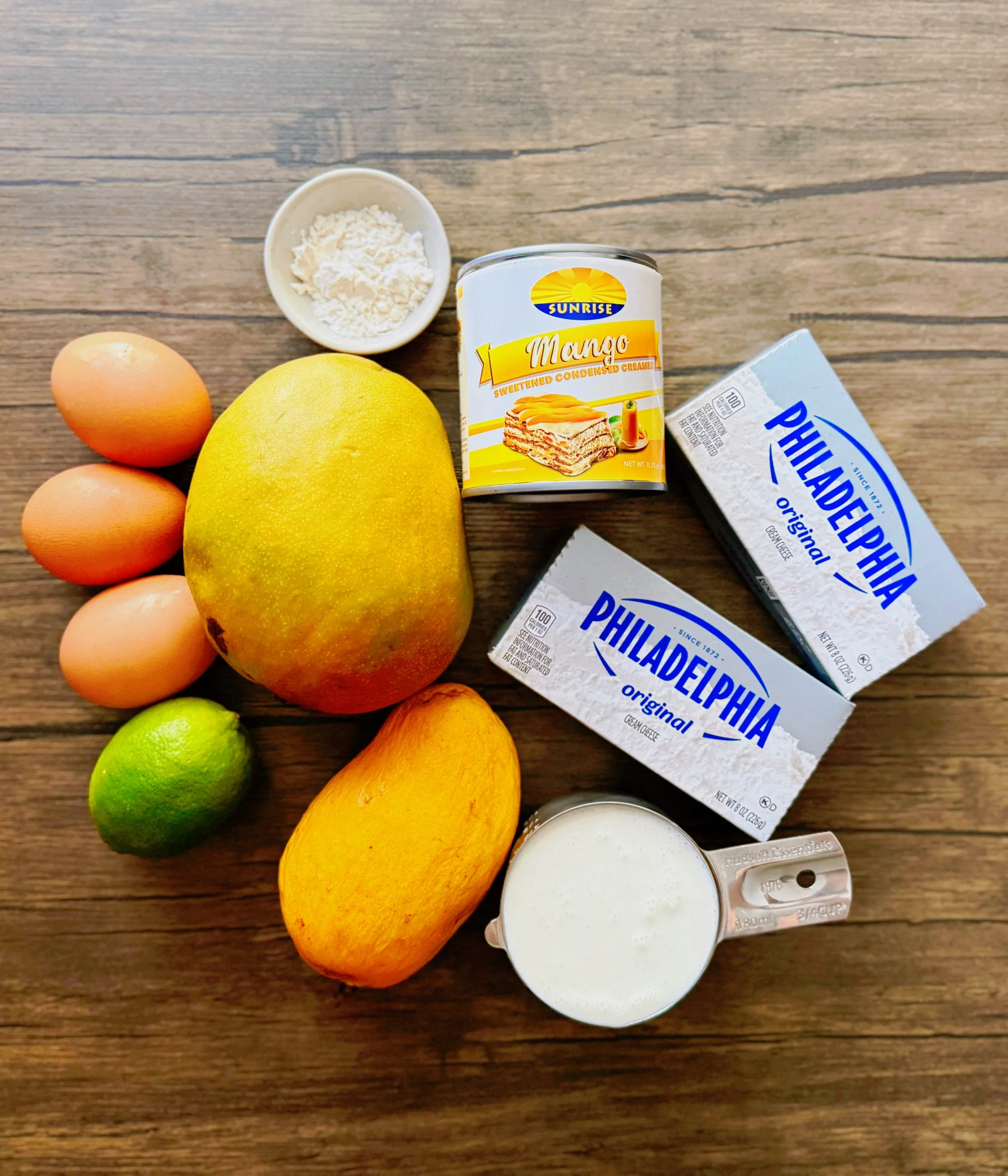
Mangoes have been cultivated in South Asia for more than 4000 years and were considered so valuable in ancient India that they were planted in royal gardens and written about in early Sanskrit texts. From there they spread along trade routes to Southeast Asia, the Middle East, and eventually the Americas when Portuguese traders carried mango seeds to Brazil and the 17th century. Today they’re one of the most widely eaten fruits in the world. Beyond the flavor mangoes are packed with vitamin C and A, and polyphenols (including mangiferin) which have anti-inflammatory and antioxidant benefits.. In other words the fruit that has been prized for centuries also happens to be genuinely good for you.

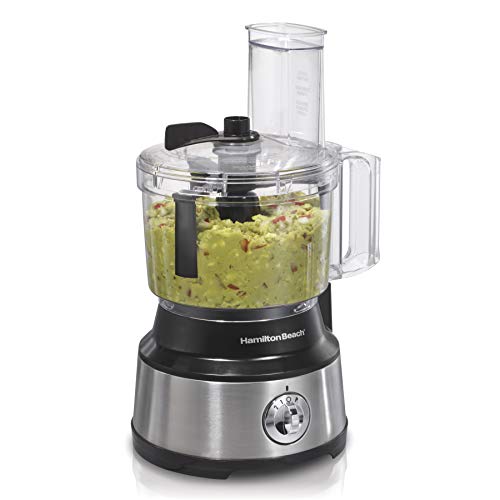
What is the difference between a food processor and a blender?
A blender and a food processor may look similar but they are built for different jobs. Blenders are designed for liquids; the tall jar and fixed blades pull ingredients down into a vortex which is why they’re good for smoothies, soups, and purees. Food processors are wider and use different blade attachments to chop, mix, shred, or knead thicker ingredients. They don’t rely on liquid to move things around, which makes them better for tasks like chopping vegetables, making pastry dough, or grinding nuts. That said, a food processor can still handle liquids and purees just fine, especially for things like sauces, dips, or batters. The difference is mostly design: blenders turn things smooth while food processors are built to break things down in more ways.
What is the history of cream cheese?
Cream cheese is a relatively modern dairy product. It was developed in US in the 1870s when a New York dairyman named William Lawrence was attempting to create a cheese similar to a French cheese called Neufchâtel. He added extra cream and ended up with a richer, softer cheese made from cream and milk. The result spread quickly in popularity especially after it began being sold under ‘Philadelphia’ brand name; chosen not because it was made there but because Philadelphia had a reputation at the time for high quality dairy products. Unlike many cheeses cream cheese was desgined to be eaten fresh which helped turn it into a staple in everything from bagels to cheesecakes.

Why cream cheese became the cheesecake standard?
Cream cheese became the standard for cheesecake mostly because it behaves better in the oven than many older cheeses. Fresh cheeses like ricotta or farmers cheese contain more moisture and grainier curds which can make a cheesecake lighter but also less stable. Cream cheese on the other hand is smooth, dense, and high in fat which allows it to blend into a very uniform batter. When baked with eggs it sets into a firm but creamy custard that slices cleanly and holds its shape. In other words it’s not just tradition, it’s chemistry.
How to make Basque style mango cheesecake?
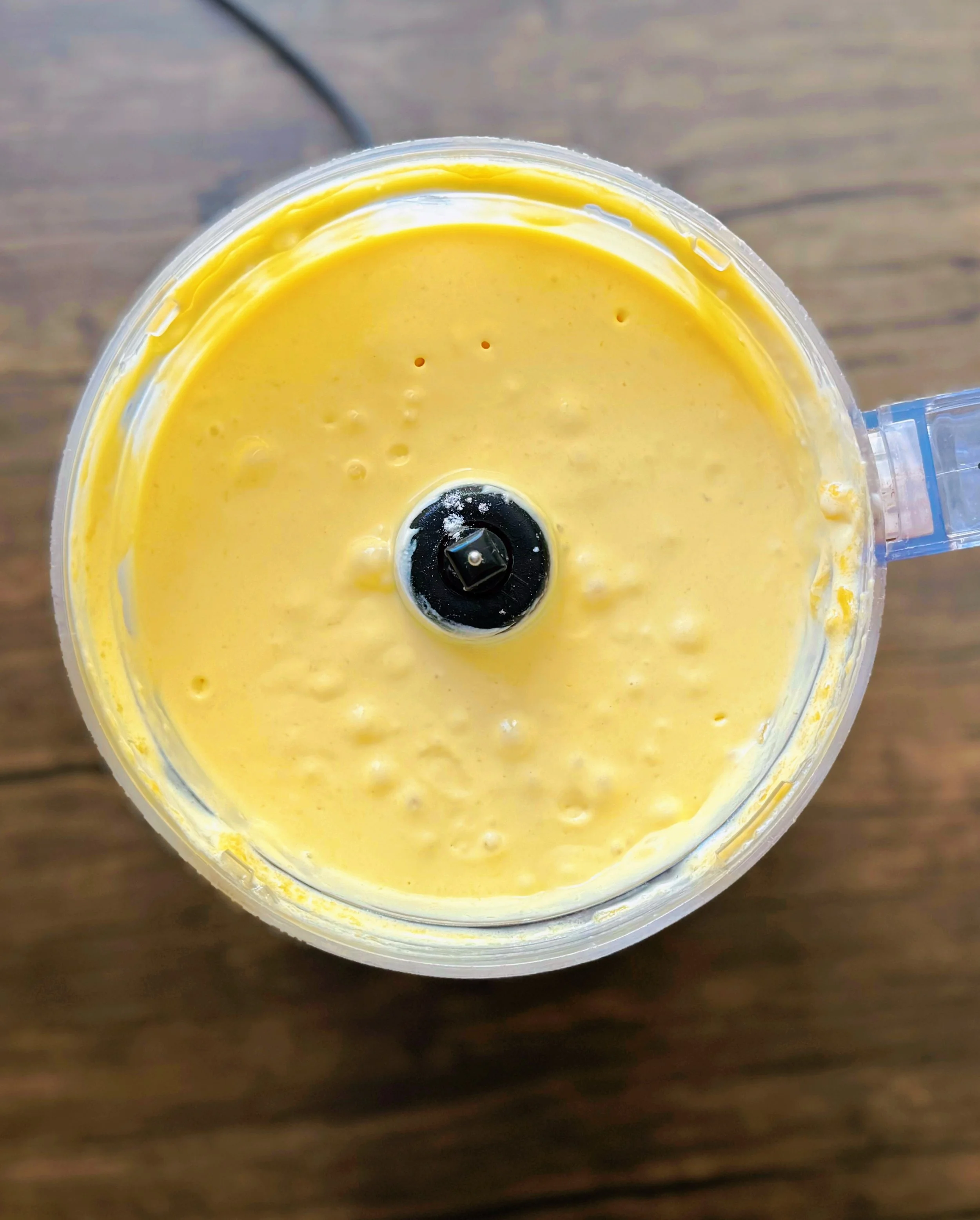
Preheat oven to 425f and line a spring form cake pan with parchment paper. In a food processor blend the mango until smooth. Then add 16 oz cream cheese, 3 eggs, 3/4 cup cream, 13 oz mango sweetened condensed milk, 1 tbsp flour, a squeeze of lime juice, and a pinch of salt. Blend until uniform. Pour into the prepared cake pan. Place the cake pan on a sheet pan and bake for 45-55 minutes until golden and the edges are set but still wobbly in the center. Cool completely on a wire rack, then refrigerate overnight. Serve plain or with fresh mango!
Recommended products to make this recipe
*This page contains affiliate links. If you choose to purchase after clicking a link, I may receive a commission at no extra cost to you.